Showing posts with label mystery. Show all posts

August 9, 2012

When You Reach Me

WHEN YOU REACH ME by Rebecca Stead (Yearling, 2009)
GENRE: Science Fiction / Mystery - Literary
HONORS: Newbery Medal; Boston Globe - Horn Book Award for Fiction; many others, including multiple best-seller and best-of-the-year lists

REVIEW: When You Reach Me begins with Miranda, a sixth grader in 1978, and a postcard informing her mother that she is to be a contestant on The $20,000 Pyramid. Miranda addresses the reader directly as she recounts the events of the year, from the time she receives the first of a series of unsettling notes, to the end of the year, when a death occurs and she slowly puzzles out the mystery of who has been leaving her the notes and why. Stead leans somewhat heavily on Miranda's favorite book, Madeleine L'Engle's A Wrinkle in Time, using this classic to seed the notion of non-linear time and travel between dimensions, (the material is strong enough on it's own that a few simple allusions would have sufficed). That said, the way Stead slowly reveals the purpose behind the notes and their sender is a thing of beauty, intricate and controlled. With a climax that is tremendously effecting and a denouement that stays with you long after the book is over, When You Reach Me is a beautifully crafted book, one that will challenge it's readers as well as reward.

OPINION: When You Reach Me is an unexpected puzzle-box. Miranda is a trustworthy narrator, guiding the reader faithfully through the story's non-linear, threads. Though the book requires a certain amount of maturity and patience on the part of the reader, it is quietly profound - the sort of book you remember reading decades later. With it's blend of L'Engle inspired science fiction and social realism, it is impressive, relevant and entirely deserving of the accolades it's received.

IDEAS: A great book for fans of A Wrinkle in Time, (the novel reads, in some ways, as a love letter to L'Engle's classic work). One might recommend reading both, back to back, and then comparing the two. Which elements of A Wrinkle in Time appear prominently in When You Reach Me? Would the novel be as strong without it's foundational allusions to L'Engle's classic? Why do you think Stead chose to weave it so strongly into this novel? Why is it important that it is Miranda's favorite book?

August 6, 2012

A Great and Terrible Beauty

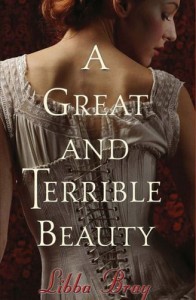
A GREAT AND TERRIBLE BEAUTY by Libba Bray (Simon & Schuster, 2003)
GENRE: Historical Romance w/ paranormal elements
HONORS: NY Times Best-Seller

REVIEW: There were not many options for girls in Victorian society, a fact that becomes obvious to sixteen-year-old Gemma Doyle upon her arrival at the Spence Academy. Initially socially marginalized, Gemma gradually befriends three other girls, even as she begins to experience disturbing visions that place her in the center of a mystery that followed her to London from the streets of India, where her beautiful mother died. A Great and Terrible Beauty reads like part gothic romance and part Victorian pulp with a healthy dose of the paranormal added to spice things up. There's of occult danger and Eastern 'otherness' (both sexy and mildly threatening to a respectable, young Englishwoman) and enough lurid drama to keep any tween / teen gobbling it down. Despite Bray's use of the first person present progressive tense, which gets tiresome at times, A Great and Terrible Beauty is a great deal of fun and surprisingly hard to put down.

OPINION: Libba Bray knows young women. Gemma Doyle is a good heroine, as far as historical fiction goes - she's active, she has agency, she's flawed but passionate. There's a fair amount of conflict and fight in her, which makes her easy for a modern girl to relate to. Gemma's friends are also interesting - the drab, unattractive Ann (who is a cutter, due in large part to her implied depression and alienation), the gorgeous, ornamental Pippa and Felicity, who, of the four, is the most complex.

A Great and Terrible Beauty is fun, dark, a little edgy and sexy in a safely historical way. It's strength lies in the fact that all four of the girls, Gemma, Pippa, Ann, and especially Felicity, want autonomy - they want to valued for themselves and, in their own way, they fight for that privilege in a Victorian world that valued silence in its women and girls. For that alone, A Great and Terrible Beauty is worth reading.

IDEAS: The first in the Gemma Doyle trilogy, A Great and Terrible Beauty is a solid suggestion for girls looking for historical romance and / or drama. Though not necessarily for reluctant readers, the book appeals on a lot of levels, even as Bray explores serious issues like alienation, autonomy and the historical role of women and girls. A nice choice for a free reading title or as a book club selection - it has a lot of discussion points.


August 1, 2012

The Mysteries of Harris Burdick

THE MYSTERIES OF HARRIS BURDICK by Chris Van Allsburg (Houghton Mifflin, 1984)
GENRE: Mystery
HONORS: None

REVIEW: The Mysteries of Harris Burdick is a deceptively simple book based on a deceptively simple premise. The author, award-winning Chris Van Allsburg, in a brief but fantastically contextualizing introduction, purports to be simply reproducing existing material - specifically, a collection of 12 illustrations, titles and first lines from 12 stories by a mysterious author named, Harris Burdick. Supposedly, Burdick left this "sample" of his work with a man named Peter Wenders 30 years before with the idea that if Wenders liked his work, Burdick would return with the rest of the stories and their illustrations. Wenders loved Burdick's work, but the author / illustrator never returned. His illustrations and titles, however, had inspired dozens of stories by the school children that Wenders had shown the work to. Inspired in turn, Van Allsburg states in his introduction that he is now publishing the "collection" in the hopes that it will inspire an even wider audience. The illustrations, as with all of Van Allsburg's art, are haunting and shadowy, hinting at far more than the eye initially sees. The titles and first lines add to the art's mystique, underscoring humor in some images, or, far more often, instilling the  illustrations with an odd, unsettling quality. Though the text is sparse, the visual and creative content is not. The Mysteries of Harris Burdick is full of enough mystery to inspire even the only marginally curious to return to the images again and again.

OPINION: To page casually through The Mysteries of Harris Burdick is to skim the surface of one's own creative potential. Though there is comparatively little text, the imaginative demands of the book's premise make it an excellent read for younger adolescents and a great creative tool / source of inspiration for tweens (and even teens) of all ages. Creepy, funny, unsettling and, indeed, mysterious, The Mysteries of Harris Burdick offers no solution to the problem of the missing manuscript pages or Burdick's disappearance, but it does offer the reader ample opportunity to write the resolution for themselves.

IDEAS: This is a fantastic book to spur discussions in a classroom or book club - how do you interpret the image? The title and first line? All three elements together? Why? It's also a great jumping off point for a creative writing exercise.

July 27, 2012

Jane Eyre

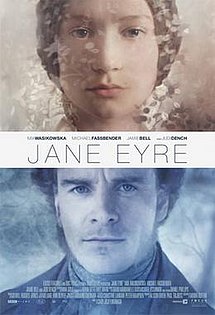
JANE EYRE (Film Adaptation) directed by Cary Joji Fukunaga; Starring Mia Wasikowska and Michael Fassbender. Based on the novel by Charlotte Bronte. (Focus Features, 2011).
GENRE: Romance (Gothic) / Historical
HONORS: LA Film Critic's Assoc. Award for Best Actor (Michael Fassbender - won); National Board of Review Spotlight Award (Michael Fassbender - won); British Independent Film Best Actress Award (Mia Wasikowska - nominated)

REVIEW: Few films capture the tone and feel of a classic as well as Fukunaga's 2011 adaptation of Charlotte Bronte's Jane Eyre. Orphaned Jane goes to work for the mysterious Mr. Rochester as a governess. Before long, she begins to notice odd things in the expansive house - strange noises, sudden fires and unexplained injuries. All the while, Jane becomes increasingly fascinated by her mercurial, challenging employer. But though Jane may look small and pale, she is strong, stronger than anyone else in the house, with a moral and ethical core that renders her integrity stunning in it's unshakability. As in the novel, Wasikowska's Jane knows her own mind, and though she is humble, she knows her own value and will not compromise it. Fassbender's Rochester is a haunted, complicated man, with an edge that wavers just to one side of dangerous. The production itself is lovely with light dreamlike expanses contrasting starkly with the dark, sinister interior of Rochester's home. Taut and intense, Jane Eyre is not a movie to watch while texting or playing an app. Luckily, it's appealing enough that even the most tech savvy tween won't want to.

OPINION: Jane Eyre is a classic with much to offer adolescent readers. However, it's also a title that tends to intimidate or simply not interest modern tweens. This adaptation, though faithfully adapted from Bronte's original, renders the story far more accessible by concentrating primarily on Jane's growth, and on her romance with Rochester, in all it's complicated, gothic glory. Darker than all of the perennially popular Jane Austen's work combined, Jane Eyre is a great suggestion for tweens looking for something a touch more gothic, and Fukunaga's film adaptation is a wonderful way to introduce them to the story and pique their interest.

IDEAS: A must-have for any display featuring the classics, it would also be an unexpected inclusion in a display with a romance or historical theme. Also a nice suggestion for fans of the book and for tweens, particularly girls, interested in classical literature / stories, but unsure where to start.

From the Mixed-Up Files of Mrs. Basil E. Frankweiler

FROM THE MIXED-UP FILES OF MRS. BASIL E. FRANKWEILER by E.L. Konigsburg (Aladdin, 2002)
GENRE: Contemporary
HONORS: Newbery Medal

REVIEW: When 11-year-old Claudia Kincaid decides to leave home, she decides to do so in comfort, so she invites her 9-year-old brother Jamie, (who has saved all his money), to come with her. The two Kincaids follow Claudia's plan not to run away from home, but rather to run to The Metropolitan Museum of Art. Jamie and Claudia take up residence at the museum, hiding in bathrooms and sleeping in antique beds, while displaying a level of intelligence and discipline that is admirable in kids their age. What follows is an adventure that, though quiet by 21st century standards, feels both true and engaging. Claudia and Jamie balance each other, for while Claudia is the planner, Jamie holds the purse-strings, resulting in a dynamic that is one of equals. The mystery of the angel statue, (which leads them to Mrs. Frankweiler's mixed-up files), keeps the narrative moving and gives Claudia and Jamie greater purpose. The result is an engrossing, quick read in which Claudia and Jamie gain a greater understanding of themselves and each other, in addition to discovering the statue's mysterious origins.

OPINION: From the Mixed-Up Files of Mrs. Basil E. Frankweiler has become a modern classic for a reason. Claudia and Jamie are fantastic, complicated characters. They are both flawed, but also remarkable in their ways, making them excellent role-models. Their relationship with each other - one of grudging respect and even admiration - is complex, requiring the reader to think beyond simple, stock brother / sister dynamics. Konisberg keeps the narrative calm, but taut - she has incredible control over her pacing and plot. It really is a must-read.

IDEAS: This is a book that respects it's reader. It's a great introduction to literary mysteries. Also wonderful for kids interested in New York, or those that need to read a Newbery book, but can't find one that interests them. Also a nice addition to a display for books on museums, adventures, art or mysteries. Fantastic book to discuss in class, as well.

July 17, 2012

The House with a Clock in it's Walls

THE HOUSE WITH A CLOCK IN ITS WALLS by John Bellairs; Illustrated by Edward Gorey (!), (Puffin (reissue), 2004)
GENRE: Horror
HONORS: ALA Children's Book of International Interest Award (1973); NY Times Outstanding Books of 1973 Award; Maude Hart Lovelace Award nominee (1982)

REVIEW: The House with a Clock in Its Walls is classic Bellairs - creepy, gothic and appealingly atmospheric. Recently orphaned Lewis Barnavelt goes to live with his Uncle Jonathon in a gorgeous, mysterious house. But all is not as it seems - the house used to be owned by a powerful warlock and the warlock's even more powerful wife, Selenna. Adding to the creepiness is the fact that a clock ticks somewhere deep in the house, but though Jonathon looks for it every night, he has never been able to find it. When a spell goes wrong and Lewis accidentally raises Selenna from the dead, Lewis, Jonathon and Jonathon's neighbor, Florence Zimmermann (a powerful witch), must defeat Selenna and find the clock before it counts down the time to Doomsday. With it's carefully wound tension and foreboding atmosphere, The House with a Clock in the Walls is a delicious read. Plus, one gets the added benefit of enjoying Edward Gorey's illustrations, which perfectly off-set Bellairs's tempered gothic prose.

OPINION: Pleasantly spooky and very well-paced, The House with a Clock in Its Walls may not be as flashy or irreverent as modern horror, but it's understated and tense and oddly charming. It's a quick, fun read and will mostly likely surprise tweens at how hard it is to put down.

IDEAS: A great addition to a Halloween, haunted house or ghost story display, The House with a Clock in Its Walls is also a good suggestion for tweens who prefer their horror to be that of the "creepy, suspenseful" variety rather than blood and guts.

July 13, 2012

Ottoline and the Yellow Cat

OTTOLINE AND THE YELLOW CAT by Chris Riddell (Harper Collins, 2007)
GENRE: Mystery
HONORS: None (Though Riddell has won various honors for his other work)

REVIEW: Ottoline Brown is a singularly impressive young lady - she is a mistress of disguise, solver of complex puzzles, collector extraordinaire and a formidable clever-plan maker. In Ottoline and the Yellow Cat, Ottoline and her best friend, Mr. Munro (a short individual with Cousin Itt hair who hails from a bog in Norway), set out to solve the mystery of disappearing dogs, but instead uncover a series of fiendish cat burglaries perpetrated by the Yellow Cat who is, appropriately enough, a yellow cat. Though the mystery is slight, the solving of it is entertaining to say the least. Ottoline is a thoughtful, independent protagonist, given to a whimsical seriousity, and yet she's also an entirely believable girl (though quite clever and capable, she misses her traveling parents terribly). Fantastic elements add to the story's charm, (a bear visiting from Canada lives in the laundry room of her building, cats and animals behave in human ways and her mom sends lovely postcards that imply that she already knows what Ottoline's been up to). Riddell's generously detailed illustrations fill in Ottoline's world with such charm and humor that one gets the sense that it's quite a fun place to live.

OPINION: Ottoline and the Yellow Cat is a lovely little book. Appropriate for tweens on the young side of adolescence (8-10 years old), it's themes of problem solving and independence are underscored with both visual and verbal charm. Though not for everyone, young fans of mystery and humor will very likely enjoy this quick little read, (and probably wish they had a Mr. Munro of their own).

IDEAS: A great suggestion for reluctant readers. The illustrations really flesh out the text and make the book feel almost like a very wordy comic (though with much more text). The conversational adds to the story's accessibility while the triumph and silliness of the climax more than rewards the reader's efforts.

July 6, 2012

The Charmed Bracelet


THE CHARMED BRACELET (Nancy Drew Graphic Novels #7) by Stefan Petrucha, illustrated by Vaughn Ross (Papercutz, 2006)
GENRE: Graphic Novel
HONORS: None

REVIEW: Unlike some other graphic novel adaptations of classic tween series, the Nancy Drew Girl Detective series introduces the famous amateur sleuth through a series of new mysteries. Unfortunately, they lack the cleverness and interest of either the original series, or the Case Files series from the 80’s and 90’s. Superficially speaking, The Charmed Bracelet is glossy and fast-paced with Nancy wise-cracking her way through a pithy narration. And that’s just the problem – the entire treatment is superficial. Nancy Drew is known for her independence, intelligence and loyalty to her friends – they are the qualities that have made her endure for over nearly 80 years. But this new Nancy has a shallowness to her that is, at best, unappealing. There is no great mind at work here, no serious determination to solve anything. There is just a chest jutting petulance that is odd and strangely off-putting given who this character is. The mystery itself suffers from the same lack of depth, with little to no tension and an extremely pat resolution, and while Ross’s illustrations are attractive for the most part, they are also cluttered, over-busy and difficult to make out, as if they are trying to hide the fact that there really isn’t anything going on below the blurb.

OPINION: Though I can see how the Papercutz graphic novel adaptation will appeal to tweens and perhaps even introduce a new generation to the famous girl detective, it feels like a bit of a waste. While the idea for a graphic novel adaptation is fantastic, the execution leaves much to be desired, and while I wouldn’t keep the series out of a collection, I would do my best to push the novels to interested readers, as well.

IDEAS: Might make a fun addition to a “Nancy Drew Through the Years” display in a library. Could also make for good comparative discussion in a book group or even classroom, with students reading one of the older novels along with the graphic novels and comparing characterizations.

THE AVIARY by Kathleen O’Dell (Knopf, 2011)
GENRE: Mystery 
HONORS: None

REVIEW: Eleven year old Clara lives in the once magnificent Glendoveer mansion, (the family home of a great magician) with her mother, the housekeeper, the magician’s aging widow and an aviary full of exotic birds. The birds respond to Clara as they respond to no one else – squawking, shrieking and eventually talking – as they enlist her help in solving the mystery of the five Glendoveer children, who were murdered fifty years before. It is a mystery that Clara is, unknowingly, at the very heart of.

OPINION: The Aviary is a well paced, if slightly predictable, juvenile take on the Victorian gothic novel. The Glendoveer mansion is a gorgeous crumbling mausoleum, complete with locked rooms and drafty halls, in which Clara is essentially confined due to a “weak heart”. Her connection to Mrs. Glendoveer and the feathered inhabitants of the aviary is both genuine and touching, grounding her in her cloistered world, even as she longs to break free of it. The mystery at the heart of the novel – who killed the five oldest Glendoveer children and kidnapped the youngest – is interesting enough to drive the plot, though it does, at times, verge on the slightly ridiculous as it nears the inevitable climax. Overall, a quick-reading love note to period fiction of the Victorian age with just enough creepiness and mystery to keep young readers on their toes.

IDEAS: Pair with other ghost stories in a library book club or display. It might also be included on a classroom reading list with “Turn of the Screw” or “The Monkey’s Paw”. It’s a fun novel and a good way to introduce tension and mood. 

The Mysterious Benedict Society


MYSTERIOUS BENEDICT SOCIETY by Trenton Lee Stewart (Little Brown, 2007)
GENRE: Mystery
HONORS: New York Times Notable Children’s Book; Booklist Editors’ Choice

REVIEW: The Mysterious Benedict Society is the longish story of four extraordinary misfits who take on evil and challenge themselves in the process. It's a charming book in some ways, and Trenton Lee Stewart certainly knows how to work the conventions (misfit finds other misfits to fit in with, children solving problems no adult can, orphans finding some form of family etc) . That said, I was disappointed. Even though The Mysterious Benedict Society does pretty much everything right, the results are pretty lackluster.

OPINION: While the novel is technically good, it lacks soul, or more specifically, it lacks an understanding of a child's soul. All of Stewart's extraordinary kids - from Reynie Muldoon, the moral compass and natural leader, to George "Sticky" Washington, the genius beset by nervous ticks - feel like an adult's "Very Clever" conception of very clever kids. There's a fug of grown-upness over the whole thing that reads as subtly disingenuous. The other problem is that there’s a huge build-up to what should be a huge show-down, but the final resolution happens off-screen, and it's not even the kids who achieve it. Then, because of serious authorial strong-arming, everyone ends up happy. There's too much machination, and too little imagination. Ultimately, the story fails to meet its own potential.

IDEAS: Despite my reservations, The Mysterious Benedict Society and its sequels have become best sellers, proving their popularity with young readers. With the amount of puzzle solving and problem-tackling embedded in the story, it’s a good way to introduce the power of logic and independent thought to younger tweens.

Death Cloud


DEATH CLOUD by Andrew Lane (Farrar Straus Giroux, 2010)
GENRE: Mystery
HONORS: None

REVIEW: The first in Lane’s new series, Sherlock Holmes: The Legend Begins, Death Cloud follows a fourteen-year-old Sherlock as he embarks on his first investigation – one that begins with two grotesquely swollen corpses and ends with a plot to topple the British Empire. Lane’s command of the material is impressive as he weaves in multiple threads and details that hint at the man the boy will become. The fast-paced, energetic plot is both fun and informative (semaphores and the Crimean War are deftly explained) as Lane pushes the young Holmes through teenage alienation, a first-crush and multiple attempts on his life, at break-neck speed.

OPINION: Death Cloud is a solid book and will no doubt appeal to boys between the ages of 10-14. Lane’s Sherlock is a compellingly flawed protagonist (just as Doyle’s original is). My only complaint is that some of the action felt superfluous – a bit more deduction and bit less scrapping would have given the remaining action more punch. The climactic swordfight also verged on the preposterous with Sherlock battling an evil Baron whose movements are controlled by a series of ropes and pulleys. However, these complaints are small, and the elements in question will no doubt fail to offend Lane’s intended readership.


IDEAS: A wonderful introduction to a classic character, as well as to the concept of deduction and the Victorian era, Death Cloud would be a strong edition to a classroom list of elective titles or a unit on Victorian history.