Showing posts with label tween. Show all posts

October 26, 2012

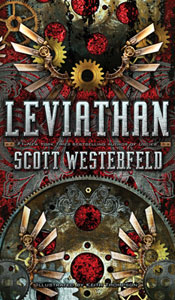
Leviathan

LEVIATHAN by Scott Westerfeld, (Simon Pulse, 2009).
GENRE: Adventure - Steampunk / Alt. History
AGE: 12 and up

Scott Westerfeld's Leviathan, the first book in a planned trilogy, is the sort of old-fashioned adventure novel that you don't see much of anymore. It's the sort of book that would have shared shelf-space with Treasure Island and The Time Machine if it were written 100 years ago, which it couldn't have been, even if Orwell could have conceived of genetic mutations and gene splicing. This is mostly because, for all its harkening back to the days of the "boy's adventure story," Westerfeld's Leviathan is the product of a modern phenomena - the mashed-up landscape of alt. history in all it's steam-powered glory.

The book starts on the night of Archduke Franz Ferdinand's assassination, an event that plunged Europe into the First World War. The Archduke's son, Prince Aleksander, flees for the Swiss border with a handful of trusted retainers in a Cyklops Stormwalker, as massive, humanoid war machine. With that, Westerfeld plunges the reader into an alternative world, one where WWI is fought between Clankers (nations with advanced mechanized technology) and the Darwinists (England and it's allies, who create new species based on Darwin's principles).

Westerfeld develops both sides through alternating chapters. While Alek learns to pilot the Stormwalker and dodge hostile troops, a young woman named Daryn Sharp disguises herself as a boy and joins the British Air Service. Through sheer accident, (her cephalopodic jellyfish - you really just need to read the book - gets caught in a storm), she's rescued by the Leviathan, a massive, living, hydrogen-based airship. As events on the world stage grow tense, the Stormtrooper and the Leviathan make their way to Switzerland, where Alek's Clankers and the Deryn's Darwinists finally meet.

Before you know it, you're fully engaged in the Leviathan's secret mission to Constantinople and the question of how Alek will survive the war without getting assassinated. It's Westerfeld's mastery of real history that makes his alternative history so seemlessly compelling. There is nothing inauthentic about the tension between the Clankers and the Darwinists. The fabric of cultural antipathy is woven so tightly that you never question the possibility of the mechanical and genetic advances that define each society.

And it isn't just the world that fascinates. Deryn and Alek are honestly interesting. Though they both fit certain archetypes, there is nothing of the stock character about either of them. Both are nuanced individuals who grow as a result of the rather extraordinary circumstances they find themselves in. The supporting characters are equally fun, particularly Wildcount Volger, the mastermind behind Alek's escape, and Dr. Nora Barlow, a female "boffin" or genetic engineer who tartly takes all manner of things into her own hands.These adults are quirky, flawed and capable. They leave the young protagonists ample room to move and plenty of agency without descending into the stereotypical uselessness of so many adults in book for teens.

To make a long story short - too late, I know - Leviathan is a shockingly fun read. Get past the first several chapters and you're off. Even without the maps and illustrations (which are jolly good fun), it's nearly impossible not to get sucked into Westerfeld's WWI. Entirely engaging and oddly educational, Leviathan is classic in the best sense of the word.

September 5, 2012

Fallen

FALLEN by Lauren Kate (Delacorte Books for Young Readers, 2009)
GENRE: Paranormal Romance
AGE: 13 and up

Every once and awhile, an extraordinary book comes along, one that breaks new ground, re-envisioning tropes long since tapped dry and changing the landscape of a genre. Fallen is not one of those books. 

Stomping over the ground Stephanie Meyers cleared with Twlight, Fallen is the story of seventeen-year-old Luce, sentenced to reform school after a boy she likes dies in a fire. Less than 24 hours after arriving at Sword & Cross, she is already torn between two preternaturally hot guys - smooth, sweet Cam, and moody, GORGEOUS Daniel (forgive the caps, but it was the only way to communicate the degree to which Luce lingers, in Bella Swan style, on Daniel's rippling perfection). Though Luce herself is anxious, socially weak and easily cowed (not a fantastic role-model), she finds herself in the middle of an enviable love-triangle, but though Cam is tempting, she is overwhelmed by her attraction to Daniel, who is, of course, beyond hostile so that he might protect Luce from their epically shared past.

Hindered dramatically by an enormous amount of interruptive, repetitious description, (most readers don't need multiple reminders that something happened just pages before), Fallen is much longer than the slender narrative requires. Though the concept compelling enough, one gets the sense that Kate didn't make the most of her material - there is very little in Fallen that doesn't directly mirror some aspect of Twilight, from lingering love-sick descriptions to the fact that Daniel, once his love is declared, makes huge sweeping decisions for Luce while she gratefully accepts. Though the climax is action-packed and exciting, the romance between Daniel and Luce never takes off - a frustration given the amount of time Kate spends trying to convince readers of it's gravity. Many loose ends, such as why angels are at a reform school to begin with, are left hanging, presumably to be answered in the sequel.

All of that said, Fallen does move, and though there are a shocking number of eye-rolling moments, the basic elements work well enough to give the story a certain appeal. Bella and Edward... pardon me - Luce and Daniel... might be little more than cardboard on the page, but the pages do turn, thanks mostly to the unanswered questions scattered throughout the book. Fallen, though weak in its own right, may prove to be the start of a strong, compelling series. If nothing else, its popularity is testament to the fact that people are reading and loving it, if only to get a Twlight-esque fix.


August 20, 2012

The Adventures of Sir Balin the Ill-Fated

THE ADVENTURES OF SIR BALIN THE ILL-FATED by Gerald Morris; Illustrated by Aaron Renier, (Houghton Mifflin, 2012)
GENRE: Adventure
AGE: 9 and up

Oh Sir Balin, you carry the heavy weight of destiny upon your noble shoulders. But can and should you trust the Old Woman of the Indeterminate Mountain's prophecy, especially when the Prophetess Guild's standards have been flagging of late? How much of destiny is predetermined? How much of your fate is really yours to control?

Gerald Morris, Arthurian scholar and author of The Squire's Tale series for younger readers, peppers his newest installment of the popular Knight's Tale series, The Adventures of Sir Balin the Ill-Fated, with these questions, but never to the detriment of good, irreverent fun. When an old woman makes a prophesy over Balin's cradle that he will become known as the noblest knight in the land, but that misfortune will follow in his wake, it colors his future, so much so that the prophecy becomes self-fulfilling. Then Annalise, The Questing Lady, and Balin's older brother, Sir Balan (their mother wanted a matched set), help Sir Balin see past the seemingly air-tight pattern of unfortunate events that comprise his knighthood to the possibility that his destiny is his to make.

Though the tale of Sir Balin has its roots traditional Arthurian tales, Morris's irreverent voice and colloquial dialogue bring the story galloping into the 21st century. With details that would be at home in a Monty Python sketch (there's a bit where various knights suggest ways of releasing a magical sword from it's scabbard - jiggling the hilt and bacon grease figure in), the general tone of silly fun is an excellent balance for Morris's age-appropriate ruminations on the nature of fate. Additionally leavened by Aaron Renier's clobberingly comedic illustrations, The Adventures of Sir Balin the Ill-Fated is a quick read and a serious, but not too serious, winner.

August 13, 2012

Bella at Midnight

BELLA AT MIDNIGHT by Diane Stanley (Harper Collins, 2006)
GENRE: Historical Romance - Fairy Tale
AGE: 10 and up

Firmly constructed on Cinderella's framework, Diane Stanley nevertheless manages to bring a fresh approach to the classic tale with her novel, Bella at Midnight. In this version, the heroine, Bella, though a knight's daughter, is fostered to a family of peasants, who lovingly raise her until her thirteenth year. When her father recalls her home, she is little prepared for her new life as a lady and the coldness of her father's home. However, Bella is kind and spirited. When she learns of a plot that threatens Prince Julian, her childhood friend, she embarks on a quest to save him aided only by her godmother, an enchanted ring and a pair of lovely glass slippers. Bella's success in the endeavor, however, has less to do with magical objects, and everything to do with the strength of her character.

Stanley's take on this familiar tale is distinctly historical in nature. Although the two warring countries are fictional, they bear great similarities to standard, medieval European societies, and though magic is not completely absent from the plot (the enchanted ring does reassure at critical moments), enchantments are, for the most part, underplayed. Stanley's narrative structure is one of alternating viewpoints, and though Bella receives more chapters than any other character, her point of view is most certainly not the only one (Prince Julian, her godmother, her foster mother and even her resentful, ill-treated stepmother and mute stepsister receive chapters of their own). For the most part, this convention works, lending the novel as scope that it otherwise would not have. Unfortunately, it also suffers from muted tensions and dulled focus because of it (nearly 80 pages are told from the stepmother's and stepsisters' points of view, lending them an excellent, interesting backstory but diluting the main thrust of the plot). That said, Stanley navigates her material deliberately, giving the reader a climax that elegantly ties up loose ends. The romance, though sweet, is underdeveloped and slightly tepid, though these very qualities make it appropriate for tweens not yet prepared for more intense relationships. Overall, it is an interesting alternative to more traditional Cinderellas, one that I wouldn't hesitate to recommend for it's discussion value alone.


August 9, 2012

When You Reach Me

WHEN YOU REACH ME by Rebecca Stead (Yearling, 2009)
GENRE: Science Fiction / Mystery - Literary
HONORS: Newbery Medal; Boston Globe - Horn Book Award for Fiction; many others, including multiple best-seller and best-of-the-year lists

REVIEW: When You Reach Me begins with Miranda, a sixth grader in 1978, and a postcard informing her mother that she is to be a contestant on The $20,000 Pyramid. Miranda addresses the reader directly as she recounts the events of the year, from the time she receives the first of a series of unsettling notes, to the end of the year, when a death occurs and she slowly puzzles out the mystery of who has been leaving her the notes and why. Stead leans somewhat heavily on Miranda's favorite book, Madeleine L'Engle's A Wrinkle in Time, using this classic to seed the notion of non-linear time and travel between dimensions, (the material is strong enough on it's own that a few simple allusions would have sufficed). That said, the way Stead slowly reveals the purpose behind the notes and their sender is a thing of beauty, intricate and controlled. With a climax that is tremendously effecting and a denouement that stays with you long after the book is over, When You Reach Me is a beautifully crafted book, one that will challenge it's readers as well as reward.

OPINION: When You Reach Me is an unexpected puzzle-box. Miranda is a trustworthy narrator, guiding the reader faithfully through the story's non-linear, threads. Though the book requires a certain amount of maturity and patience on the part of the reader, it is quietly profound - the sort of book you remember reading decades later. With it's blend of L'Engle inspired science fiction and social realism, it is impressive, relevant and entirely deserving of the accolades it's received.

IDEAS: A great book for fans of A Wrinkle in Time, (the novel reads, in some ways, as a love letter to L'Engle's classic work). One might recommend reading both, back to back, and then comparing the two. Which elements of A Wrinkle in Time appear prominently in When You Reach Me? Would the novel be as strong without it's foundational allusions to L'Engle's classic? Why do you think Stead chose to weave it so strongly into this novel? Why is it important that it is Miranda's favorite book?

The Dark is Rising

THE DARK IS RISING by Susan Cooper (Scholastic, 1974)
GENRE: Fantasy
HONORS: Newbery Honor (1974)

REVIEW: On his eleventh birthday, Will Stanton, the seventh son of a seventh son, finds out that he is an Old One, an ancient race of beings who keep the Dark at bay in the name of the Light. No sooner does Will discover that his true purpose as the Seeker, the Old One destined to unite the Things of Power, than he is plunged into the battle between Light and Dark, Good and Evil. The story follows Will as he collects the Six Signs to form the Circle, pursued by the Black Rider, an agent of Darkness, and added by Merriman Lyon, The Lady and other Old Ones who have been fighting the Dark for centuries. Peppered with elements from Celtic myth and Arthurian legend, The Dark is Rising (the second in The Dark is Rising Sequence) is a layered and thoughtful combination of old myth, fantasy and contemporary suspense. It is a book that rewards focus and attention, even while giving it's readers an entertaining, satisfying ride.

OPINION: Beautifully written and briskly paced, The Dark is Rising, smacks of literary quality even as its premise is rooted firmly in the fantasy tradition. Will is a compelling hero - mature, smart, savvy and slightly flawed. He is a kid that most readers would want to be, or at least be friends with. His growth over the course of the novel, spurred primarily through his expanding view of the world, is one that many young readers will identify with, even if they themselves are unlikely to battle the Dark or call on the Wild Hunt for assistance. A tween fantasy classic for a reason, it is arguably the strongest title in The Dark is Rising Sequence, one that stands firmly on it's own.

IDEAS: A wonderful tie in to units on world mythology, particularly Celtic mythology and Arthurian legend. Also a good way to introduce theme, symbolism and allusion. A great recommendation to kids who need to read a Newbery book, but who are more interested in genre fiction than realism. This book has stood the test of time and still feels urgent and contemporary.

August 7, 2012

Among the Hidden

AMONG THE HIDDEN by Margaret Peterson Haddix (Simon & Schuster, 2008)
GENRE: Science Fiction - Dystopia
HONORS: None

REVIEW: In a society in which the number of children per family is limited to two, Luke Garner is a third child, a shadowchild, a child whose very existence is illegal. When the forest surrounding his parents' farm is felled to make way for a housing development for the society's ruling class, Luke must stay hidden, never leaving the house and, eventually, never leaving his attic room. But Luke does leave, and in the process he meets Jen, another third child, the daughter of a rich and powerful Baron, with justice, equality and revolution on her mind. Over the course of their friendship, Luke begins to understand the limitations of his life and learn the courage to hope for more. Haddix's totalitarian dystopia borrows heavily from China's One Child Act, (according to the author, it helped inspire the concept of the book). Though underdeveloped at times (there are questions about the Government's true reach and the society's Population Police that, if answered, would have heighten tensions), Among the Hidden is a compellingly fast read that inspires questions and thought in the reader.

OPINION: Though not as meaty or deeply conceived as the Panem of Suzanne Collins's Hunger Games trilogy, Among the Hidden has much to offer the fans of dystopic fiction. Often overwhelmed and under-informed, Luke is a sympathetic protagonist, ultimately overcoming the hesitation that twelve-years of hiding has bred in him. His relationships - to his mother, to his own frustration, to his doomed friend, Jen - make his story easy to invest in. Overall, a thought-provoking read that will leave reader's curious enough to continue with the rest of the series.

IDEAS: A great suggestion for readers a little too young for The Hunger Games but interested in stories set in dystopias (the fact that it's part of a series means there's a lot to get hooked on). Also a nice, less expected choice for a science fiction display or science fiction book club. The fact that the protagonist is a boy will also help it appeal to male tweens.

August 6, 2012

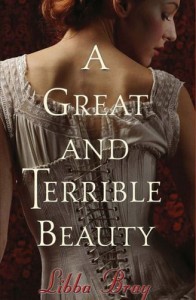
A Great and Terrible Beauty

A GREAT AND TERRIBLE BEAUTY by Libba Bray (Simon & Schuster, 2003)
GENRE: Historical Romance w/ paranormal elements
HONORS: NY Times Best-Seller

REVIEW: There were not many options for girls in Victorian society, a fact that becomes obvious to sixteen-year-old Gemma Doyle upon her arrival at the Spence Academy. Initially socially marginalized, Gemma gradually befriends three other girls, even as she begins to experience disturbing visions that place her in the center of a mystery that followed her to London from the streets of India, where her beautiful mother died. A Great and Terrible Beauty reads like part gothic romance and part Victorian pulp with a healthy dose of the paranormal added to spice things up. There's of occult danger and Eastern 'otherness' (both sexy and mildly threatening to a respectable, young Englishwoman) and enough lurid drama to keep any tween / teen gobbling it down. Despite Bray's use of the first person present progressive tense, which gets tiresome at times, A Great and Terrible Beauty is a great deal of fun and surprisingly hard to put down.

OPINION: Libba Bray knows young women. Gemma Doyle is a good heroine, as far as historical fiction goes - she's active, she has agency, she's flawed but passionate. There's a fair amount of conflict and fight in her, which makes her easy for a modern girl to relate to. Gemma's friends are also interesting - the drab, unattractive Ann (who is a cutter, due in large part to her implied depression and alienation), the gorgeous, ornamental Pippa and Felicity, who, of the four, is the most complex.

A Great and Terrible Beauty is fun, dark, a little edgy and sexy in a safely historical way. It's strength lies in the fact that all four of the girls, Gemma, Pippa, Ann, and especially Felicity, want autonomy - they want to valued for themselves and, in their own way, they fight for that privilege in a Victorian world that valued silence in its women and girls. For that alone, A Great and Terrible Beauty is worth reading.

IDEAS: The first in the Gemma Doyle trilogy, A Great and Terrible Beauty is a solid suggestion for girls looking for historical romance and / or drama. Though not necessarily for reluctant readers, the book appeals on a lot of levels, even as Bray explores serious issues like alienation, autonomy and the historical role of women and girls. A nice choice for a free reading title or as a book club selection - it has a lot of discussion points.


August 3, 2012

My Depression: A Picture Book

MY DEPRESSION: A Picture Book by Elizabeth Swados (Hyperion, 2005)
GENRE: Nonfiction - Autobiography
HONORS: None

REVIEW: Depression is a difficult topic and there are very few books written for tweens on the subject. Though My Depression: A Picture Book is written by an adult with an adult audience in mind, there are many aspects of her story that will resonate with tweens struggling to understand the condition. Swados writes about depression frankly, as one who has struggled with the condition since she herself was an adolescent. Her illustrations are raw, evocative and gently humorous, underscoring her minimal text and the emotional difficulties of traveling through a depressive episode and successfully reaching the other side. Swados deals with everything from onset and coping mechanisms to social difficulties and treatment options without falling into the trap of recommending a cure - lots of things work, you just have to be patient and find what works for you. With an absolute lack of judgement, Swados delivers an encouraging message from a person with first hand experience.

OPINION: Certain topics in Swados's story may be inappropriate for younger adolescents (she briefly addresses suicide - though in such as way that emphasizes the many reasons she chose not to. Also mentioned are smoking and drinking as initial coping mechanisms). As such, it's a book that should be recommended and read with care. For older adolescents, particularly those who can read the book and discuss it with a trusted adult, My Depression: A Picture Book is an enlightening, encouraging and nourishing read, filled with sensitivity, frankness and the gentle humor of a person who has been there and made it through.

IDEAS: Unless dealing with a tween or teen that you know quite well,  this My Depression:  A Picture Book is best recommended to parents / caregivers by librarians (counselors and professionals often recommend it directly, but for nonprofessionals, caution is best). Though blatantly encouraging (the ability to draw strength from depression is repeatedly underscored, while Swados's positive attitude communicates strong authorial support), for older adolescents, it is still a book ideally read with the support of someone else.

Lilly and the Pirates

LILLY AND THE PIRATES by Phyllis Root; Illustrated by Rob Shepperson (Boyds Mills Press, 2010)
GENRE: Adventure
HONORS: None

REVIEW: Lilly worries. She worries a lot. What if a yodeler causes an avalanche? What if her parents get swept out to sea? She worries to keep disaster at bay, writing down her concerns in her worry book and hoping for the best - until her scientist parents go on an expedition to the Shipwreck Islands to study the frangipani fruit fly, leaving Lilly behind. When their boat wrecks on the reefs, it is up to Lilly to rescue them by overcoming her fear of the sea and finding the hidden island, all while outsmarting a bunch of pirates. She even learns not to worry - at least, not quite so much. Root's lean, well-paced chapter book is exciting and gently silly (the scholar pirate swears by shouting E=MC2!), while Lilly herself is an honest of an anxious child. Her preventative worrying will be familiar to any young worrier, and though slightly over the top, Root treats her with understanding and respect, all while allowing Lilly to overcome her worries in situationally appropriate, intuitive ways. Encouraging without being preachy, Lilly and the Pirates is a hidden gem - a real buried treasure!

OPINION: Lilly and the Pirates is a quick and extremely charming read. Easy to overlook (it deals with classic themes in classic ways), it still manages to feel fresh and modern. Shepperson's illustrations are great (especially the one of Lilly underwater, debating whether or not to let her worry book go so she can float to the surface), lending Root's tale an air of jaunty, piratical fun. Though it may require some blatant pushing at first, it's popularity is likely to grow through sheer word of mouth.

IDEAS: An unexpected though excellent addition to a pirate, adventure or even humor display. Even more directly, however, it's a wonderful recommendation for kids prone to worry or anxiety who are looking for a genuinely fun and encouraging adventure. In addition, it's a great book for younger adolescents or even grade school kids to read with their parents - especially given the lovely relationship between Lilly and her parents paired with her ability to strike out on her own independently at the end of the book while still loving them.

August 2, 2012

Nicola and the Viscount

NICOLA AND THE VISCOUNT by Meg Cabot (Harper Teen, 2004)
GENRE: Romance - Historical
HONORS: None

REVIEW: Beguiling 16-year-old orphan, Nicola Sparks, is everything a young marriageable young lady in Regency England should be - lovely, charming and just a bit silly. When the young Viscount Farnsworth, (whom Nicola thinks of habitually as "the God"), suddenly proposes marriage, she immediately accepts. The rest of the book is taken up with Nicola's slow realization that her intended, though handsome and superficially charming, may not be all he seems. Cabot treads well-worn ground here, so much so that Nicola and the Viscount, which is obviously intended to read like Jane Austen lite, reads a bit more like a junior Harlequin Regency romance. Not that there's anything wrong with this. Though formulaic in the extreme, the story still follows a winning, time-tested formula, with the heroine caught between two men in a romance peppered with social witticisms. Though Cabot's prose feels awkward, as if she's wearing a dress that doesn't quite fit, the tone is perfect for a light period romance. Even though it's obvious where the story is going from the start, the journey is fun for all it's romantically silly glory.

OPINION: Nicola and the Viscount is a nice alternative to the darker, more fraught passions of paranormal romance. Completely devoid of vampires, demons, werewolves, fallen angels or even run-of-the-mill seriousness, it's a classic sort of romance driven by just enough drama to keep the pages turning. All of the characters, though typical of Regency romances, are charming and fun. The overall effect is of a light little bon bon that's ever-so-easy to gobble up.

IDEAS: With romance that springs from interpersonal tensions rather than blatant physical desire, this is a great read for girls who are ready for more than holding hands at a dance, but not quite ready for Twilight. Also a good suggestion for fans of the film versions of Pride and Prejudice or Emma.

The Book of Time

THE BOOK OF TIME by Guillaume Prevost (Scholastic, 2006)
GENRE: Science Fiction - Time Travel
HONORS: None

REVIEW: Sam Faulkner, 14, has had a difficult couple of years. After his mother died, his father, Allan, sold their house and opened an antique bookstore in a run-down house. Just when things start to become normal again, Allan disappears. But when Sam goes to look for him, he finds a stone in the basement that enables him to time travel - to a monastery under Viking attack, to a French battlefield in WWI and a temple in Ancient Egypt. The more Sam travels, the more he understands, until, with the help of his cousin, he deduces that his father is being held captive by Vlad Tepes in 15th century Translyvania. Unforunately, that's when the book ends. Though fast-paced and terrifically interesting, most of The Book of Time reads as if the author is simply laying groundwork for the next book, an impression confirmed by the abrupt cliff-hanger ending. This is unfortunate because the story is well-paced with a genuinely likable protagonist and tons of interesting, accessible historical material. For all that, it fails to work as a cohesive whole - in trying to establish a narrative arc for the series, the author failed to establish an arc for the book.

OPINION: For all it's structural flaws, The Book of Time is still a worthwhile read. The pacing is great - the author hardly allows Sam, or the reader, time to take a breath before launching into a new dangers. Even Sam's present day is full of threatening bullies and his aunt's suspicious new boyfriend. With this much adventure, action and suspense, (not to mention the highest of stakes - his father is being held captive by Vlad the Impaler), The Book of Time is likely to please.

IDEAS: This is fun, accessible science-fiction for kids who don't like science fiction. It's also a fantastic book for classroom use as Prevost (who teaches history) lines each adventure with serious doses of historical interest and detail. The Scholastic edition also includes a comprehensive list of discussion questions, making it a truly educational volume, even though it feels like nothing more than fun when you're reading it.

I'd Tell You I Love You, But Then I'd Have to Kill You

I'D TELL YOU I LOVE YOU, BUT THEN I'D HAVE TO KILL YOU by Ally Carter (Hyperion, 2007)
GENRE: Romance - Contemporary
HONORS: None

REVIEW: Fifteen year old Cammie Morgan goes to the Gallagher Academy for Exceptional Young Women, a boarding school that trains future spies. Even there, she is truly special, with an ex-CIA mom (who is also headmistress) and a dad killed on assignment, Cammie is a natural spy. But she's also a girl, as the author is quick to point out. Curious about life beyond self-defense and covert ops, Cammie falls in love with Josh, a local boy, who has no idea who, or what, she is. Hijinks ensue as Cammie uses her skills to keep her worlds from colliding, which, of course, they inevitably do. The 1st person narration is perky and cute, almost to a fault, as Cammie confides in the reader through plentiful, though eventually tiresome asides. The world of the Gallagher Academy is completely over-the-top, though if you suspend the right amount of disbelief, the ridiculousness is almost fun. Unfortunately, the stakes never get high enough for all the drama to seem warranted. There are no real bad guys and no lives at stake. For a novel populated by supposedly hard-core spies, this is a problem. As a result, Cammie's real-girl struggles fall a bit flat in this elevated, fantasy world.

OPINION: Carter keeps a tight focus on the audience I Would Tell You I Love You, But Then I'd Have to Kill You is aimed at. Though it ultimately fails to live up to it's potential, tweens and teens will very likely devour this blend of everyday romance and girl-power spy-fantasy. Cammie is sympathetic and generally likable and, though not the most interesting person in this motley cast of characters, she is the easiest to relate to.

IDEAS: A good suggestion for girls who want their romance with a little humor and a bit of action. The importance of female friendships is also a nice touch and will likely appeal to a wide variety of girls.

August 1, 2012

The Mysteries of Harris Burdick

THE MYSTERIES OF HARRIS BURDICK by Chris Van Allsburg (Houghton Mifflin, 1984)
GENRE: Mystery
HONORS: None

REVIEW: The Mysteries of Harris Burdick is a deceptively simple book based on a deceptively simple premise. The author, award-winning Chris Van Allsburg, in a brief but fantastically contextualizing introduction, purports to be simply reproducing existing material - specifically, a collection of 12 illustrations, titles and first lines from 12 stories by a mysterious author named, Harris Burdick. Supposedly, Burdick left this "sample" of his work with a man named Peter Wenders 30 years before with the idea that if Wenders liked his work, Burdick would return with the rest of the stories and their illustrations. Wenders loved Burdick's work, but the author / illustrator never returned. His illustrations and titles, however, had inspired dozens of stories by the school children that Wenders had shown the work to. Inspired in turn, Van Allsburg states in his introduction that he is now publishing the "collection" in the hopes that it will inspire an even wider audience. The illustrations, as with all of Van Allsburg's art, are haunting and shadowy, hinting at far more than the eye initially sees. The titles and first lines add to the art's mystique, underscoring humor in some images, or, far more often, instilling the  illustrations with an odd, unsettling quality. Though the text is sparse, the visual and creative content is not. The Mysteries of Harris Burdick is full of enough mystery to inspire even the only marginally curious to return to the images again and again.

OPINION: To page casually through The Mysteries of Harris Burdick is to skim the surface of one's own creative potential. Though there is comparatively little text, the imaginative demands of the book's premise make it an excellent read for younger adolescents and a great creative tool / source of inspiration for tweens (and even teens) of all ages. Creepy, funny, unsettling and, indeed, mysterious, The Mysteries of Harris Burdick offers no solution to the problem of the missing manuscript pages or Burdick's disappearance, but it does offer the reader ample opportunity to write the resolution for themselves.

IDEAS: This is a fantastic book to spur discussions in a classroom or book club - how do you interpret the image? The title and first line? All three elements together? Why? It's also a great jumping off point for a creative writing exercise.

July 31, 2012

The Hitchhiker's Guide to the Galaxy

THE HITCHHIKER'S GUIDE TO THE GALAXY by Douglas Adams (Crown, 2004 - Anniversary Edition)
GENRE: Science Fiction
HONORS: Multiple Best-Seller Lists Over Multiple Decades

REVIEW: One morning, Arthur Dent wakes up to find a  construction crew with a bulldozer outside of his house - the location for a new interstate. It is also the day that Earth has been scheduled for demolition to make way for a new intergalactic highway. Luckily, Arthur's friend, Ford Prefect, is not what he seems. He is a Hitchhiker and he knows where his towel is. Just as the Earth explodes, Ford, with Arthur in tow, snags a ride from a passing ship, escaping the Earth's destruction and landing them in a series of comic misadventures across the galaxy. With a cast of characters that have come to personify the ridiculous (in a really funny kind of way), Adams's now classic adventure is true must-read, particularly junior high boys - not to discriminate against junior high girls, it's just that, even thirty years later, adolescent males seem to take special joy in quoting any number of Adamsisms at length. Expertly paced, tonally perfect and truly quirky, The Hitchhiker's Guide to the Galaxy may be science-fiction lite, but it's still must-read science fiction, even at the risk of exposure to Vogon poetry.

OPINION: The Hitchhiker's Guide to the Galaxy is the kind of funny that relies on timing, word play and healthy dose of the ridiculous. It swings along and before you know it, you're halfway through and ignoring chores. Though not for readers that take themselves terribly seriously, most adolescents will enjoy Arthur Dent's slow inculcation into the Hitchhiking way of life. If a library doesn't have this book, there is very likely something wrong...

IDEAS: A great suggestion for parents looking a book they can read with their tween. A lot of parents will remember reading it when they were adolescents and would probably share it, with great enthusiasm, with their own kids. The humor has more than held up.

The Girl Who Circumnavigated Fairyland in a Ship of Her Own Making

THE GIRL WHO CIRCUMNAVIGATED FAIRYLAND IN A SHIP OF HER OWN MAKING by Catherynne M. Valente; Illustrated by Ana Juan (Square Fish, 2012)
GENRE: Fantasy / Fairytale
HONORS: Andre Norton Award

REVIEW: While washing pink and yellow teacups in her kitchen sink, September is offered the chance to ride the Leopard of Gentle Breezes to Fairyland with the Green Wind, a natty and mischievous individual. September, who is not only tired of washing teacups, but of Nebraska and of normal life in general, accepts, embarking on an adventure that takes her to Pandemonium, (the capital of Fairyland) and the home of the evil Marquess, to the Autumn territories where it is always Halloween, around the whole of Fairyland in her titular ship and finally to the Lonely Jail, where all is explained. Along the way, she meets a girl made of soap, a Wyverary (a Wyvern that is half  library), witches, pookahs, alchemists, velocipedes, a boy named Saturday and her own Death. While drawing liberally on motifs and themes from multiple fairy tales, Valente manages to construct a story that is both linguistically beautiful and completely unique. September's journey lands her in unexpected and oddly familiar places, while the climax, though (in hindsight) is perfectly, constructed and inevitable, still manages to surprise. A gorgeous and truly special book, The Girl Who Circumnavigated Fairyland in a Ship of Her Own Making is a lovely, jewel of a thing, full of enough adventure and emotional resonance to have readers gobbling it up like fairy food.

OPINION: This is, so far, my favorite book of the semester. Valente's narrative voice is playful and sure, drawsing on old-fashioned language and conceits (such as asides to the reader) that in her hands feels fresh and new. Everything about September's story vibrates with energy and color, but what makes it stand out, particularly, is the emotional depth operating beneath the visual and linguistic loveliness. Themes of loneliness, fear and regret play out gracefully to the end, making The Girl Who Circumnavigated Fairyland in a Ship of Her Own Making much more than just a charming face.

IDEAS: A good suggestion for slightly older tweens with the ability to focus on language. While not a difficult read, it does require a bit of focus and maturity from the reader. It would be especially fun for tweens who enjoy fairy tales and classics like Alice's Adventures in Wonderland as Valente refers to many of them thematically and stylistically throughout. Also a wonderful choice for a library or school book club, where an adult could help lead discussions on any number of possible topics.

The Mummy's Mother

THE MUMMY'S MOTHER by Tony Johnston (Blue Sky Press, 2003)
GENRE: Adventure / Humor
HONORS: None

REVIEW: Ramoses is a 4, 010 year old mummy (4, 010 because he was 10 years old when he was mummified 4,000 years ago). For all that time, he and his mother, the Queen, have been tucked quietly in their tomb, waiting for the Afterlife, until one day, nefarious thieves steal his mother's mummy away. Though young, inexperienced and a bit physically fragile (one good thump could crumble his ancient bones), Ramoses heads off in pursuit, undertaking a journey that leads him through the desert on a cranky camel, to a ship where he makes friends and plays ping-pong and finally to New York, where his mother is being displayed in a museum. Ramoses is a sweet and earnest protagonist, whose vulnerabilities (both emotional and physical) are nicely balanced by his bravery and his ability to rise to every occasion. Johnston keeps things moving without unduly rushing the narrative. The result is a well-paced little story that lingers just long enough on each of Ramoses's adventures for humor or tension to bloom, without interfering with the pace.

OPINION: The Mummy's Mother makes up in humor and pacing for what it lacks in depth. Still, given that it is aimed at younger adolescents, a slight lack of depth could be considered a plus. It is especially humorous that Ramoses, who looks like a typical mummy, never arouses the suspicion of adults, most of whom assume he is a normal boy wearing bandages for some reason. This fun and funny suspension of disbelief contributes greatly to the book's charm. As an added benefit, Johnston weaves in a lot of aspects of Ancient Egyptian history and mythology, which will likely pique the interest of young readers and perhaps prompt them to learn more.

IDEAS: A great suggestion to younger tweens interested in Ancient Egypt or quick adventures with a gentle dose of humor. Also a nice supplementary reading for classrooms who are doing a unit on world mythology as the names and functions of Egyptian gods are featured throughout.

July 27, 2012

The Giver

THE GIVER by Lois Lowry (Houghton Mifflin, 1993)
GENRE: Science Fiction - Dystopic
HONORS: Newbery Award

REVIEW: Jonas lives in a community ruled by "Sameness". People are assigned jobs and spouses, they apply to have children (a maximum of one boy and one girl, dispensed when the "new child" is 1 year old). It is a society that doesn't know war or pain or hunger, but they also cannot love. There is no collective memory. All of the community's memories reside in The Receiver, a person of great honor, and Jonas is selected to replace him. As the old Receiver becomes The Giver, passing memories of joy and pain into the boy, Jonas faces the painful isolation of awareness. He alone knows about colors and snow and war and love. Ultimately, Jonas must decide whether to stay in a community that becomes increasingly horrific in his eyes, or to risk the wilds "Els subtle ewhere"for a chance at an honest life. With a masterful, light touch, Lowry constructs a world that grows increasingly unsettling over course of this short book, dispensing knowledge more through implication than stated fact. Jonas journey of awareness is painful and inevitable, and the choice he ultimately makes is the perfect criticism of a society based on rigid homogeneity.

OPINION: The Giver is a subtly overwhelming book. Lowry blends the tender (the naming ceremony) with the creepy ("comfort objects"; the "Releasing Room") to paint a picture of life in a society that, though safe, is hardly a life at all. Jonah is a brave protagonist who grows rapidly over the course of the book, gaining wisdom through the memories The Giver transfers to him. As a meditation on societal control, "sameness", the importance of shared history and the nature of love, The Giver is, quite possibly, the perfect adolescent novel. It most certainly contains a perfect dystopia, if such a thing could exist.

IDEAS: Used in middle school and junior high English classes everywhere, The Giver is made to be discussed, with serious themes and issues woven carefully through its straightforward narrative. A great suggestion for tween fans of dystopic fiction and science fiction, it's also a wonderful introduction for young people not yet familiar with the genre.

The 13 Clocks

THE 13 CLOCKS by James Thurber; Illustrated by Marc Simont; Introduction by Neil Gaiman (New York Review Children's Collection, 1950)
GENRE: Fantasy / Humor / Fairy Tale
HONORS: None

REVIEW: High up in a castle, an evil Duke (who is so cold that even the hands of his 13 clocks have frozen at "ten minutes to five") lives with his beautiful niece, Princess Seralinda. Loathe to lose her to marriage, the Duke devises all manner of impossible quests for the suitors who come knocking at his castle door. It is only when Xingu, a "knight who is not a knight" learns of the lovely Seralinda and undertakes a quest to win her hand in marriage, that the Duke overthrown and justice served. Thoroughly intelligent and charmingly ridiculous, The 13 Clocks takes full advantage of an entire host of fairy tales. Though it won't appeal to every reader, for those who enjoy a touch of the ridiculous, light romance, fairy tales or complex puns it is a wonderful, surprising read.

OPINION: The 13 Clocks is a quick read that works on several levels. For younger adolescents, the story alone, with it's fabulous villain, lovely princess and intrepid knight, is a fun romp through territory littered with familiar fairy tale motifs. For older tweens, or those who read more closely, Thurber's word play and internal pacing give The 13 Clocks and extra degree of interest. One could read this book several times and still not catch every double-meaning or subtle joke, making it a subtly ridiculous, utterly engrossing read for a wide range of tweens. Neil Gaiman's introduction adds a nice bit of context for the modern reader, as well.

IDEAS: Great for fans of Roald Dahl's satirical style and work play. Also an unexpected suggestion for fans of fairy tales and knightly romance, particularly for those who enjoy a dash of humor and a touch of the ridiculous. In the classroom, a nice vehicle for discussion about folklore and fairy tale motifs and themes.

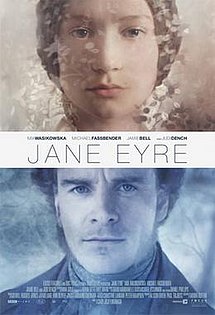
Jane Eyre

JANE EYRE (Film Adaptation) directed by Cary Joji Fukunaga; Starring Mia Wasikowska and Michael Fassbender. Based on the novel by Charlotte Bronte. (Focus Features, 2011).
GENRE: Romance (Gothic) / Historical
HONORS: LA Film Critic's Assoc. Award for Best Actor (Michael Fassbender - won); National Board of Review Spotlight Award (Michael Fassbender - won); British Independent Film Best Actress Award (Mia Wasikowska - nominated)

REVIEW: Few films capture the tone and feel of a classic as well as Fukunaga's 2011 adaptation of Charlotte Bronte's Jane Eyre. Orphaned Jane goes to work for the mysterious Mr. Rochester as a governess. Before long, she begins to notice odd things in the expansive house - strange noises, sudden fires and unexplained injuries. All the while, Jane becomes increasingly fascinated by her mercurial, challenging employer. But though Jane may look small and pale, she is strong, stronger than anyone else in the house, with a moral and ethical core that renders her integrity stunning in it's unshakability. As in the novel, Wasikowska's Jane knows her own mind, and though she is humble, she knows her own value and will not compromise it. Fassbender's Rochester is a haunted, complicated man, with an edge that wavers just to one side of dangerous. The production itself is lovely with light dreamlike expanses contrasting starkly with the dark, sinister interior of Rochester's home. Taut and intense, Jane Eyre is not a movie to watch while texting or playing an app. Luckily, it's appealing enough that even the most tech savvy tween won't want to.

OPINION: Jane Eyre is a classic with much to offer adolescent readers. However, it's also a title that tends to intimidate or simply not interest modern tweens. This adaptation, though faithfully adapted from Bronte's original, renders the story far more accessible by concentrating primarily on Jane's growth, and on her romance with Rochester, in all it's complicated, gothic glory. Darker than all of the perennially popular Jane Austen's work combined, Jane Eyre is a great suggestion for tweens looking for something a touch more gothic, and Fukunaga's film adaptation is a wonderful way to introduce them to the story and pique their interest.

IDEAS: A must-have for any display featuring the classics, it would also be an unexpected inclusion in a display with a romance or historical theme. Also a nice suggestion for fans of the book and for tweens, particularly girls, interested in classical literature / stories, but unsure where to start.