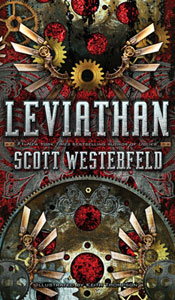
LEVIATHAN by Scott Westerfeld, (Simon Pulse, 2009).
GENRE: Adventure - Steampunk / Alt. History
AGE: 12 and up
Scott Westerfeld's Leviathan, the first book in a planned trilogy, is the sort of old-fashioned adventure novel that you don't see much of anymore. It's the sort of book that would have shared shelf-space with Treasure Island and The Time Machine if it were written 100 years ago, which it couldn't have been, even if Orwell could have conceived of genetic mutations and gene splicing. This is mostly because, for all its harkening back to the days of the "boy's adventure story," Westerfeld's Leviathan is the product of a modern phenomena - the mashed-up landscape of alt. history in all it's steam-powered glory.
The book starts on the night of Archduke Franz Ferdinand's assassination, an event that plunged Europe into the First World War. The Archduke's son, Prince Aleksander, flees for the Swiss border with a handful of trusted retainers in a Cyklops Stormwalker, as massive, humanoid war machine. With that, Westerfeld plunges the reader into an alternative world, one where WWI is fought between Clankers (nations with advanced mechanized technology) and the Darwinists (England and it's allies, who create new species based on Darwin's principles).
Westerfeld develops both sides through alternating chapters. While Alek learns to pilot the Stormwalker and dodge hostile troops, a young woman named Daryn Sharp disguises herself as a boy and joins the British Air Service. Through sheer accident, (her cephalopodic jellyfish - you really just need to read the book - gets caught in a storm), she's rescued by the Leviathan, a massive, living, hydrogen-based airship. As events on the world stage grow tense, the Stormtrooper and the Leviathan make their way to Switzerland, where Alek's Clankers and the Deryn's Darwinists finally meet.
Before you know it, you're fully engaged in the Leviathan's secret mission to Constantinople and the question of how Alek will survive the war without getting assassinated. It's Westerfeld's mastery of real history that makes his alternative history so seemlessly compelling. There is nothing inauthentic about the tension between the Clankers and the Darwinists. The fabric of cultural antipathy is woven so tightly that you never question the possibility of the mechanical and genetic advances that define each society.
And it isn't just the world that fascinates. Deryn and Alek are honestly interesting. Though they both fit certain archetypes, there is nothing of the stock character about either of them. Both are nuanced individuals who grow as a result of the rather extraordinary circumstances they find themselves in. The supporting characters are equally fun, particularly Wildcount Volger, the mastermind behind Alek's escape, and Dr. Nora Barlow, a female "boffin" or genetic engineer who tartly takes all manner of things into her own hands.These adults are quirky, flawed and capable. They leave the young protagonists ample room to move and plenty of agency without descending into the stereotypical uselessness of so many adults in book for teens.
To make a long story short - too late, I know - Leviathan is a shockingly fun read. Get past the first several chapters and you're off. Even without the maps and illustrations (which are jolly good fun), it's nearly impossible not to get sucked into Westerfeld's WWI. Entirely engaging and oddly educational, Leviathan is classic in the best sense of the word.
Showing posts with label historical. Show all posts
October 26, 2012
August 25, 2012
Clockwork Angel
CLOCKWORK ANGEL: The Infernal Devices Trilogy, Book 1 by Cassandra Clare, (Simon & Schuster, 2010)
GENRE: Paranormal Romance / Historical Fantasy
AGE: 14 and up
Tessa Gray's arrival in England is portentously unsettling. Met not by her brother, Nate, but by his self-proclaimed landladies, two women calling themselves the "Dark Sisters," Tessa is swept away and held prisoner for nearly two months. In that time, the Sisters unlock an ability in Tessa that she hadn't known she had - the ability to literally become someone else. Plunged into the Shadow World, a realm of faeries and warlocks, vampires and werewolves, overseen by the Nephelim, (angel descended warriors called Shadowhunters), Tessa struggles to master her unsettling ability and find her missing brother. When a young Shadowhunter named Will Herendale rescues Tessa, she becomes the key to discovering the identity of The Magister, the mastermind behind a plot to topple the order imposed by the Nephilim, a role the bookish, practical Tessa must learn to embrace.
Clockwork Angel is a compellingly atmospheric book. Tessa's dogged search for her brother, Nate, drives various subplots while providing momentum and color to the overall arc. The tone is pleasantly gothic with plenty of sinister houses and fog shrouded London streets, the perfect backdrop for a clockwork army and a demonic mastermind. Though the characters are somewhat idealized - the handsome, self-destructive Will who harbors a dark secret beneath a sardonic grin; beautiful, silver-haired Jem whose compassion and perspective exceed his seventeen years; and Tessa, whose earnest authenticity is balanced with a seriousness that makes her a surprisingly practical heroine - all three protagonists are oddly likable characters with flashes of real emotional resonance, though I do wish that Tessa's ability had played a more active, (and less theoretical role) in the events of the book as they unfold. The romantic aspects of the novel are age-appropriately steamy (several searing kisses and many a longing glance), while never threatening to derail the rest of the plot. Even still, the tension between Tessa and Will adds a great deal to the overall tension of the narrative arc.
Clockwork Angel is the first in a trilogy set in the same world as Clare's Mortal Instruments series. The dishy Victorian setting adds a nice bit of background to the happenings in that series, while ensuring that this new trilogy stands on its own. Despite lagging a bit towards the end (too much denouement) and fight scenes that beggar belief at times (death by parasol commonly occurs), Clockwork Angel is a well-written, tremendously enjoyable read and a great introduction to what will certainly be a popular new series.
GENRE: Paranormal Romance / Historical Fantasy
AGE: 14 and up
Tessa Gray's arrival in England is portentously unsettling. Met not by her brother, Nate, but by his self-proclaimed landladies, two women calling themselves the "Dark Sisters," Tessa is swept away and held prisoner for nearly two months. In that time, the Sisters unlock an ability in Tessa that she hadn't known she had - the ability to literally become someone else. Plunged into the Shadow World, a realm of faeries and warlocks, vampires and werewolves, overseen by the Nephelim, (angel descended warriors called Shadowhunters), Tessa struggles to master her unsettling ability and find her missing brother. When a young Shadowhunter named Will Herendale rescues Tessa, she becomes the key to discovering the identity of The Magister, the mastermind behind a plot to topple the order imposed by the Nephilim, a role the bookish, practical Tessa must learn to embrace.
Clockwork Angel is a compellingly atmospheric book. Tessa's dogged search for her brother, Nate, drives various subplots while providing momentum and color to the overall arc. The tone is pleasantly gothic with plenty of sinister houses and fog shrouded London streets, the perfect backdrop for a clockwork army and a demonic mastermind. Though the characters are somewhat idealized - the handsome, self-destructive Will who harbors a dark secret beneath a sardonic grin; beautiful, silver-haired Jem whose compassion and perspective exceed his seventeen years; and Tessa, whose earnest authenticity is balanced with a seriousness that makes her a surprisingly practical heroine - all three protagonists are oddly likable characters with flashes of real emotional resonance, though I do wish that Tessa's ability had played a more active, (and less theoretical role) in the events of the book as they unfold. The romantic aspects of the novel are age-appropriately steamy (several searing kisses and many a longing glance), while never threatening to derail the rest of the plot. Even still, the tension between Tessa and Will adds a great deal to the overall tension of the narrative arc.
Clockwork Angel is the first in a trilogy set in the same world as Clare's Mortal Instruments series. The dishy Victorian setting adds a nice bit of background to the happenings in that series, while ensuring that this new trilogy stands on its own. Despite lagging a bit towards the end (too much denouement) and fight scenes that beggar belief at times (death by parasol commonly occurs), Clockwork Angel is a well-written, tremendously enjoyable read and a great introduction to what will certainly be a popular new series.
August 20, 2012
The Adventures of Sir Balin the Ill-Fated
THE ADVENTURES OF SIR BALIN THE ILL-FATED by Gerald Morris; Illustrated by Aaron Renier, (Houghton Mifflin, 2012)
Oh Sir Balin, you carry the heavy weight of destiny upon your noble shoulders. But can and should you trust the Old Woman of the Indeterminate Mountain's prophecy, especially when the Prophetess Guild's standards have been flagging of late? How much of destiny is predetermined? How much of your fate is really yours to control?
Gerald Morris, Arthurian scholar and author of The Squire's Tale series for younger readers, peppers his newest installment of the popular Knight's Tale series, The Adventures of Sir Balin the Ill-Fated, with these questions, but never to the detriment of good, irreverent fun. When an old woman makes a prophesy over Balin's cradle that he will become known as the noblest knight in the land, but that misfortune will follow in his wake, it colors his future, so much so that the prophecy becomes self-fulfilling. Then Annalise, The Questing Lady, and Balin's older brother, Sir Balan (their mother wanted a matched set), help Sir Balin see past the seemingly air-tight pattern of unfortunate events that comprise his knighthood to the possibility that his destiny is his to make.
Though the tale of Sir Balin has its roots traditional Arthurian tales, Morris's irreverent voice and colloquial dialogue bring the story galloping into the 21st century. With details that would be at home in a Monty Python sketch (there's a bit where various knights suggest ways of releasing a magical sword from it's scabbard - jiggling the hilt and bacon grease figure in), the general tone of silly fun is an excellent balance for Morris's age-appropriate ruminations on the nature of fate. Additionally leavened by Aaron Renier's clobberingly comedic illustrations, The Adventures of Sir Balin the Ill-Fated is a quick read and a serious, but not too serious, winner.
AGE: 9 and up
Oh Sir Balin, you carry the heavy weight of destiny upon your noble shoulders. But can and should you trust the Old Woman of the Indeterminate Mountain's prophecy, especially when the Prophetess Guild's standards have been flagging of late? How much of destiny is predetermined? How much of your fate is really yours to control?
Gerald Morris, Arthurian scholar and author of The Squire's Tale series for younger readers, peppers his newest installment of the popular Knight's Tale series, The Adventures of Sir Balin the Ill-Fated, with these questions, but never to the detriment of good, irreverent fun. When an old woman makes a prophesy over Balin's cradle that he will become known as the noblest knight in the land, but that misfortune will follow in his wake, it colors his future, so much so that the prophecy becomes self-fulfilling. Then Annalise, The Questing Lady, and Balin's older brother, Sir Balan (their mother wanted a matched set), help Sir Balin see past the seemingly air-tight pattern of unfortunate events that comprise his knighthood to the possibility that his destiny is his to make.
Though the tale of Sir Balin has its roots traditional Arthurian tales, Morris's irreverent voice and colloquial dialogue bring the story galloping into the 21st century. With details that would be at home in a Monty Python sketch (there's a bit where various knights suggest ways of releasing a magical sword from it's scabbard - jiggling the hilt and bacon grease figure in), the general tone of silly fun is an excellent balance for Morris's age-appropriate ruminations on the nature of fate. Additionally leavened by Aaron Renier's clobberingly comedic illustrations, The Adventures of Sir Balin the Ill-Fated is a quick read and a serious, but not too serious, winner.
August 13, 2012
Bella at Midnight
BELLA AT MIDNIGHT by Diane Stanley (Harper Collins, 2006)
GENRE: Historical Romance - Fairy Tale
AGE: 10 and up
Firmly constructed on Cinderella's framework, Diane Stanley nevertheless manages to bring a fresh approach to the classic tale with her novel, Bella at Midnight. In this version, the heroine, Bella, though a knight's daughter, is fostered to a family of peasants, who lovingly raise her until her thirteenth year. When her father recalls her home, she is little prepared for her new life as a lady and the coldness of her father's home. However, Bella is kind and spirited. When she learns of a plot that threatens Prince Julian, her childhood friend, she embarks on a quest to save him aided only by her godmother, an enchanted ring and a pair of lovely glass slippers. Bella's success in the endeavor, however, has less to do with magical objects, and everything to do with the strength of her character.
Stanley's take on this familiar tale is distinctly historical in nature. Although the two warring countries are fictional, they bear great similarities to standard, medieval European societies, and though magic is not completely absent from the plot (the enchanted ring does reassure at critical moments), enchantments are, for the most part, underplayed. Stanley's narrative structure is one of alternating viewpoints, and though Bella receives more chapters than any other character, her point of view is most certainly not the only one (Prince Julian, her godmother, her foster mother and even her resentful, ill-treated stepmother and mute stepsister receive chapters of their own). For the most part, this convention works, lending the novel as scope that it otherwise would not have. Unfortunately, it also suffers from muted tensions and dulled focus because of it (nearly 80 pages are told from the stepmother's and stepsisters' points of view, lending them an excellent, interesting backstory but diluting the main thrust of the plot). That said, Stanley navigates her material deliberately, giving the reader a climax that elegantly ties up loose ends. The romance, though sweet, is underdeveloped and slightly tepid, though these very qualities make it appropriate for tweens not yet prepared for more intense relationships. Overall, it is an interesting alternative to more traditional Cinderellas, one that I wouldn't hesitate to recommend for it's discussion value alone.
GENRE: Historical Romance - Fairy Tale
AGE: 10 and up
Firmly constructed on Cinderella's framework, Diane Stanley nevertheless manages to bring a fresh approach to the classic tale with her novel, Bella at Midnight. In this version, the heroine, Bella, though a knight's daughter, is fostered to a family of peasants, who lovingly raise her until her thirteenth year. When her father recalls her home, she is little prepared for her new life as a lady and the coldness of her father's home. However, Bella is kind and spirited. When she learns of a plot that threatens Prince Julian, her childhood friend, she embarks on a quest to save him aided only by her godmother, an enchanted ring and a pair of lovely glass slippers. Bella's success in the endeavor, however, has less to do with magical objects, and everything to do with the strength of her character.
Stanley's take on this familiar tale is distinctly historical in nature. Although the two warring countries are fictional, they bear great similarities to standard, medieval European societies, and though magic is not completely absent from the plot (the enchanted ring does reassure at critical moments), enchantments are, for the most part, underplayed. Stanley's narrative structure is one of alternating viewpoints, and though Bella receives more chapters than any other character, her point of view is most certainly not the only one (Prince Julian, her godmother, her foster mother and even her resentful, ill-treated stepmother and mute stepsister receive chapters of their own). For the most part, this convention works, lending the novel as scope that it otherwise would not have. Unfortunately, it also suffers from muted tensions and dulled focus because of it (nearly 80 pages are told from the stepmother's and stepsisters' points of view, lending them an excellent, interesting backstory but diluting the main thrust of the plot). That said, Stanley navigates her material deliberately, giving the reader a climax that elegantly ties up loose ends. The romance, though sweet, is underdeveloped and slightly tepid, though these very qualities make it appropriate for tweens not yet prepared for more intense relationships. Overall, it is an interesting alternative to more traditional Cinderellas, one that I wouldn't hesitate to recommend for it's discussion value alone.
Labels:
fairy tale,
fantasy,
historical,
romance,
tween,
YA
August 6, 2012
A Great and Terrible Beauty
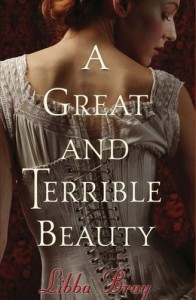
A GREAT AND TERRIBLE BEAUTY by Libba Bray (Simon & Schuster, 2003)
GENRE: Historical Romance w/ paranormal elements
HONORS: NY Times Best-Seller
REVIEW: There were not many options for girls in Victorian society, a fact that becomes obvious to sixteen-year-old Gemma Doyle upon her arrival at the Spence Academy. Initially socially marginalized, Gemma gradually befriends three other girls, even as she begins to experience disturbing visions that place her in the center of a mystery that followed her to London from the streets of India, where her beautiful mother died. A Great and Terrible Beauty reads like part gothic romance and part Victorian pulp with a healthy dose of the paranormal added to spice things up. There's of occult danger and Eastern 'otherness' (both sexy and mildly threatening to a respectable, young Englishwoman) and enough lurid drama to keep any tween / teen gobbling it down. Despite Bray's use of the first person present progressive tense, which gets tiresome at times, A Great and Terrible Beauty is a great deal of fun and surprisingly hard to put down.
OPINION: Libba Bray knows young women. Gemma Doyle is a good heroine, as far as historical fiction goes - she's active, she has agency, she's flawed but passionate. There's a fair amount of conflict and fight in her, which makes her easy for a modern girl to relate to. Gemma's friends are also interesting - the drab, unattractive Ann (who is a cutter, due in large part to her implied depression and alienation), the gorgeous, ornamental Pippa and Felicity, who, of the four, is the most complex.
IDEAS: The first in the Gemma Doyle trilogy, A Great and Terrible Beauty is a solid suggestion for girls looking for historical romance and / or drama. Though not necessarily for reluctant readers, the book appeals on a lot of levels, even as Bray explores serious issues like alienation, autonomy and the historical role of women and girls. A nice choice for a free reading title or as a book club selection - it has a lot of discussion points.
GENRE: Historical Romance w/ paranormal elements
HONORS: NY Times Best-Seller
REVIEW: There were not many options for girls in Victorian society, a fact that becomes obvious to sixteen-year-old Gemma Doyle upon her arrival at the Spence Academy. Initially socially marginalized, Gemma gradually befriends three other girls, even as she begins to experience disturbing visions that place her in the center of a mystery that followed her to London from the streets of India, where her beautiful mother died. A Great and Terrible Beauty reads like part gothic romance and part Victorian pulp with a healthy dose of the paranormal added to spice things up. There's of occult danger and Eastern 'otherness' (both sexy and mildly threatening to a respectable, young Englishwoman) and enough lurid drama to keep any tween / teen gobbling it down. Despite Bray's use of the first person present progressive tense, which gets tiresome at times, A Great and Terrible Beauty is a great deal of fun and surprisingly hard to put down.
OPINION: Libba Bray knows young women. Gemma Doyle is a good heroine, as far as historical fiction goes - she's active, she has agency, she's flawed but passionate. There's a fair amount of conflict and fight in her, which makes her easy for a modern girl to relate to. Gemma's friends are also interesting - the drab, unattractive Ann (who is a cutter, due in large part to her implied depression and alienation), the gorgeous, ornamental Pippa and Felicity, who, of the four, is the most complex.
A Great and Terrible Beauty is fun, dark, a little edgy and sexy in a safely historical way. It's strength lies in the fact that all four of the girls, Gemma, Pippa, Ann, and especially Felicity, want autonomy - they want to valued for themselves and, in their own way, they fight for that privilege in a Victorian world that valued silence in its women and girls. For that alone, A Great and Terrible Beauty is worth reading.
IDEAS: The first in the Gemma Doyle trilogy, A Great and Terrible Beauty is a solid suggestion for girls looking for historical romance and / or drama. Though not necessarily for reluctant readers, the book appeals on a lot of levels, even as Bray explores serious issues like alienation, autonomy and the historical role of women and girls. A nice choice for a free reading title or as a book club selection - it has a lot of discussion points.
August 2, 2012
Nicola and the Viscount
NICOLA AND THE VISCOUNT by Meg Cabot (Harper Teen, 2004)
GENRE: Romance - Historical
HONORS: None
REVIEW: Beguiling 16-year-old orphan, Nicola Sparks, is everything a young marriageable young lady in Regency England should be - lovely, charming and just a bit silly. When the young Viscount Farnsworth, (whom Nicola thinks of habitually as "the God"), suddenly proposes marriage, she immediately accepts. The rest of the book is taken up with Nicola's slow realization that her intended, though handsome and superficially charming, may not be all he seems. Cabot treads well-worn ground here, so much so that Nicola and the Viscount, which is obviously intended to read like Jane Austen lite, reads a bit more like a junior Harlequin Regency romance. Not that there's anything wrong with this. Though formulaic in the extreme, the story still follows a winning, time-tested formula, with the heroine caught between two men in a romance peppered with social witticisms. Though Cabot's prose feels awkward, as if she's wearing a dress that doesn't quite fit, the tone is perfect for a light period romance. Even though it's obvious where the story is going from the start, the journey is fun for all it's romantically silly glory.
OPINION: Nicola and the Viscount is a nice alternative to the darker, more fraught passions of paranormal romance. Completely devoid of vampires, demons, werewolves, fallen angels or even run-of-the-mill seriousness, it's a classic sort of romance driven by just enough drama to keep the pages turning. All of the characters, though typical of Regency romances, are charming and fun. The overall effect is of a light little bon bon that's ever-so-easy to gobble up.
IDEAS: With romance that springs from interpersonal tensions rather than blatant physical desire, this is a great read for girls who are ready for more than holding hands at a dance, but not quite ready for Twilight. Also a good suggestion for fans of the film versions of Pride and Prejudice or Emma.
GENRE: Romance - Historical
HONORS: None
REVIEW: Beguiling 16-year-old orphan, Nicola Sparks, is everything a young marriageable young lady in Regency England should be - lovely, charming and just a bit silly. When the young Viscount Farnsworth, (whom Nicola thinks of habitually as "the God"), suddenly proposes marriage, she immediately accepts. The rest of the book is taken up with Nicola's slow realization that her intended, though handsome and superficially charming, may not be all he seems. Cabot treads well-worn ground here, so much so that Nicola and the Viscount, which is obviously intended to read like Jane Austen lite, reads a bit more like a junior Harlequin Regency romance. Not that there's anything wrong with this. Though formulaic in the extreme, the story still follows a winning, time-tested formula, with the heroine caught between two men in a romance peppered with social witticisms. Though Cabot's prose feels awkward, as if she's wearing a dress that doesn't quite fit, the tone is perfect for a light period romance. Even though it's obvious where the story is going from the start, the journey is fun for all it's romantically silly glory.
OPINION: Nicola and the Viscount is a nice alternative to the darker, more fraught passions of paranormal romance. Completely devoid of vampires, demons, werewolves, fallen angels or even run-of-the-mill seriousness, it's a classic sort of romance driven by just enough drama to keep the pages turning. All of the characters, though typical of Regency romances, are charming and fun. The overall effect is of a light little bon bon that's ever-so-easy to gobble up.
IDEAS: With romance that springs from interpersonal tensions rather than blatant physical desire, this is a great read for girls who are ready for more than holding hands at a dance, but not quite ready for Twilight. Also a good suggestion for fans of the film versions of Pride and Prejudice or Emma.
Labels:
assignment 5,
historical,
humor,
LIBR 264,
romance,
tween
The Book of Time
THE BOOK OF TIME by Guillaume Prevost (Scholastic, 2006)
GENRE: Science Fiction - Time Travel
HONORS: None
REVIEW: Sam Faulkner, 14, has had a difficult couple of years. After his mother died, his father, Allan, sold their house and opened an antique bookstore in a run-down house. Just when things start to become normal again, Allan disappears. But when Sam goes to look for him, he finds a stone in the basement that enables him to time travel - to a monastery under Viking attack, to a French battlefield in WWI and a temple in Ancient Egypt. The more Sam travels, the more he understands, until, with the help of his cousin, he deduces that his father is being held captive by Vlad Tepes in 15th century Translyvania. Unforunately, that's when the book ends. Though fast-paced and terrifically interesting, most of The Book of Time reads as if the author is simply laying groundwork for the next book, an impression confirmed by the abrupt cliff-hanger ending. This is unfortunate because the story is well-paced with a genuinely likable protagonist and tons of interesting, accessible historical material. For all that, it fails to work as a cohesive whole - in trying to establish a narrative arc for the series, the author failed to establish an arc for the book.
OPINION: For all it's structural flaws, The Book of Time is still a worthwhile read. The pacing is great - the author hardly allows Sam, or the reader, time to take a breath before launching into a new dangers. Even Sam's present day is full of threatening bullies and his aunt's suspicious new boyfriend. With this much adventure, action and suspense, (not to mention the highest of stakes - his father is being held captive by Vlad the Impaler), The Book of Time is likely to please.
IDEAS: This is fun, accessible science-fiction for kids who don't like science fiction. It's also a fantastic book for classroom use as Prevost (who teaches history) lines each adventure with serious doses of historical interest and detail. The Scholastic edition also includes a comprehensive list of discussion questions, making it a truly educational volume, even though it feels like nothing more than fun when you're reading it.
GENRE: Science Fiction - Time Travel
HONORS: None
REVIEW: Sam Faulkner, 14, has had a difficult couple of years. After his mother died, his father, Allan, sold their house and opened an antique bookstore in a run-down house. Just when things start to become normal again, Allan disappears. But when Sam goes to look for him, he finds a stone in the basement that enables him to time travel - to a monastery under Viking attack, to a French battlefield in WWI and a temple in Ancient Egypt. The more Sam travels, the more he understands, until, with the help of his cousin, he deduces that his father is being held captive by Vlad Tepes in 15th century Translyvania. Unforunately, that's when the book ends. Though fast-paced and terrifically interesting, most of The Book of Time reads as if the author is simply laying groundwork for the next book, an impression confirmed by the abrupt cliff-hanger ending. This is unfortunate because the story is well-paced with a genuinely likable protagonist and tons of interesting, accessible historical material. For all that, it fails to work as a cohesive whole - in trying to establish a narrative arc for the series, the author failed to establish an arc for the book.
OPINION: For all it's structural flaws, The Book of Time is still a worthwhile read. The pacing is great - the author hardly allows Sam, or the reader, time to take a breath before launching into a new dangers. Even Sam's present day is full of threatening bullies and his aunt's suspicious new boyfriend. With this much adventure, action and suspense, (not to mention the highest of stakes - his father is being held captive by Vlad the Impaler), The Book of Time is likely to please.
IDEAS: This is fun, accessible science-fiction for kids who don't like science fiction. It's also a fantastic book for classroom use as Prevost (who teaches history) lines each adventure with serious doses of historical interest and detail. The Scholastic edition also includes a comprehensive list of discussion questions, making it a truly educational volume, even though it feels like nothing more than fun when you're reading it.
July 27, 2012
Jane Eyre
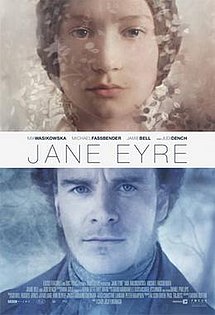
JANE EYRE (Film Adaptation) directed by Cary Joji Fukunaga; Starring Mia Wasikowska and Michael Fassbender. Based on the novel by Charlotte Bronte. (Focus Features, 2011).
GENRE: Romance (Gothic) / Historical
HONORS: LA Film Critic's Assoc. Award for Best Actor (Michael Fassbender - won); National Board of Review Spotlight Award (Michael Fassbender - won); British Independent Film Best Actress Award (Mia Wasikowska - nominated)
REVIEW: Few films capture the tone and feel of a classic as well as Fukunaga's 2011 adaptation of Charlotte Bronte's Jane Eyre. Orphaned Jane goes to work for the mysterious Mr. Rochester as a governess. Before long, she begins to notice odd things in the expansive house - strange noises, sudden fires and unexplained injuries. All the while, Jane becomes increasingly fascinated by her mercurial, challenging employer. But though Jane may look small and pale, she is strong, stronger than anyone else in the house, with a moral and ethical core that renders her integrity stunning in it's unshakability. As in the novel, Wasikowska's Jane knows her own mind, and though she is humble, she knows her own value and will not compromise it. Fassbender's Rochester is a haunted, complicated man, with an edge that wavers just to one side of dangerous. The production itself is lovely with light dreamlike expanses contrasting starkly with the dark, sinister interior of Rochester's home. Taut and intense, Jane Eyre is not a movie to watch while texting or playing an app. Luckily, it's appealing enough that even the most tech savvy tween won't want to.
OPINION: Jane Eyre is a classic with much to offer adolescent readers. However, it's also a title that tends to intimidate or simply not interest modern tweens. This adaptation, though faithfully adapted from Bronte's original, renders the story far more accessible by concentrating primarily on Jane's growth, and on her romance with Rochester, in all it's complicated, gothic glory. Darker than all of the perennially popular Jane Austen's work combined, Jane Eyre is a great suggestion for tweens looking for something a touch more gothic, and Fukunaga's film adaptation is a wonderful way to introduce them to the story and pique their interest.
IDEAS: A must-have for any display featuring the classics, it would also be an unexpected inclusion in a display with a romance or historical theme. Also a nice suggestion for fans of the book and for tweens, particularly girls, interested in classical literature / stories, but unsure where to start.
GENRE: Romance (Gothic) / Historical
HONORS: LA Film Critic's Assoc. Award for Best Actor (Michael Fassbender - won); National Board of Review Spotlight Award (Michael Fassbender - won); British Independent Film Best Actress Award (Mia Wasikowska - nominated)
REVIEW: Few films capture the tone and feel of a classic as well as Fukunaga's 2011 adaptation of Charlotte Bronte's Jane Eyre. Orphaned Jane goes to work for the mysterious Mr. Rochester as a governess. Before long, she begins to notice odd things in the expansive house - strange noises, sudden fires and unexplained injuries. All the while, Jane becomes increasingly fascinated by her mercurial, challenging employer. But though Jane may look small and pale, she is strong, stronger than anyone else in the house, with a moral and ethical core that renders her integrity stunning in it's unshakability. As in the novel, Wasikowska's Jane knows her own mind, and though she is humble, she knows her own value and will not compromise it. Fassbender's Rochester is a haunted, complicated man, with an edge that wavers just to one side of dangerous. The production itself is lovely with light dreamlike expanses contrasting starkly with the dark, sinister interior of Rochester's home. Taut and intense, Jane Eyre is not a movie to watch while texting or playing an app. Luckily, it's appealing enough that even the most tech savvy tween won't want to.
OPINION: Jane Eyre is a classic with much to offer adolescent readers. However, it's also a title that tends to intimidate or simply not interest modern tweens. This adaptation, though faithfully adapted from Bronte's original, renders the story far more accessible by concentrating primarily on Jane's growth, and on her romance with Rochester, in all it's complicated, gothic glory. Darker than all of the perennially popular Jane Austen's work combined, Jane Eyre is a great suggestion for tweens looking for something a touch more gothic, and Fukunaga's film adaptation is a wonderful way to introduce them to the story and pique their interest.
IDEAS: A must-have for any display featuring the classics, it would also be an unexpected inclusion in a display with a romance or historical theme. Also a nice suggestion for fans of the book and for tweens, particularly girls, interested in classical literature / stories, but unsure where to start.
July 16, 2012
Cleopatra VII: Daughter of the Nile
CLEOPATRA VII: DAUGHTER OF THE NILE (Royal Diaries) by Kristiana Gregory; Narrated by Josephine Bailey (Tantor Media, 2006)
GENRE: History - Fiction / Audiobook
HONORS: None
REVIEW: In this well-researched fictional account of Cleopatra's early life, Kristina Gregory presents a portrait of the young princess that renders her both incredibly impressive and warmly human. The "diary" begins when Cleopatra is twelve years old. Having survived an assassination attempt, Cleopatra's father, Ptolemy XII, flees Egypt for Rome where he intends to garner the money and support of Julius Caesar and the Roman Senate. Fearing for her life (with good reason) Cleopatra joins him. The diary chronicles her Cleopatra's time in Rome and her well-executed efforts to make herself worthy of being Queen. Though already quite self-aware, Cleopatra grows in wisdom through dedicated effort so that by the time she reaches her fourteenth year, one can easily see the formidable Queen she would become. While the book itself is wonderful, Josephine Bailey's narration truly made the audio version stand out. Fluid and compelling, her voice brought Gregory's prose, and Cleopatra, to life.
OPINION: The first in the Royal Diaries series, Cleopatra VII is a surprising balance of entertainment and scholarship. Though little is actually known about Cleopatra's early life, Gregory uses what primary sources are available to piece together a viable picture of the Queen as a girl. The diary format, as always, lends immediacy to the story while providing the author with plenty of opportunity to slip in exposition and historical detail. Educational and compelling, it's a great addition to a library's collection.
IDEAS: Cleopatra remains a fascinating figure, while ancient Egypt is enjoying a surge in popularity thanks to films like The Mummy and books like The Red Pyramid by Rick Riordan and Theodosia and the Eye of Horus by R.L. LaFevers. A great suggestion for fans of either series, Cleopatra VII is also a good read for tweens interested in ancient Egypt, Rome or the great Queen herself.
GENRE: History - Fiction / Audiobook
HONORS: None
REVIEW: In this well-researched fictional account of Cleopatra's early life, Kristina Gregory presents a portrait of the young princess that renders her both incredibly impressive and warmly human. The "diary" begins when Cleopatra is twelve years old. Having survived an assassination attempt, Cleopatra's father, Ptolemy XII, flees Egypt for Rome where he intends to garner the money and support of Julius Caesar and the Roman Senate. Fearing for her life (with good reason) Cleopatra joins him. The diary chronicles her Cleopatra's time in Rome and her well-executed efforts to make herself worthy of being Queen. Though already quite self-aware, Cleopatra grows in wisdom through dedicated effort so that by the time she reaches her fourteenth year, one can easily see the formidable Queen she would become. While the book itself is wonderful, Josephine Bailey's narration truly made the audio version stand out. Fluid and compelling, her voice brought Gregory's prose, and Cleopatra, to life.
OPINION: The first in the Royal Diaries series, Cleopatra VII is a surprising balance of entertainment and scholarship. Though little is actually known about Cleopatra's early life, Gregory uses what primary sources are available to piece together a viable picture of the Queen as a girl. The diary format, as always, lends immediacy to the story while providing the author with plenty of opportunity to slip in exposition and historical detail. Educational and compelling, it's a great addition to a library's collection.
IDEAS: Cleopatra remains a fascinating figure, while ancient Egypt is enjoying a surge in popularity thanks to films like The Mummy and books like The Red Pyramid by Rick Riordan and Theodosia and the Eye of Horus by R.L. LaFevers. A great suggestion for fans of either series, Cleopatra VII is also a good read for tweens interested in ancient Egypt, Rome or the great Queen herself.
July 10, 2012
Nightmares and Fairytales: 1140 Rue Royale
NIGHTMARES AND FAIRY TALES Volume 3: 1140 RUE ROYALE by Serena Valentino; Illustrated by Crab Scrambly (SLG Publishing, 2007)
GENRE: Graphic Novel / Horror
HONORS: None (though the series has enjoyed many positive critical reviews)
REVIEW: Nightmares and Fairytales is a series of graphic novels wherein the uniting factor is a strange little doll called Annabel. Annabel is said to be cursed, but her current owner, a girl named Gwen understands her, so Annabel tells her stories of the horrors that she's seen. 1140 Rue Royale is one of Annabel's stories. Though an integrated part of the series, it can easily be read alone. It tells the story of a woman named Victoria and her niece who move into the house on 1140 Rue Royale - a house that is said to be haunted by the slaves who were tortured and killed there years before. What unfolds is a story full of foreboding and magnificent creepiness. Valentino's writing is perfectly paced, giving the reader just enough of a break between frightening occurrences to relax before she ratchets up the wrongness even more. Scrambly's illustrations are gorgeous and atmospheric - one part Edward Gorey, one part early Tim Burton - with odd angles and shadings that make you want to look over your shoulder. Everything about 1140 Rue Royale, it is based on the true story of Delphine LaLaurie, from the panel design to the narrative itself, is meant to sweep the reader along into a story that is dark and honestly horrifying (what was done to the slaves is diabolical). A beautiful, effecting and impressive work.
OPINION: The Nightmares and Fairytales series is, generally speaking, not one for younger adolescents, and some volumes should be consigned strictly to YA. 1140 Rue Royale is an exception, though I would only recommend it for those 12 and above, given the level of horror-style tension, some of the imagery and the violence that is implied. That said, 1140 Rue Royale is horror at it's best - driven not by blood and guts, but by a sense of injustice that must be avenged. Between Valentino's haunting story and Scrambly's evocative illustrations, it's one that the reader will think about long after it's been put down.
IDEAS: A good edition to any display containing darker fare, along with Neil Gaiman, Ted Naifeh etc., 1140 Rue Royale is a good suggestion for older tweens who are into Stephen King and serious poltergeist style ghost stories. Given the abuses to slaves that are depicted, it would also pair well with the Newbery award winning books, The Slave Dancer, Roll of Thunder Hear My Cry and The Dark Thirty: Southern Tales of the Supernatural.
GENRE: Graphic Novel / Horror
HONORS: None (though the series has enjoyed many positive critical reviews)
REVIEW: Nightmares and Fairytales is a series of graphic novels wherein the uniting factor is a strange little doll called Annabel. Annabel is said to be cursed, but her current owner, a girl named Gwen understands her, so Annabel tells her stories of the horrors that she's seen. 1140 Rue Royale is one of Annabel's stories. Though an integrated part of the series, it can easily be read alone. It tells the story of a woman named Victoria and her niece who move into the house on 1140 Rue Royale - a house that is said to be haunted by the slaves who were tortured and killed there years before. What unfolds is a story full of foreboding and magnificent creepiness. Valentino's writing is perfectly paced, giving the reader just enough of a break between frightening occurrences to relax before she ratchets up the wrongness even more. Scrambly's illustrations are gorgeous and atmospheric - one part Edward Gorey, one part early Tim Burton - with odd angles and shadings that make you want to look over your shoulder. Everything about 1140 Rue Royale, it is based on the true story of Delphine LaLaurie, from the panel design to the narrative itself, is meant to sweep the reader along into a story that is dark and honestly horrifying (what was done to the slaves is diabolical). A beautiful, effecting and impressive work.
OPINION: The Nightmares and Fairytales series is, generally speaking, not one for younger adolescents, and some volumes should be consigned strictly to YA. 1140 Rue Royale is an exception, though I would only recommend it for those 12 and above, given the level of horror-style tension, some of the imagery and the violence that is implied. That said, 1140 Rue Royale is horror at it's best - driven not by blood and guts, but by a sense of injustice that must be avenged. Between Valentino's haunting story and Scrambly's evocative illustrations, it's one that the reader will think about long after it's been put down.
IDEAS: A good edition to any display containing darker fare, along with Neil Gaiman, Ted Naifeh etc., 1140 Rue Royale is a good suggestion for older tweens who are into Stephen King and serious poltergeist style ghost stories. Given the abuses to slaves that are depicted, it would also pair well with the Newbery award winning books, The Slave Dancer, Roll of Thunder Hear My Cry and The Dark Thirty: Southern Tales of the Supernatural.
July 9, 2012
Black Butler
BLACK BUTLER. TV adaptation.
(Directed by Shinohara Toshiya. Based on the
manga by Yana Toboso. Distributed by Funimation)
GENRE: Action (anime)
HONORS: None
REVIEW: Black Butler
chronicles the Faustian contract between Ciel, the twelve-year-old head of the
Phantomhive family and his demonic butler, Sebastian Michaelis. It is stated
throughout the series that Sebastian is “one hell of a butler”, and he is. In
addition to overseeing the vast Phantomhive Estate, Sebastian acts as
bodyguard, confidant and advisor to his young master as they pursue vengeance
upon the villains who killed Ciel’s parents. The premise of Black
Butler is rock solid – a young boy in a
position of great power wields a secret weapon against those who have crossed
him. The pseudo-Victorian setting provides a nice veneer of civilization and
Victorian gothic appeal. The overall darkness of the series is leavened by the
sometimes heavy-handed antics of the other servants, but though the drama and
comedy are, at times, unbalanced, the series is well done, compelling and
lovely to look at.
OPINION: Black Butler is
a compulsively watchable gothic romp. Girls will find Sebastian to be an
attractive, if unattainable figure, while boys will most likely get right
behind Ciel’s quest for vengeance and the (moderate) violence that results. The
manga, in particular, would be a strong addition to a tween collection, while
the anime adaptation is a good suggestion to have on hand.
IDEAS: Both the manga and the anime adaptation are a great suggestion for young
readers interested in historical or gothic fiction, but a too young for some of
the more intense YA options. It also pairs nicely with Eoin Colfer’s Artemis
Fowle series, which chronicles the
nefarious doings of a young, diabolical genius.
Labels:
action,
anime,
assignment 5,
historical,
horror,
humor,
LIBR 264,
tween
July 6, 2012
My Secret War
MY SECRET WAR: The WWII Diary of Madeline Beck (Dear America) by Mary Pope Osborne (Scholastic, 2000)
GENRE: History - Fiction
HONORS: none
REVIEW: My Secret War: The World War II Diary of Madeline Beck is a solid, if somewhat uninspired novel that blends
nonfiction and fiction into the narrative of one girl’s wartime experiences
between 1941-1942. Maddie is an earnest protagonist who’s Lt. Colonial father
is stationed in the Pacific when Roosevelt declares war on the Japanese and the
Allied powers officially form. Told in diary form, the story moves at an
efficient pace as Maddie navigates the social difficulties of being the new
girl at school, finds purpose by organizing war efforts for local kids on the
home front and even experiences her first romantic relationship. Though a bit
superficial through the first 2/3’s of the book, the story reaches a nice
emotional depth when Maddie’s father is wounded in battle. The supporting
characters are all nicely drawn, with both adults and kids reacting realistically
to the outbreak of the war and the war culture that sprouted up over night in
the States. Though the dialogue of colloquially neutral (an effective choice),
Osborne sometimes sprinkles in period slang, like “jeepers” and “doggone it”.
Though a bit heavy-handed, it does help establish the period.
OPINION: Overall, this a solid offering. The blend of fiction and nonfiction is
a bit too seemless at times – real events are credited to fictional characters
– but the amount of information and exposition that Osborne packs into the
epistolary structure is impressive and well-placed. Beneath the agelessness of
tween angst is a history lesson worth learning, and My Secret War is a nice dose of sugar to help it go down.
IDEAS: As with all the titles in the Dear America series, My Secret War would be great supplemental reading for classroom
use. It’s also a good recommendation for kids interested in WWII and a nice
addition to a display on D-Day or Pearl Harbor.
GENRE: Mystery
HONORS: None
REVIEW: Eleven year old Clara
lives in the once magnificent Glendoveer mansion, (the family home of a great
magician) with her mother, the housekeeper, the magician’s aging widow and an
aviary full of exotic birds. The birds respond to Clara as they respond to no
one else – squawking, shrieking and eventually talking – as they enlist her
help in solving the mystery of the five Glendoveer children, who were murdered
fifty years before. It is a mystery that Clara is, unknowingly, at the very
heart of.
OPINION: The Aviary is a well paced, if slightly predictable, juvenile take on
the Victorian gothic novel. The Glendoveer mansion is a gorgeous crumbling
mausoleum, complete with locked rooms and drafty halls, in which Clara is
essentially confined due to a “weak heart”. Her connection to Mrs. Glendoveer
and the feathered inhabitants of the aviary is both genuine and touching,
grounding her in her cloistered world, even as she longs to break free of it.
The mystery at the heart of the novel – who killed the five oldest Glendoveer
children and kidnapped the youngest – is interesting enough to drive the plot,
though it does, at times, verge on the slightly ridiculous as it nears the
inevitable climax. Overall, a quick-reading love note to period fiction of the
Victorian age with just enough creepiness and mystery to keep young readers on
their toes.
IDEAS: Pair with other ghost stories in a library book club or display. It
might also be included on a classroom reading list with “Turn of the Screw” or
“The Monkey’s Paw”. It’s a fun novel and a good way to introduce tension and
mood.
Subscribe to:
Comments (Atom)