Daughter of Smoke and Bone by Laini Taylor, (Little Brown, 2011).
GENRE: Urban Fantasy
AGE: 15 and up
In a literary landscape glutted with star-crossed romance, Laini Taylor's Daughter of Smoke and Bone, stands out as something unique, a work so far ahead of its contemporaries that it renders comparisons unfair.
Though the novel opens in contemporary Prague, it spans two worlds - our own and Eretz, a parallel place destroyed by ancient wars, which can only be accessed through magical portals and slits in the sky. With no memory of her parents, Karou, Taylor's beautiful, blue-haired protagonist, is raised in a space between Earth and Eretz by Brimstone, a chimaera (mythical creatures that are half-human and half-animal) and his assistants. She lives two half-lives - one as an art student in Prague, the other as Brimstone's courier, until the portals to his shop are destroyed and Karou is cast out. Bent on returning, Karou confronts Akiva, one of the seraphs responsible for the destruction of the doorways, and unknowingly begins the process of rediscovering who she is.
There is so much more to this novel than summarization can sufficiently communicate. Karou is a highly nuanced heroine, a seventeen year old with piques and pettiness as well as a deep reserve of strength and the feral will to survive. She is the embodiment of agency and the places Taylor takes her are worthy of her complexity. The novel's secondary characters match Karou's full-bloodedness. Brimstone, Zusana, Karou's tiny, crackling best-friend, Akiva, and even Kaz, her ridiculous ex - all are exceptionally recognizable as people, not constructs, in their way.
Taylor's sense of aesthetics (Zusana's giant marionette, Karou's lapis hair), her facility with imagery, (black handprints on the portal doors, the caged city), and instinct with physical characterization (a baby Karou playing w/ brimstone's tail, the anxious flutter of a chimaera's bat wings) create a landscape so light and lush, so simply gorgeous that it feels like the print equivalent of Karou's sketchbooks, but what makes the book special is the substance beneath the aesthetics. There's a perceptive depth to Karou's isolation that is just not describable. It's what makes Taylor such a writer to envy - the nebulous strength of her work is layered throughout every aspect of the book, impossible to tease out.
This is a challenging, engaging novel and though it is driven by a romance (as are so many YA novels), the romance has unexpected elements and is stricken by very real difficulties. It will no doubt resonate with older teens readers who have, perhaps, already tasted their first heartbreaks. Taylor does not pander to her reader. She writes to the fullness of the concept's potential, which is really quite high. An exquisite, perfectly paced pleasure.
Showing posts with label contemporary. Show all posts
September 26, 2012
September 5, 2012
Fallen
FALLEN by Lauren Kate (Delacorte Books for Young Readers, 2009)
GENRE: Paranormal Romance
AGE: 13 and up
Every once and awhile, an extraordinary book comes along, one that breaks new ground, re-envisioning tropes long since tapped dry and changing the landscape of a genre. Fallen is not one of those books.
Stomping over the ground Stephanie Meyers cleared with Twlight, Fallen is the story of seventeen-year-old Luce, sentenced to reform school after a boy she likes dies in a fire. Less than 24 hours after arriving at Sword & Cross, she is already torn between two preternaturally hot guys - smooth, sweet Cam, and moody, GORGEOUS Daniel (forgive the caps, but it was the only way to communicate the degree to which Luce lingers, in Bella Swan style, on Daniel's rippling perfection). Though Luce herself is anxious, socially weak and easily cowed (not a fantastic role-model), she finds herself in the middle of an enviable love-triangle, but though Cam is tempting, she is overwhelmed by her attraction to Daniel, who is, of course, beyond hostile so that he might protect Luce from their epically shared past.
Hindered dramatically by an enormous amount of interruptive, repetitious description, (most readers don't need multiple reminders that something happened just pages before), Fallen is much longer than the slender narrative requires. Though the concept compelling enough, one gets the sense that Kate didn't make the most of her material - there is very little in Fallen that doesn't directly mirror some aspect of Twilight, from lingering love-sick descriptions to the fact that Daniel, once his love is declared, makes huge sweeping decisions for Luce while she gratefully accepts. Though the climax is action-packed and exciting, the romance between Daniel and Luce never takes off - a frustration given the amount of time Kate spends trying to convince readers of it's gravity. Many loose ends, such as why angels are at a reform school to begin with, are left hanging, presumably to be answered in the sequel.
All of that said, Fallen does move, and though there are a shocking number of eye-rolling moments, the basic elements work well enough to give the story a certain appeal. Bella and Edward... pardon me - Luce and Daniel... might be little more than cardboard on the page, but the pages do turn, thanks mostly to the unanswered questions scattered throughout the book. Fallen, though weak in its own right, may prove to be the start of a strong, compelling series. If nothing else, its popularity is testament to the fact that people are reading and loving it, if only to get a Twlight-esque fix.
GENRE: Paranormal Romance
AGE: 13 and up
Every once and awhile, an extraordinary book comes along, one that breaks new ground, re-envisioning tropes long since tapped dry and changing the landscape of a genre. Fallen is not one of those books.
Stomping over the ground Stephanie Meyers cleared with Twlight, Fallen is the story of seventeen-year-old Luce, sentenced to reform school after a boy she likes dies in a fire. Less than 24 hours after arriving at Sword & Cross, she is already torn between two preternaturally hot guys - smooth, sweet Cam, and moody, GORGEOUS Daniel (forgive the caps, but it was the only way to communicate the degree to which Luce lingers, in Bella Swan style, on Daniel's rippling perfection). Though Luce herself is anxious, socially weak and easily cowed (not a fantastic role-model), she finds herself in the middle of an enviable love-triangle, but though Cam is tempting, she is overwhelmed by her attraction to Daniel, who is, of course, beyond hostile so that he might protect Luce from their epically shared past.
Hindered dramatically by an enormous amount of interruptive, repetitious description, (most readers don't need multiple reminders that something happened just pages before), Fallen is much longer than the slender narrative requires. Though the concept compelling enough, one gets the sense that Kate didn't make the most of her material - there is very little in Fallen that doesn't directly mirror some aspect of Twilight, from lingering love-sick descriptions to the fact that Daniel, once his love is declared, makes huge sweeping decisions for Luce while she gratefully accepts. Though the climax is action-packed and exciting, the romance between Daniel and Luce never takes off - a frustration given the amount of time Kate spends trying to convince readers of it's gravity. Many loose ends, such as why angels are at a reform school to begin with, are left hanging, presumably to be answered in the sequel.
All of that said, Fallen does move, and though there are a shocking number of eye-rolling moments, the basic elements work well enough to give the story a certain appeal. Bella and Edward... pardon me - Luce and Daniel... might be little more than cardboard on the page, but the pages do turn, thanks mostly to the unanswered questions scattered throughout the book. Fallen, though weak in its own right, may prove to be the start of a strong, compelling series. If nothing else, its popularity is testament to the fact that people are reading and loving it, if only to get a Twlight-esque fix.
August 30, 2012
Lies, Knives and Girls in Red Dresses
LIES, KNIVES AND GIRLS IN RED DRESSES by Ron Koertge; illustrated by Andrea Dezso, (Candlewick Press, 2012)
GENRE: Poetry / Fairy Tales
AGE: 14 and up
Tapping into the burgeoning popularity of fairy tales and fairy tale adaptations, poet and novelist Ron Koertge presents this slender little volume of free-verse. But though aesthetically pleasing, (thanks to Andrea Dezso's cut paper illustrations and a gorgeous lay-out), and occasionally inventive, Koertge's trim, darkly funny collection is a bit of a mixed bag. While all of the stories are solid, only half contribute something new to the source materials, and of those, only a handful truly stand-out, making the rest dim by comparison.
Among the stand-outs are a fantastic re-imagining of "Hansel and Gretel" with a gruesome twist at end, a lovely re-telling of "Thumbelina" told from the mole's point of view, a strong, incisive look at Bluebeard's young wife and a version of "The Emperor's New Clothes" with some truly cutting social commentary woven through. Also, quite nice were the re-telling of "Rapunzel" from a five different points of view, and a quietly heartbreaking account of the Cinderella's step-sisters' Ever After. Each tale is accompanied by one of Dezso's strange, unsettling cut paper illustrations, all of which lend the casual, contemporary tone of the volume a somewhat gruesome, silhouetted depth. Koertge's free-verse has a wry, cutting quality that sometimes overwhelms the material, (as in "The Robber Bridegroom), but for the most part, it's a strong compliment to the black humor with which he re-tells these tales.
Overall, Lies, Knives and Girls in Red Dresses does not uncover any new ground in the dark, fairy tale forest. It does, however, add a nice bit of nuance and smirky humor to the territory, making it a good volume for the fairy tale inclined and a nice introduction, if nothing else, to the appeal of free-verse.
GENRE: Poetry / Fairy Tales
AGE: 14 and up
Tapping into the burgeoning popularity of fairy tales and fairy tale adaptations, poet and novelist Ron Koertge presents this slender little volume of free-verse. But though aesthetically pleasing, (thanks to Andrea Dezso's cut paper illustrations and a gorgeous lay-out), and occasionally inventive, Koertge's trim, darkly funny collection is a bit of a mixed bag. While all of the stories are solid, only half contribute something new to the source materials, and of those, only a handful truly stand-out, making the rest dim by comparison.
Among the stand-outs are a fantastic re-imagining of "Hansel and Gretel" with a gruesome twist at end, a lovely re-telling of "Thumbelina" told from the mole's point of view, a strong, incisive look at Bluebeard's young wife and a version of "The Emperor's New Clothes" with some truly cutting social commentary woven through. Also, quite nice were the re-telling of "Rapunzel" from a five different points of view, and a quietly heartbreaking account of the Cinderella's step-sisters' Ever After. Each tale is accompanied by one of Dezso's strange, unsettling cut paper illustrations, all of which lend the casual, contemporary tone of the volume a somewhat gruesome, silhouetted depth. Koertge's free-verse has a wry, cutting quality that sometimes overwhelms the material, (as in "The Robber Bridegroom), but for the most part, it's a strong compliment to the black humor with which he re-tells these tales.
Overall, Lies, Knives and Girls in Red Dresses does not uncover any new ground in the dark, fairy tale forest. It does, however, add a nice bit of nuance and smirky humor to the territory, making it a good volume for the fairy tale inclined and a nice introduction, if nothing else, to the appeal of free-verse.
August 9, 2012
The Dark is Rising
THE DARK IS RISING by Susan Cooper (Scholastic, 1974)GENRE: Fantasy
HONORS: Newbery Honor (1974)
REVIEW: On his eleventh birthday, Will Stanton, the seventh son of a seventh son, finds out that he is an Old One, an ancient race of beings who keep the Dark at bay in the name of the Light. No sooner does Will discover that his true purpose as the Seeker, the Old One destined to unite the Things of Power, than he is plunged into the battle between Light and Dark, Good and Evil. The story follows Will as he collects the Six Signs to form the Circle, pursued by the Black Rider, an agent of Darkness, and added by Merriman Lyon, The Lady and other Old Ones who have been fighting the Dark for centuries. Peppered with elements from Celtic myth and Arthurian legend, The Dark is Rising (the second in The Dark is Rising Sequence) is a layered and thoughtful combination of old myth, fantasy and contemporary suspense. It is a book that rewards focus and attention, even while giving it's readers an entertaining, satisfying ride.
OPINION: Beautifully written and briskly paced, The Dark is Rising, smacks of literary quality even as its premise is rooted firmly in the fantasy tradition. Will is a compelling hero - mature, smart, savvy and slightly flawed. He is a kid that most readers would want to be, or at least be friends with. His growth over the course of the novel, spurred primarily through his expanding view of the world, is one that many young readers will identify with, even if they themselves are unlikely to battle the Dark or call on the Wild Hunt for assistance. A tween fantasy classic for a reason, it is arguably the strongest title in The Dark is Rising Sequence, one that stands firmly on it's own.
IDEAS: A wonderful tie in to units on world mythology, particularly Celtic mythology and Arthurian legend. Also a good way to introduce theme, symbolism and allusion. A great recommendation to kids who need to read a Newbery book, but who are more interested in genre fiction than realism. This book has stood the test of time and still feels urgent and contemporary.
August 7, 2012
Among the Hidden
AMONG THE HIDDEN by Margaret Peterson Haddix (Simon & Schuster, 2008)
GENRE: Science Fiction - Dystopia
HONORS: None
REVIEW: In a society in which the number of children per family is limited to two, Luke Garner is a third child, a shadowchild, a child whose very existence is illegal. When the forest surrounding his parents' farm is felled to make way for a housing development for the society's ruling class, Luke must stay hidden, never leaving the house and, eventually, never leaving his attic room. But Luke does leave, and in the process he meets Jen, another third child, the daughter of a rich and powerful Baron, with justice, equality and revolution on her mind. Over the course of their friendship, Luke begins to understand the limitations of his life and learn the courage to hope for more. Haddix's totalitarian dystopia borrows heavily from China's One Child Act, (according to the author, it helped inspire the concept of the book). Though underdeveloped at times (there are questions about the Government's true reach and the society's Population Police that, if answered, would have heighten tensions), Among the Hidden is a compellingly fast read that inspires questions and thought in the reader.
OPINION: Though not as meaty or deeply conceived as the Panem of Suzanne Collins's Hunger Games trilogy, Among the Hidden has much to offer the fans of dystopic fiction. Often overwhelmed and under-informed, Luke is a sympathetic protagonist, ultimately overcoming the hesitation that twelve-years of hiding has bred in him. His relationships - to his mother, to his own frustration, to his doomed friend, Jen - make his story easy to invest in. Overall, a thought-provoking read that will leave reader's curious enough to continue with the rest of the series.
IDEAS: A great suggestion for readers a little too young for The Hunger Games but interested in stories set in dystopias (the fact that it's part of a series means there's a lot to get hooked on). Also a nice, less expected choice for a science fiction display or science fiction book club. The fact that the protagonist is a boy will also help it appeal to male tweens.
GENRE: Science Fiction - Dystopia
HONORS: None
REVIEW: In a society in which the number of children per family is limited to two, Luke Garner is a third child, a shadowchild, a child whose very existence is illegal. When the forest surrounding his parents' farm is felled to make way for a housing development for the society's ruling class, Luke must stay hidden, never leaving the house and, eventually, never leaving his attic room. But Luke does leave, and in the process he meets Jen, another third child, the daughter of a rich and powerful Baron, with justice, equality and revolution on her mind. Over the course of their friendship, Luke begins to understand the limitations of his life and learn the courage to hope for more. Haddix's totalitarian dystopia borrows heavily from China's One Child Act, (according to the author, it helped inspire the concept of the book). Though underdeveloped at times (there are questions about the Government's true reach and the society's Population Police that, if answered, would have heighten tensions), Among the Hidden is a compellingly fast read that inspires questions and thought in the reader.
OPINION: Though not as meaty or deeply conceived as the Panem of Suzanne Collins's Hunger Games trilogy, Among the Hidden has much to offer the fans of dystopic fiction. Often overwhelmed and under-informed, Luke is a sympathetic protagonist, ultimately overcoming the hesitation that twelve-years of hiding has bred in him. His relationships - to his mother, to his own frustration, to his doomed friend, Jen - make his story easy to invest in. Overall, a thought-provoking read that will leave reader's curious enough to continue with the rest of the series.
IDEAS: A great suggestion for readers a little too young for The Hunger Games but interested in stories set in dystopias (the fact that it's part of a series means there's a lot to get hooked on). Also a nice, less expected choice for a science fiction display or science fiction book club. The fact that the protagonist is a boy will also help it appeal to male tweens.
August 3, 2012
My Depression: A Picture Book
MY DEPRESSION: A Picture Book by Elizabeth Swados (Hyperion, 2005)
GENRE: Nonfiction - Autobiography
HONORS: None
REVIEW: Depression is a difficult topic and there are very few books written for tweens on the subject. Though My Depression: A Picture Book is written by an adult with an adult audience in mind, there are many aspects of her story that will resonate with tweens struggling to understand the condition. Swados writes about depression frankly, as one who has struggled with the condition since she herself was an adolescent. Her illustrations are raw, evocative and gently humorous, underscoring her minimal text and the emotional difficulties of traveling through a depressive episode and successfully reaching the other side. Swados deals with everything from onset and coping mechanisms to social difficulties and treatment options without falling into the trap of recommending a cure - lots of things work, you just have to be patient and find what works for you. With an absolute lack of judgement, Swados delivers an encouraging message from a person with first hand experience.
OPINION: Certain topics in Swados's story may be inappropriate for younger adolescents (she briefly addresses suicide - though in such as way that emphasizes the many reasons she chose not to. Also mentioned are smoking and drinking as initial coping mechanisms). As such, it's a book that should be recommended and read with care. For older adolescents, particularly those who can read the book and discuss it with a trusted adult, My Depression: A Picture Book is an enlightening, encouraging and nourishing read, filled with sensitivity, frankness and the gentle humor of a person who has been there and made it through.
IDEAS: Unless dealing with a tween or teen that you know quite well, this My Depression: A Picture Book is best recommended to parents / caregivers by librarians (counselors and professionals often recommend it directly, but for nonprofessionals, caution is best). Though blatantly encouraging (the ability to draw strength from depression is repeatedly underscored, while Swados's positive attitude communicates strong authorial support), for older adolescents, it is still a book ideally read with the support of someone else.
GENRE: Nonfiction - Autobiography
HONORS: None
REVIEW: Depression is a difficult topic and there are very few books written for tweens on the subject. Though My Depression: A Picture Book is written by an adult with an adult audience in mind, there are many aspects of her story that will resonate with tweens struggling to understand the condition. Swados writes about depression frankly, as one who has struggled with the condition since she herself was an adolescent. Her illustrations are raw, evocative and gently humorous, underscoring her minimal text and the emotional difficulties of traveling through a depressive episode and successfully reaching the other side. Swados deals with everything from onset and coping mechanisms to social difficulties and treatment options without falling into the trap of recommending a cure - lots of things work, you just have to be patient and find what works for you. With an absolute lack of judgement, Swados delivers an encouraging message from a person with first hand experience.
OPINION: Certain topics in Swados's story may be inappropriate for younger adolescents (she briefly addresses suicide - though in such as way that emphasizes the many reasons she chose not to. Also mentioned are smoking and drinking as initial coping mechanisms). As such, it's a book that should be recommended and read with care. For older adolescents, particularly those who can read the book and discuss it with a trusted adult, My Depression: A Picture Book is an enlightening, encouraging and nourishing read, filled with sensitivity, frankness and the gentle humor of a person who has been there and made it through.
IDEAS: Unless dealing with a tween or teen that you know quite well, this My Depression: A Picture Book is best recommended to parents / caregivers by librarians (counselors and professionals often recommend it directly, but for nonprofessionals, caution is best). Though blatantly encouraging (the ability to draw strength from depression is repeatedly underscored, while Swados's positive attitude communicates strong authorial support), for older adolescents, it is still a book ideally read with the support of someone else.
Lilly and the Pirates
LILLY AND THE PIRATES by Phyllis Root; Illustrated by Rob Shepperson (Boyds Mills Press, 2010)
GENRE: Adventure
HONORS: None
REVIEW: Lilly worries. She worries a lot. What if a yodeler causes an avalanche? What if her parents get swept out to sea? She worries to keep disaster at bay, writing down her concerns in her worry book and hoping for the best - until her scientist parents go on an expedition to the Shipwreck Islands to study the frangipani fruit fly, leaving Lilly behind. When their boat wrecks on the reefs, it is up to Lilly to rescue them by overcoming her fear of the sea and finding the hidden island, all while outsmarting a bunch of pirates. She even learns not to worry - at least, not quite so much. Root's lean, well-paced chapter book is exciting and gently silly (the scholar pirate swears by shouting E=MC2!), while Lilly herself is an honest of an anxious child. Her preventative worrying will be familiar to any young worrier, and though slightly over the top, Root treats her with understanding and respect, all while allowing Lilly to overcome her worries in situationally appropriate, intuitive ways. Encouraging without being preachy, Lilly and the Pirates is a hidden gem - a real buried treasure!
OPINION: Lilly and the Pirates is a quick and extremely charming read. Easy to overlook (it deals with classic themes in classic ways), it still manages to feel fresh and modern. Shepperson's illustrations are great (especially the one of Lilly underwater, debating whether or not to let her worry book go so she can float to the surface), lending Root's tale an air of jaunty, piratical fun. Though it may require some blatant pushing at first, it's popularity is likely to grow through sheer word of mouth.
IDEAS: An unexpected though excellent addition to a pirate, adventure or even humor display. Even more directly, however, it's a wonderful recommendation for kids prone to worry or anxiety who are looking for a genuinely fun and encouraging adventure. In addition, it's a great book for younger adolescents or even grade school kids to read with their parents - especially given the lovely relationship between Lilly and her parents paired with her ability to strike out on her own independently at the end of the book while still loving them.
GENRE: Adventure
HONORS: None
REVIEW: Lilly worries. She worries a lot. What if a yodeler causes an avalanche? What if her parents get swept out to sea? She worries to keep disaster at bay, writing down her concerns in her worry book and hoping for the best - until her scientist parents go on an expedition to the Shipwreck Islands to study the frangipani fruit fly, leaving Lilly behind. When their boat wrecks on the reefs, it is up to Lilly to rescue them by overcoming her fear of the sea and finding the hidden island, all while outsmarting a bunch of pirates. She even learns not to worry - at least, not quite so much. Root's lean, well-paced chapter book is exciting and gently silly (the scholar pirate swears by shouting E=MC2!), while Lilly herself is an honest of an anxious child. Her preventative worrying will be familiar to any young worrier, and though slightly over the top, Root treats her with understanding and respect, all while allowing Lilly to overcome her worries in situationally appropriate, intuitive ways. Encouraging without being preachy, Lilly and the Pirates is a hidden gem - a real buried treasure!
OPINION: Lilly and the Pirates is a quick and extremely charming read. Easy to overlook (it deals with classic themes in classic ways), it still manages to feel fresh and modern. Shepperson's illustrations are great (especially the one of Lilly underwater, debating whether or not to let her worry book go so she can float to the surface), lending Root's tale an air of jaunty, piratical fun. Though it may require some blatant pushing at first, it's popularity is likely to grow through sheer word of mouth.
IDEAS: An unexpected though excellent addition to a pirate, adventure or even humor display. Even more directly, however, it's a wonderful recommendation for kids prone to worry or anxiety who are looking for a genuinely fun and encouraging adventure. In addition, it's a great book for younger adolescents or even grade school kids to read with their parents - especially given the lovely relationship between Lilly and her parents paired with her ability to strike out on her own independently at the end of the book while still loving them.
August 2, 2012
The Book of Time
THE BOOK OF TIME by Guillaume Prevost (Scholastic, 2006)
GENRE: Science Fiction - Time Travel
HONORS: None
REVIEW: Sam Faulkner, 14, has had a difficult couple of years. After his mother died, his father, Allan, sold their house and opened an antique bookstore in a run-down house. Just when things start to become normal again, Allan disappears. But when Sam goes to look for him, he finds a stone in the basement that enables him to time travel - to a monastery under Viking attack, to a French battlefield in WWI and a temple in Ancient Egypt. The more Sam travels, the more he understands, until, with the help of his cousin, he deduces that his father is being held captive by Vlad Tepes in 15th century Translyvania. Unforunately, that's when the book ends. Though fast-paced and terrifically interesting, most of The Book of Time reads as if the author is simply laying groundwork for the next book, an impression confirmed by the abrupt cliff-hanger ending. This is unfortunate because the story is well-paced with a genuinely likable protagonist and tons of interesting, accessible historical material. For all that, it fails to work as a cohesive whole - in trying to establish a narrative arc for the series, the author failed to establish an arc for the book.
OPINION: For all it's structural flaws, The Book of Time is still a worthwhile read. The pacing is great - the author hardly allows Sam, or the reader, time to take a breath before launching into a new dangers. Even Sam's present day is full of threatening bullies and his aunt's suspicious new boyfriend. With this much adventure, action and suspense, (not to mention the highest of stakes - his father is being held captive by Vlad the Impaler), The Book of Time is likely to please.
IDEAS: This is fun, accessible science-fiction for kids who don't like science fiction. It's also a fantastic book for classroom use as Prevost (who teaches history) lines each adventure with serious doses of historical interest and detail. The Scholastic edition also includes a comprehensive list of discussion questions, making it a truly educational volume, even though it feels like nothing more than fun when you're reading it.
GENRE: Science Fiction - Time Travel
HONORS: None
REVIEW: Sam Faulkner, 14, has had a difficult couple of years. After his mother died, his father, Allan, sold their house and opened an antique bookstore in a run-down house. Just when things start to become normal again, Allan disappears. But when Sam goes to look for him, he finds a stone in the basement that enables him to time travel - to a monastery under Viking attack, to a French battlefield in WWI and a temple in Ancient Egypt. The more Sam travels, the more he understands, until, with the help of his cousin, he deduces that his father is being held captive by Vlad Tepes in 15th century Translyvania. Unforunately, that's when the book ends. Though fast-paced and terrifically interesting, most of The Book of Time reads as if the author is simply laying groundwork for the next book, an impression confirmed by the abrupt cliff-hanger ending. This is unfortunate because the story is well-paced with a genuinely likable protagonist and tons of interesting, accessible historical material. For all that, it fails to work as a cohesive whole - in trying to establish a narrative arc for the series, the author failed to establish an arc for the book.
OPINION: For all it's structural flaws, The Book of Time is still a worthwhile read. The pacing is great - the author hardly allows Sam, or the reader, time to take a breath before launching into a new dangers. Even Sam's present day is full of threatening bullies and his aunt's suspicious new boyfriend. With this much adventure, action and suspense, (not to mention the highest of stakes - his father is being held captive by Vlad the Impaler), The Book of Time is likely to please.
IDEAS: This is fun, accessible science-fiction for kids who don't like science fiction. It's also a fantastic book for classroom use as Prevost (who teaches history) lines each adventure with serious doses of historical interest and detail. The Scholastic edition also includes a comprehensive list of discussion questions, making it a truly educational volume, even though it feels like nothing more than fun when you're reading it.
I'd Tell You I Love You, But Then I'd Have to Kill You
I'D TELL YOU I LOVE YOU, BUT THEN I'D HAVE TO KILL YOU by Ally Carter (Hyperion, 2007)
GENRE: Romance - Contemporary
HONORS: None
REVIEW: Fifteen year old Cammie Morgan goes to the Gallagher Academy for Exceptional Young Women, a boarding school that trains future spies. Even there, she is truly special, with an ex-CIA mom (who is also headmistress) and a dad killed on assignment, Cammie is a natural spy. But she's also a girl, as the author is quick to point out. Curious about life beyond self-defense and covert ops, Cammie falls in love with Josh, a local boy, who has no idea who, or what, she is. Hijinks ensue as Cammie uses her skills to keep her worlds from colliding, which, of course, they inevitably do. The 1st person narration is perky and cute, almost to a fault, as Cammie confides in the reader through plentiful, though eventually tiresome asides. The world of the Gallagher Academy is completely over-the-top, though if you suspend the right amount of disbelief, the ridiculousness is almost fun. Unfortunately, the stakes never get high enough for all the drama to seem warranted. There are no real bad guys and no lives at stake. For a novel populated by supposedly hard-core spies, this is a problem. As a result, Cammie's real-girl struggles fall a bit flat in this elevated, fantasy world.
OPINION: Carter keeps a tight focus on the audience I Would Tell You I Love You, But Then I'd Have to Kill You is aimed at. Though it ultimately fails to live up to it's potential, tweens and teens will very likely devour this blend of everyday romance and girl-power spy-fantasy. Cammie is sympathetic and generally likable and, though not the most interesting person in this motley cast of characters, she is the easiest to relate to.
IDEAS: A good suggestion for girls who want their romance with a little humor and a bit of action. The importance of female friendships is also a nice touch and will likely appeal to a wide variety of girls.
GENRE: Romance - Contemporary
HONORS: None
REVIEW: Fifteen year old Cammie Morgan goes to the Gallagher Academy for Exceptional Young Women, a boarding school that trains future spies. Even there, she is truly special, with an ex-CIA mom (who is also headmistress) and a dad killed on assignment, Cammie is a natural spy. But she's also a girl, as the author is quick to point out. Curious about life beyond self-defense and covert ops, Cammie falls in love with Josh, a local boy, who has no idea who, or what, she is. Hijinks ensue as Cammie uses her skills to keep her worlds from colliding, which, of course, they inevitably do. The 1st person narration is perky and cute, almost to a fault, as Cammie confides in the reader through plentiful, though eventually tiresome asides. The world of the Gallagher Academy is completely over-the-top, though if you suspend the right amount of disbelief, the ridiculousness is almost fun. Unfortunately, the stakes never get high enough for all the drama to seem warranted. There are no real bad guys and no lives at stake. For a novel populated by supposedly hard-core spies, this is a problem. As a result, Cammie's real-girl struggles fall a bit flat in this elevated, fantasy world.
OPINION: Carter keeps a tight focus on the audience I Would Tell You I Love You, But Then I'd Have to Kill You is aimed at. Though it ultimately fails to live up to it's potential, tweens and teens will very likely devour this blend of everyday romance and girl-power spy-fantasy. Cammie is sympathetic and generally likable and, though not the most interesting person in this motley cast of characters, she is the easiest to relate to.
IDEAS: A good suggestion for girls who want their romance with a little humor and a bit of action. The importance of female friendships is also a nice touch and will likely appeal to a wide variety of girls.
Labels:
action,
assignment 5,
contemporary,
humor,
LIBR 264,
romance,
tween
July 31, 2012
The Hitchhiker's Guide to the Galaxy
THE HITCHHIKER'S GUIDE TO THE GALAXY by Douglas Adams (Crown, 2004 - Anniversary Edition)
GENRE: Science Fiction
HONORS: Multiple Best-Seller Lists Over Multiple Decades
REVIEW: One morning, Arthur Dent wakes up to find a construction crew with a bulldozer outside of his house - the location for a new interstate. It is also the day that Earth has been scheduled for demolition to make way for a new intergalactic highway. Luckily, Arthur's friend, Ford Prefect, is not what he seems. He is a Hitchhiker and he knows where his towel is. Just as the Earth explodes, Ford, with Arthur in tow, snags a ride from a passing ship, escaping the Earth's destruction and landing them in a series of comic misadventures across the galaxy. With a cast of characters that have come to personify the ridiculous (in a really funny kind of way), Adams's now classic adventure is true must-read, particularly junior high boys - not to discriminate against junior high girls, it's just that, even thirty years later, adolescent males seem to take special joy in quoting any number of Adamsisms at length. Expertly paced, tonally perfect and truly quirky, The Hitchhiker's Guide to the Galaxy may be science-fiction lite, but it's still must-read science fiction, even at the risk of exposure to Vogon poetry.
OPINION: The Hitchhiker's Guide to the Galaxy is the kind of funny that relies on timing, word play and healthy dose of the ridiculous. It swings along and before you know it, you're halfway through and ignoring chores. Though not for readers that take themselves terribly seriously, most adolescents will enjoy Arthur Dent's slow inculcation into the Hitchhiking way of life. If a library doesn't have this book, there is very likely something wrong...
IDEAS: A great suggestion for parents looking a book they can read with their tween. A lot of parents will remember reading it when they were adolescents and would probably share it, with great enthusiasm, with their own kids. The humor has more than held up.
GENRE: Science Fiction
HONORS: Multiple Best-Seller Lists Over Multiple Decades
REVIEW: One morning, Arthur Dent wakes up to find a construction crew with a bulldozer outside of his house - the location for a new interstate. It is also the day that Earth has been scheduled for demolition to make way for a new intergalactic highway. Luckily, Arthur's friend, Ford Prefect, is not what he seems. He is a Hitchhiker and he knows where his towel is. Just as the Earth explodes, Ford, with Arthur in tow, snags a ride from a passing ship, escaping the Earth's destruction and landing them in a series of comic misadventures across the galaxy. With a cast of characters that have come to personify the ridiculous (in a really funny kind of way), Adams's now classic adventure is true must-read, particularly junior high boys - not to discriminate against junior high girls, it's just that, even thirty years later, adolescent males seem to take special joy in quoting any number of Adamsisms at length. Expertly paced, tonally perfect and truly quirky, The Hitchhiker's Guide to the Galaxy may be science-fiction lite, but it's still must-read science fiction, even at the risk of exposure to Vogon poetry.
OPINION: The Hitchhiker's Guide to the Galaxy is the kind of funny that relies on timing, word play and healthy dose of the ridiculous. It swings along and before you know it, you're halfway through and ignoring chores. Though not for readers that take themselves terribly seriously, most adolescents will enjoy Arthur Dent's slow inculcation into the Hitchhiking way of life. If a library doesn't have this book, there is very likely something wrong...
IDEAS: A great suggestion for parents looking a book they can read with their tween. A lot of parents will remember reading it when they were adolescents and would probably share it, with great enthusiasm, with their own kids. The humor has more than held up.
July 27, 2012
The Rose and the Beast
THE ROSE AND THE BEAST by Francesca Lia Block (Harper Collins, 2000)
GENRE: Fantasy / Fairy Tales
HONORS: L.A. Times Best Seller
REVIEW: The Rose and the Beast is an unexpected collection. Each story is an adaptation of a fairy tale ranging from the popular, ("Snow," a variation on Snow White) to the less well-known, ("Bones," Block's Bluebeard). As in much of Francesca Lia Block's work, the language is lovely and poetic, with a nebulous quality that gives each story the feeling a Impressionist painting. Though not immediately obvious in most cases, the original tales form strong foundation for each adaptation, providing Block with a platform on which to explore themes such as the variable nature of love and friendship, as well as darker issues, such as abuse and alienation. More appropriate for adolescents 13 and over, The Rose and the Beast is a subtle, emotional collection, one that deals with potentially difficult subject matter, while rarely handing the reader a clear-cut solution to any of the situations depicted. That said, the stories are haunting and beautiful, and will reward the reader who takes the time to sit and ponder them.
OPINION: This is a wonderful collection of literary fairy tale adaptations. Each story, written with Block's characteristic linguistic care, skims the surface of the original, while hinting at the depths beneath. A strong addition to any tween collection, it is a book that requires the reader's full emotional and intellectual attention. It would probably be most enjoyed by readers already familiar with the world of fairy tales and their adaptations and / or fans of Block's other work.
IDEAS: A great book for comparative discussion. The tales of full of hints, clues and variations on the original fairy tales that inspired them. Also a great suggestion for fans of Block's other collections, particularly Girl Goddess #9 and How to (un)Cage a Girl.
GENRE: Fantasy / Fairy Tales
HONORS: L.A. Times Best Seller
REVIEW: The Rose and the Beast is an unexpected collection. Each story is an adaptation of a fairy tale ranging from the popular, ("Snow," a variation on Snow White) to the less well-known, ("Bones," Block's Bluebeard). As in much of Francesca Lia Block's work, the language is lovely and poetic, with a nebulous quality that gives each story the feeling a Impressionist painting. Though not immediately obvious in most cases, the original tales form strong foundation for each adaptation, providing Block with a platform on which to explore themes such as the variable nature of love and friendship, as well as darker issues, such as abuse and alienation. More appropriate for adolescents 13 and over, The Rose and the Beast is a subtle, emotional collection, one that deals with potentially difficult subject matter, while rarely handing the reader a clear-cut solution to any of the situations depicted. That said, the stories are haunting and beautiful, and will reward the reader who takes the time to sit and ponder them.
OPINION: This is a wonderful collection of literary fairy tale adaptations. Each story, written with Block's characteristic linguistic care, skims the surface of the original, while hinting at the depths beneath. A strong addition to any tween collection, it is a book that requires the reader's full emotional and intellectual attention. It would probably be most enjoyed by readers already familiar with the world of fairy tales and their adaptations and / or fans of Block's other work.
IDEAS: A great book for comparative discussion. The tales of full of hints, clues and variations on the original fairy tales that inspired them. Also a great suggestion for fans of Block's other collections, particularly Girl Goddess #9 and How to (un)Cage a Girl.
From the Mixed-Up Files of Mrs. Basil E. Frankweiler
FROM THE MIXED-UP FILES OF MRS. BASIL E. FRANKWEILER by E.L. Konigsburg (Aladdin, 2002)
GENRE: Contemporary
HONORS: Newbery Medal
REVIEW: When 11-year-old Claudia Kincaid decides to leave home, she decides to do so in comfort, so she invites her 9-year-old brother Jamie, (who has saved all his money), to come with her. The two Kincaids follow Claudia's plan not to run away from home, but rather to run to The Metropolitan Museum of Art. Jamie and Claudia take up residence at the museum, hiding in bathrooms and sleeping in antique beds, while displaying a level of intelligence and discipline that is admirable in kids their age. What follows is an adventure that, though quiet by 21st century standards, feels both true and engaging. Claudia and Jamie balance each other, for while Claudia is the planner, Jamie holds the purse-strings, resulting in a dynamic that is one of equals. The mystery of the angel statue, (which leads them to Mrs. Frankweiler's mixed-up files), keeps the narrative moving and gives Claudia and Jamie greater purpose. The result is an engrossing, quick read in which Claudia and Jamie gain a greater understanding of themselves and each other, in addition to discovering the statue's mysterious origins.
OPINION: From the Mixed-Up Files of Mrs. Basil E. Frankweiler has become a modern classic for a reason. Claudia and Jamie are fantastic, complicated characters. They are both flawed, but also remarkable in their ways, making them excellent role-models. Their relationship with each other - one of grudging respect and even admiration - is complex, requiring the reader to think beyond simple, stock brother / sister dynamics. Konisberg keeps the narrative calm, but taut - she has incredible control over her pacing and plot. It really is a must-read.
IDEAS: This is a book that respects it's reader. It's a great introduction to literary mysteries. Also wonderful for kids interested in New York, or those that need to read a Newbery book, but can't find one that interests them. Also a nice addition to a display for books on museums, adventures, art or mysteries. Fantastic book to discuss in class, as well.
GENRE: Contemporary
HONORS: Newbery Medal
REVIEW: When 11-year-old Claudia Kincaid decides to leave home, she decides to do so in comfort, so she invites her 9-year-old brother Jamie, (who has saved all his money), to come with her. The two Kincaids follow Claudia's plan not to run away from home, but rather to run to The Metropolitan Museum of Art. Jamie and Claudia take up residence at the museum, hiding in bathrooms and sleeping in antique beds, while displaying a level of intelligence and discipline that is admirable in kids their age. What follows is an adventure that, though quiet by 21st century standards, feels both true and engaging. Claudia and Jamie balance each other, for while Claudia is the planner, Jamie holds the purse-strings, resulting in a dynamic that is one of equals. The mystery of the angel statue, (which leads them to Mrs. Frankweiler's mixed-up files), keeps the narrative moving and gives Claudia and Jamie greater purpose. The result is an engrossing, quick read in which Claudia and Jamie gain a greater understanding of themselves and each other, in addition to discovering the statue's mysterious origins.
OPINION: From the Mixed-Up Files of Mrs. Basil E. Frankweiler has become a modern classic for a reason. Claudia and Jamie are fantastic, complicated characters. They are both flawed, but also remarkable in their ways, making them excellent role-models. Their relationship with each other - one of grudging respect and even admiration - is complex, requiring the reader to think beyond simple, stock brother / sister dynamics. Konisberg keeps the narrative calm, but taut - she has incredible control over her pacing and plot. It really is a must-read.
IDEAS: This is a book that respects it's reader. It's a great introduction to literary mysteries. Also wonderful for kids interested in New York, or those that need to read a Newbery book, but can't find one that interests them. Also a nice addition to a display for books on museums, adventures, art or mysteries. Fantastic book to discuss in class, as well.
July 23, 2012
Technically, It's Not My Fault
TECHNICALLY, IT'S NOT MY FAULT: Concrete Poems by John Grandits (Houghton Mifflin, 2004)
GENRE: Poetry (contemporary / realism)
HONORS: ALA Notable Book for Children; ALA Quick Pick for Reluctant Readers; VOYA Poetry Pick
REVIEW: Poetry can be a difficult sell, particularly for tweens and teens. The assumption tends to be one of leaves of grass and various meditations on things that don't matter, let alone resonate, with modern teens. Luckily, John Grandits's collection, Technically It's Not My Fault, effectively, and with great humor, dispels that notion. To begin with, Grandits's poems form a narrative arc in which the narrator / poet, a boy named Robert, recounts and ponders his life, from his older sister's choice in head-wear, (apparently, she wears a pyramid shaped hat) to mowing the grass. The result is a humorous and oddly genuine portrait of a twelve-year old boy's world. The other aspect that makes the poems in this collection appeal so strongly with young people, is the fact that they are concrete poems, or poems in which the words form shapes that elucidate the topic of the poem as a whole. So when Robert writes about the injustice of being punished for setting off fireworks, the words of the poem illustrate the shoot and fizzle of the fireworks in question. Because the form is so integral, it frees the poetry to sound more colloquial and chatty - more like spoken word than iambic pentameter, a fact which renders the poems in this collection accessible to a fantastic degree.
OPINION: This is one of the best poetry collections for young people that I've ever read. Inventive, accessible and polished, it's fun to read simply for the narrative, but in addition to being a fun, quick read, it begs the reader to think, even if briefly, about the nature of poetry and about what poetry is, all the while deepening their capacity to think critically about what they read.
IDEAS: A wonderful suggestion for reluctant readers of both sexes and fans of Diary of a Wimpy Kid, as both explore the everyday life of modern tweens. An especially great choice for young people resistant to poetry. In fact, you could probably hand it to a tween without saying a word, confident that he or she would enjoy it without even realizing it's a collection of poetry.
GENRE: Poetry (contemporary / realism)
HONORS: ALA Notable Book for Children; ALA Quick Pick for Reluctant Readers; VOYA Poetry Pick
REVIEW: Poetry can be a difficult sell, particularly for tweens and teens. The assumption tends to be one of leaves of grass and various meditations on things that don't matter, let alone resonate, with modern teens. Luckily, John Grandits's collection, Technically It's Not My Fault, effectively, and with great humor, dispels that notion. To begin with, Grandits's poems form a narrative arc in which the narrator / poet, a boy named Robert, recounts and ponders his life, from his older sister's choice in head-wear, (apparently, she wears a pyramid shaped hat) to mowing the grass. The result is a humorous and oddly genuine portrait of a twelve-year old boy's world. The other aspect that makes the poems in this collection appeal so strongly with young people, is the fact that they are concrete poems, or poems in which the words form shapes that elucidate the topic of the poem as a whole. So when Robert writes about the injustice of being punished for setting off fireworks, the words of the poem illustrate the shoot and fizzle of the fireworks in question. Because the form is so integral, it frees the poetry to sound more colloquial and chatty - more like spoken word than iambic pentameter, a fact which renders the poems in this collection accessible to a fantastic degree.
OPINION: This is one of the best poetry collections for young people that I've ever read. Inventive, accessible and polished, it's fun to read simply for the narrative, but in addition to being a fun, quick read, it begs the reader to think, even if briefly, about the nature of poetry and about what poetry is, all the while deepening their capacity to think critically about what they read.
IDEAS: A wonderful suggestion for reluctant readers of both sexes and fans of Diary of a Wimpy Kid, as both explore the everyday life of modern tweens. An especially great choice for young people resistant to poetry. In fact, you could probably hand it to a tween without saying a word, confident that he or she would enjoy it without even realizing it's a collection of poetry.
July 17, 2012
Cirque Du Freak: A Living Nightmare
CIRQUE DU FREAK: A LIVING NIGHTMARE (Book 1) by Darren Shan (Little Brown, 2002)
GENRE: Horror
HONORS: Sheffield Children's Book Award (Second Prize); WHSmith Children's Book Of The Year (shortlisted); RA-CBC Children's Choice Award
REVIEW: In this fictional autobiography, Darren Shan relates to the reader how he, an average, soccer-playing kid with a fascination for spiders, ends up becoming a vampire's apprentice. Though a bit overly descriptive at times (the account of the freak show goes through each act methodically, somewhat dulling the pace), Shan keeps the overall plot moving at a brisk, suspenseful pace. As the tension mounts and the stakes become higher (pardon the pun), the reader is drawn into the story by the inevitable consequences of Darrens actions. Darker, with more emotional repercussions than many horror series for tweens, Cirque Du Freak makes you feel for Darren, even as you hope you would make different choices than he does.
OPINION: Shan manages to balance horror and humor very successfully. Darren is an appealing protagonist, flawed but like-able and easy to relate to. The story is fast-paced and always evolving - just when one locus of horror resolves, another emerges to take its place. The fact that Darran's actions reap some fairly unappealing and graphic consequences at the end is an added bonus, grounding the series in a pleasing, unapologetic darkness.
IDEAS: A great read-a-like for fans of R.L. Stine or tweens ready to graduate from the Stine's Goosebumps series. Also a fun title to highlight around Halloween, and a good suggestion for fans of vampire fiction, especially boys.
GENRE: Horror
HONORS: Sheffield Children's Book Award (Second Prize); WHSmith Children's Book Of The Year (shortlisted); RA-CBC Children's Choice Award
REVIEW: In this fictional autobiography, Darren Shan relates to the reader how he, an average, soccer-playing kid with a fascination for spiders, ends up becoming a vampire's apprentice. Though a bit overly descriptive at times (the account of the freak show goes through each act methodically, somewhat dulling the pace), Shan keeps the overall plot moving at a brisk, suspenseful pace. As the tension mounts and the stakes become higher (pardon the pun), the reader is drawn into the story by the inevitable consequences of Darrens actions. Darker, with more emotional repercussions than many horror series for tweens, Cirque Du Freak makes you feel for Darren, even as you hope you would make different choices than he does.
OPINION: Shan manages to balance horror and humor very successfully. Darren is an appealing protagonist, flawed but like-able and easy to relate to. The story is fast-paced and always evolving - just when one locus of horror resolves, another emerges to take its place. The fact that Darran's actions reap some fairly unappealing and graphic consequences at the end is an added bonus, grounding the series in a pleasing, unapologetic darkness.
IDEAS: A great read-a-like for fans of R.L. Stine or tweens ready to graduate from the Stine's Goosebumps series. Also a fun title to highlight around Halloween, and a good suggestion for fans of vampire fiction, especially boys.
Diary of a Wimpy Kid
DIARY OFA WIMPY KID: A Novel in Cartoons by Jeff Kinney (Amulet, 2007)
GENRE: Humor (contemporary)
HONORS: ALA Notable Book Award; multiple Nickelodeon Kid's Choice Awards and nominations
REVIEW: Diary of a Wimpy Kid enjoys a near universal fandom among middle school boys (and many middle school girls). It's the story of Greg Heffley, a sympathetic and frank, "every-kid" figure of a tween-age boy. Appropriately, the diary opens with a caveat - a statement that Greg's mother is making him keep a journal and so that is why he's doing it. Greg's journal (not a diary - girls keep diaries) is informal and colloquial and full of appeal. Greg's struggles with the middle-school social hierarchy, with his big brother Roderick, with his dorky best friend and with his life in general, are conveyed through hand-written notes and goofy drawings, as is appropriate for the diary of a kid Greg's age. The humor is skewed directly at the middle-school set, and though it falls a touch flat from an adult's perspective, it's appeal is undeniable when considering the target audience. Savvy and topical, it's no wonder that the series took off and shows no sign of slowing.
OPINION: Diary of a Wimpy Kid has become something of a cultural juggernaut. It is rare to find a middle-schooler who hasn't read at least one, or seen the movie. Well-written and extremely in touch with the concerns of adolescents (particularly those who are less than popular), it's a strong series deserving of the attention it gets.
IDEAS: Undoubtedly a sure thing for reluctant readers - especially boys - providing you find one who hasn't read them already. A nice suggestion as well for kids ready to graduate from the Geronimo Stilton books, or fans of The Dork Diaries.
GENRE: Humor (contemporary)
HONORS: ALA Notable Book Award; multiple Nickelodeon Kid's Choice Awards and nominations
REVIEW: Diary of a Wimpy Kid enjoys a near universal fandom among middle school boys (and many middle school girls). It's the story of Greg Heffley, a sympathetic and frank, "every-kid" figure of a tween-age boy. Appropriately, the diary opens with a caveat - a statement that Greg's mother is making him keep a journal and so that is why he's doing it. Greg's journal (not a diary - girls keep diaries) is informal and colloquial and full of appeal. Greg's struggles with the middle-school social hierarchy, with his big brother Roderick, with his dorky best friend and with his life in general, are conveyed through hand-written notes and goofy drawings, as is appropriate for the diary of a kid Greg's age. The humor is skewed directly at the middle-school set, and though it falls a touch flat from an adult's perspective, it's appeal is undeniable when considering the target audience. Savvy and topical, it's no wonder that the series took off and shows no sign of slowing.
OPINION: Diary of a Wimpy Kid has become something of a cultural juggernaut. It is rare to find a middle-schooler who hasn't read at least one, or seen the movie. Well-written and extremely in touch with the concerns of adolescents (particularly those who are less than popular), it's a strong series deserving of the attention it gets.
IDEAS: Undoubtedly a sure thing for reluctant readers - especially boys - providing you find one who hasn't read them already. A nice suggestion as well for kids ready to graduate from the Geronimo Stilton books, or fans of The Dork Diaries.
July 13, 2012
The English Roses: A Perfect Pair
THE ENGLISH ROSES: A PERFECT PAIR by Madonna; Illustrated by Jeffrey Fulvimari (Puffin, 2009)
GENRE: Romance (contemporary)
HONORS: None
REVIEW: In the eighth installment of Madonna's popular English Roses series, the girls' attention is taken up by the upcoming Valentine's Day dance - except for the brainiest Rose, Nicole's. Nicole is entirely focused on the Science Fair and on beating a boy from another school. When it is announced that she must partner up with popular footballer, Jamie Somers for the project, Nicole is dubious. But lessons are learned when Nicole discovers that Jamie also has a brain in his head. After overcoming uncomfortable gossip and her own competitive nature, Nicole ends up winning on both the scientific and romantic fronts, as one might expect. A Perfect Pair is a rather anemic, slightly vacuous little novel whose five title characters, while ostensibly deeply individuated, blend together like bad watercolors - except for Nicole, whose academic intensity sets her slightly apart from the rest. The quippy narration occasionally charms, but mostly tries too hard (Madonna addresses the reader often, most of the time sounding a bit like your tipsy aunt trying to recapture her youth). Though there are some good messages here - girls can like science, stereotypes are always true, gossip is damaging - but the girls themselves undermine the narrator's well-intentioned assertions, as they happily focus the bulk of their attention on "girl-talk" and "perfecting their outfits for the dance".
OPINION: The Perfect Pair is like a little meringue - pretty, though there isn't much there. While not harmful in any way - the girls obviously care about each other and lessons are learned - there is a lot of "telling" here and very little "showing". It makes for a sweet but hollow read. Likewise, Nicole's romance with the boy from the other school is underdeveloped and tied together with an unsatisfying bow. With conflict that amounts to a tempest in teapot and a climax shimmers with "just so", The Perfect Pair will likely appeal to very young tweens, but there simply isn't enough substance to keep the attention for long.
IDEAS: A good book for a Valentine's display. Also a decent suggestion for reluctant readers and girls looking for light contemporary romance and books about female friendship.
GENRE: Romance (contemporary)
HONORS: None
REVIEW: In the eighth installment of Madonna's popular English Roses series, the girls' attention is taken up by the upcoming Valentine's Day dance - except for the brainiest Rose, Nicole's. Nicole is entirely focused on the Science Fair and on beating a boy from another school. When it is announced that she must partner up with popular footballer, Jamie Somers for the project, Nicole is dubious. But lessons are learned when Nicole discovers that Jamie also has a brain in his head. After overcoming uncomfortable gossip and her own competitive nature, Nicole ends up winning on both the scientific and romantic fronts, as one might expect. A Perfect Pair is a rather anemic, slightly vacuous little novel whose five title characters, while ostensibly deeply individuated, blend together like bad watercolors - except for Nicole, whose academic intensity sets her slightly apart from the rest. The quippy narration occasionally charms, but mostly tries too hard (Madonna addresses the reader often, most of the time sounding a bit like your tipsy aunt trying to recapture her youth). Though there are some good messages here - girls can like science, stereotypes are always true, gossip is damaging - but the girls themselves undermine the narrator's well-intentioned assertions, as they happily focus the bulk of their attention on "girl-talk" and "perfecting their outfits for the dance".
OPINION: The Perfect Pair is like a little meringue - pretty, though there isn't much there. While not harmful in any way - the girls obviously care about each other and lessons are learned - there is a lot of "telling" here and very little "showing". It makes for a sweet but hollow read. Likewise, Nicole's romance with the boy from the other school is underdeveloped and tied together with an unsatisfying bow. With conflict that amounts to a tempest in teapot and a climax shimmers with "just so", The Perfect Pair will likely appeal to very young tweens, but there simply isn't enough substance to keep the attention for long.
IDEAS: A good book for a Valentine's display. Also a decent suggestion for reluctant readers and girls looking for light contemporary romance and books about female friendship.
July 10, 2012
Inkheart
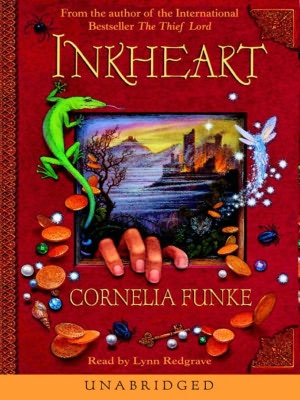
INKHEART by Cornelia Funke; Read by Lynn Redgrave. (Learning Library Audio, 2005)
GENRE: Adventure / Audiobook
HONORS: None
REVIEW: Inkheart is the story of a girl, Meggie, her bookbinder father, Mo, and the trouble that lands on their doorstep when a figure from Mo's past arrives one rainy night. Though exquisitely detailed with adventures and secrets and nefarious doings and hard-won triumphs, Inkheart is, in the end, a love note to books. Meggie is a born reader with a reverence for the printed page that she inherited (along with a slightly more dangerous gift) from her father. Solace and comfort are found between the pages of various stories, which is interesting because the novel's greatest villain also springs forth from the written word. Though overlong at times, (the book sometimes stalls under the weight of Funke's admittedly beautiful descriptions), Inkheart is a pleasure - truly engrossing, charmingly adventurous and satsifyingly resolved. The audiobook also has the advantage of being read by Lynn Redgrave whose vocal performance is nuanced, varied and masterful. Somehow she manages to sound equally convincing as an illiterate thug as she does as a twelve-year old girl. A real treat.
OPINION: The novel is tailor made for younger tweens hungering for an "epic" series to try. Though the action is dark at times, and genuinely a bit frightening, the story follows many of the tropes established in the books that Meggie so loves. In this way, Inkheart is oddly comforting, even as it keeps you on your toes.
IDEAS: A wonderful suggestion for reluctant readers, boys and girls alike. Also a great pick for a tween book club, especially if the members tend towards the younger side.
GENRE: Adventure / Audiobook
HONORS: None
REVIEW: Inkheart is the story of a girl, Meggie, her bookbinder father, Mo, and the trouble that lands on their doorstep when a figure from Mo's past arrives one rainy night. Though exquisitely detailed with adventures and secrets and nefarious doings and hard-won triumphs, Inkheart is, in the end, a love note to books. Meggie is a born reader with a reverence for the printed page that she inherited (along with a slightly more dangerous gift) from her father. Solace and comfort are found between the pages of various stories, which is interesting because the novel's greatest villain also springs forth from the written word. Though overlong at times, (the book sometimes stalls under the weight of Funke's admittedly beautiful descriptions), Inkheart is a pleasure - truly engrossing, charmingly adventurous and satsifyingly resolved. The audiobook also has the advantage of being read by Lynn Redgrave whose vocal performance is nuanced, varied and masterful. Somehow she manages to sound equally convincing as an illiterate thug as she does as a twelve-year old girl. A real treat.
OPINION: The novel is tailor made for younger tweens hungering for an "epic" series to try. Though the action is dark at times, and genuinely a bit frightening, the story follows many of the tropes established in the books that Meggie so loves. In this way, Inkheart is oddly comforting, even as it keeps you on your toes.
IDEAS: A wonderful suggestion for reluctant readers, boys and girls alike. Also a great pick for a tween book club, especially if the members tend towards the younger side.
Pendragon Book One: The Merchant of Death
PENDRAGON Graphic Novel Book One: THE MERCHANT OF DEATH by Carla Speed McNeal. Based on the novel by D.J. MacHale (Aladdin, 2008).
GENRE: Graphic Novel / Adventure
HONORS: None
REVIEW: Bobby Pendragon is an enviable kid. He's popular, good at sports and romantically linked to a really great girl. But he's also what's known as a "traveler"- people who travel between worlds through "flumes" or passages in time and space. Travelers move between dimensions righting wrongs and doing good, ultimately battling the Traveler-gone-wrong, Saint Dane, the series' big villain. It's a very appealing premise, one with a lot of fantastic potential. Unfortunately, that potential remains unmet, at least in this graphic novel adaptation. Bobby is a singularly unappealing protagonist - weak, vain and shallow - and, unfortunately, there is little growth shown over the course of the narrative arc. One gets the sense that, as Bobby accepts his new, inter-dimensional role, he will only become a different shade of insufferable. The story itself is a storehouse of recyled tropes - boy discovers true identity and gets dragged into a "fight that isn't his", adult role models hang around just long enough to get captured or killed before the apprenticeship is over, and there's even an arena fight. A decent adventure, but nothing to write home about.
OPINION: There's nothing wrong, exactly, with this story. It simply rings shallow and predictable. McNeal's illustrations, though competent, are relatively generic, often tending towards the cluttered and unclear, while the slang incorporated to appeal to tweens ("coolio", "lou-zah!" etc.) rings false and forced. An overall middle-of-the-road offering that will probably appeal to younger male tweens, but make no lasting impression.
IDEAS: A fun supplement to the book series, it's a good introduction to the novels for reluctant readers (especially boys) intimidated by the longer form.
GENRE: Graphic Novel / Adventure
HONORS: None
REVIEW: Bobby Pendragon is an enviable kid. He's popular, good at sports and romantically linked to a really great girl. But he's also what's known as a "traveler"- people who travel between worlds through "flumes" or passages in time and space. Travelers move between dimensions righting wrongs and doing good, ultimately battling the Traveler-gone-wrong, Saint Dane, the series' big villain. It's a very appealing premise, one with a lot of fantastic potential. Unfortunately, that potential remains unmet, at least in this graphic novel adaptation. Bobby is a singularly unappealing protagonist - weak, vain and shallow - and, unfortunately, there is little growth shown over the course of the narrative arc. One gets the sense that, as Bobby accepts his new, inter-dimensional role, he will only become a different shade of insufferable. The story itself is a storehouse of recyled tropes - boy discovers true identity and gets dragged into a "fight that isn't his", adult role models hang around just long enough to get captured or killed before the apprenticeship is over, and there's even an arena fight. A decent adventure, but nothing to write home about.
OPINION: There's nothing wrong, exactly, with this story. It simply rings shallow and predictable. McNeal's illustrations, though competent, are relatively generic, often tending towards the cluttered and unclear, while the slang incorporated to appeal to tweens ("coolio", "lou-zah!" etc.) rings false and forced. An overall middle-of-the-road offering that will probably appeal to younger male tweens, but make no lasting impression.
IDEAS: A fun supplement to the book series, it's a good introduction to the novels for reluctant readers (especially boys) intimidated by the longer form.
July 9, 2012
Percy Jackson and the Olympians: The Lighting Thief
PERCY JACKSON & THE OLYMPIANS:
THE LIGHTENING THIEF. Film adaptation. (Directed by Chris Columbus. Starring
Logan Lerhman. Based on the novels by Rick Riorden)
GENRE: Action / Adventure
HONORS: None
REVIEW: The film adaptation of
Rick Riorden’s best-selling series, Percy Jackson and the Olympians, moves at an efficient pace while maintaining the essence
of what makes the books so appealing – Percy’s struggle to manage himself in
the wider world. Lehrman plays Percy, demigod and son of Poseiden, with modern
flair, mixing enough defiance into Percy’s geekiness to make him an appealing
underdog with plenty of fight. Grover, his satyr "protector", grounds
Percy’s quest in contextual gravity while providing comic relief, while
Annabeth, the battle-ready daughter of Athena is a nice foil for Percy, who is
literally dropped into his new reality when a Fury accosts him. Upon learning
of his true heritage, Percy rises to the challenge and proves himself to be a
natural hero with what seems to be, at times, convenient ease.
OPINION: The emotional core of Percy
Jackson and the Lightening Thief rang
hollow at times and it lacks the world-building creativity of other series
adaptations, but it is still a satisfying ride that will no doubt appeal to
fans of the books.
IDEAS: A strong addition to any
unit on Greek mythology or hero quests. Show the film and talk about parallels
between Percy’s quest and the mythological quests it draws from (Odysseus and
the lotus-eaters, Perseus and Medusa, Orpheus in Hades, etc.). There is also an
inherent appeal for kids with dyslexia and ADHD as Percy struggles with these
conditions before discovering that he is a hero.
Princess Diaries
THE PRINCESS DIARIES. Film adaptation. (Directed by Garry
Marshall. Starring Anne Hathaway. Based on the novel by Meg Cabot)
GENRE: Humor
HONORS: None
REVIEW: Awkward, geeky Mia Thermopolis meets her estranged grandmother and
finds out that she isthe heir apparent to the throne of a small European
country called Genovia. While most girls would be thrilled at the news, Mia is
dismayed. She can’t see herself leading anything, let alone a whole country.
What follows is Mia’s physical and emotional transformation as she learns to
accept her royal role. Though simplistic at times, Marshall’s adaptation of the
Cabot novel is charming, touching and funny by turns, while Hathaway’s Mia is a
heroine with substance and depth.
OPINION: Although The Princess Diaries sticks closely its Cinderella / Disney formula, Mia is a refreshing
take on the ugly duckling. She is intelligent, sensitive and self-possessed,
and while her physical make-over is fun, one gets the sense that this is a girl
with enough perspective to rise to the challenge of ruling.
IDEAS: The movie is a good introduction to the tween romance genre, as well as to fairy tale adaptations. If a girls
like it, recommend Meg Cabot’s Princess Diaries series, Ella Enchanted by Gail Carson Levine and Robin
McKinley’s Rose Daughter (for slightly older tweens).
Labels:
assignment 5,
contemporary,
fairy tale,
film,
humor,
LIBR 264,
romance,
tween
Subscribe to:
Posts (Atom)