WHEN YOU REACH ME by Rebecca Stead (Yearling, 2009)
GENRE: Science Fiction / Mystery - Literary
HONORS: Newbery Medal; Boston Globe - Horn Book Award for Fiction; many others, including multiple best-seller and best-of-the-year lists
REVIEW: When You Reach Me begins with Miranda, a sixth grader in 1978, and a postcard informing her mother that she is to be a contestant on The $20,000 Pyramid. Miranda addresses the reader directly as she recounts the events of the year, from the time she receives the first of a series of unsettling notes, to the end of the year, when a death occurs and she slowly puzzles out the mystery of who has been leaving her the notes and why. Stead leans somewhat heavily on Miranda's favorite book, Madeleine L'Engle's A Wrinkle in Time, using this classic to seed the notion of non-linear time and travel between dimensions, (the material is strong enough on it's own that a few simple allusions would have sufficed). That said, the way Stead slowly reveals the purpose behind the notes and their sender is a thing of beauty, intricate and controlled. With a climax that is tremendously effecting and a denouement that stays with you long after the book is over, When You Reach Me is a beautifully crafted book, one that will challenge it's readers as well as reward.
OPINION: When You Reach Me is an unexpected puzzle-box. Miranda is a trustworthy narrator, guiding the reader faithfully through the story's non-linear, threads. Though the book requires a certain amount of maturity and patience on the part of the reader, it is quietly profound - the sort of book you remember reading decades later. With it's blend of L'Engle inspired science fiction and social realism, it is impressive, relevant and entirely deserving of the accolades it's received.
IDEAS: A great book for fans of A Wrinkle in Time, (the novel reads, in some ways, as a love letter to L'Engle's classic work). One might recommend reading both, back to back, and then comparing the two. Which elements of A Wrinkle in Time appear prominently in When You Reach Me? Would the novel be as strong without it's foundational allusions to L'Engle's classic? Why do you think Stead chose to weave it so strongly into this novel? Why is it important that it is Miranda's favorite book?
Showing posts with label LIBR 264. Show all posts
August 9, 2012
The Dark is Rising
THE DARK IS RISING by Susan Cooper (Scholastic, 1974)GENRE: Fantasy
HONORS: Newbery Honor (1974)
REVIEW: On his eleventh birthday, Will Stanton, the seventh son of a seventh son, finds out that he is an Old One, an ancient race of beings who keep the Dark at bay in the name of the Light. No sooner does Will discover that his true purpose as the Seeker, the Old One destined to unite the Things of Power, than he is plunged into the battle between Light and Dark, Good and Evil. The story follows Will as he collects the Six Signs to form the Circle, pursued by the Black Rider, an agent of Darkness, and added by Merriman Lyon, The Lady and other Old Ones who have been fighting the Dark for centuries. Peppered with elements from Celtic myth and Arthurian legend, The Dark is Rising (the second in The Dark is Rising Sequence) is a layered and thoughtful combination of old myth, fantasy and contemporary suspense. It is a book that rewards focus and attention, even while giving it's readers an entertaining, satisfying ride.
OPINION: Beautifully written and briskly paced, The Dark is Rising, smacks of literary quality even as its premise is rooted firmly in the fantasy tradition. Will is a compelling hero - mature, smart, savvy and slightly flawed. He is a kid that most readers would want to be, or at least be friends with. His growth over the course of the novel, spurred primarily through his expanding view of the world, is one that many young readers will identify with, even if they themselves are unlikely to battle the Dark or call on the Wild Hunt for assistance. A tween fantasy classic for a reason, it is arguably the strongest title in The Dark is Rising Sequence, one that stands firmly on it's own.
IDEAS: A wonderful tie in to units on world mythology, particularly Celtic mythology and Arthurian legend. Also a good way to introduce theme, symbolism and allusion. A great recommendation to kids who need to read a Newbery book, but who are more interested in genre fiction than realism. This book has stood the test of time and still feels urgent and contemporary.
August 7, 2012
Among the Hidden
AMONG THE HIDDEN by Margaret Peterson Haddix (Simon & Schuster, 2008)
GENRE: Science Fiction - Dystopia
HONORS: None
REVIEW: In a society in which the number of children per family is limited to two, Luke Garner is a third child, a shadowchild, a child whose very existence is illegal. When the forest surrounding his parents' farm is felled to make way for a housing development for the society's ruling class, Luke must stay hidden, never leaving the house and, eventually, never leaving his attic room. But Luke does leave, and in the process he meets Jen, another third child, the daughter of a rich and powerful Baron, with justice, equality and revolution on her mind. Over the course of their friendship, Luke begins to understand the limitations of his life and learn the courage to hope for more. Haddix's totalitarian dystopia borrows heavily from China's One Child Act, (according to the author, it helped inspire the concept of the book). Though underdeveloped at times (there are questions about the Government's true reach and the society's Population Police that, if answered, would have heighten tensions), Among the Hidden is a compellingly fast read that inspires questions and thought in the reader.
OPINION: Though not as meaty or deeply conceived as the Panem of Suzanne Collins's Hunger Games trilogy, Among the Hidden has much to offer the fans of dystopic fiction. Often overwhelmed and under-informed, Luke is a sympathetic protagonist, ultimately overcoming the hesitation that twelve-years of hiding has bred in him. His relationships - to his mother, to his own frustration, to his doomed friend, Jen - make his story easy to invest in. Overall, a thought-provoking read that will leave reader's curious enough to continue with the rest of the series.
IDEAS: A great suggestion for readers a little too young for The Hunger Games but interested in stories set in dystopias (the fact that it's part of a series means there's a lot to get hooked on). Also a nice, less expected choice for a science fiction display or science fiction book club. The fact that the protagonist is a boy will also help it appeal to male tweens.
GENRE: Science Fiction - Dystopia
HONORS: None
REVIEW: In a society in which the number of children per family is limited to two, Luke Garner is a third child, a shadowchild, a child whose very existence is illegal. When the forest surrounding his parents' farm is felled to make way for a housing development for the society's ruling class, Luke must stay hidden, never leaving the house and, eventually, never leaving his attic room. But Luke does leave, and in the process he meets Jen, another third child, the daughter of a rich and powerful Baron, with justice, equality and revolution on her mind. Over the course of their friendship, Luke begins to understand the limitations of his life and learn the courage to hope for more. Haddix's totalitarian dystopia borrows heavily from China's One Child Act, (according to the author, it helped inspire the concept of the book). Though underdeveloped at times (there are questions about the Government's true reach and the society's Population Police that, if answered, would have heighten tensions), Among the Hidden is a compellingly fast read that inspires questions and thought in the reader.
OPINION: Though not as meaty or deeply conceived as the Panem of Suzanne Collins's Hunger Games trilogy, Among the Hidden has much to offer the fans of dystopic fiction. Often overwhelmed and under-informed, Luke is a sympathetic protagonist, ultimately overcoming the hesitation that twelve-years of hiding has bred in him. His relationships - to his mother, to his own frustration, to his doomed friend, Jen - make his story easy to invest in. Overall, a thought-provoking read that will leave reader's curious enough to continue with the rest of the series.
IDEAS: A great suggestion for readers a little too young for The Hunger Games but interested in stories set in dystopias (the fact that it's part of a series means there's a lot to get hooked on). Also a nice, less expected choice for a science fiction display or science fiction book club. The fact that the protagonist is a boy will also help it appeal to male tweens.
August 6, 2012
A Great and Terrible Beauty
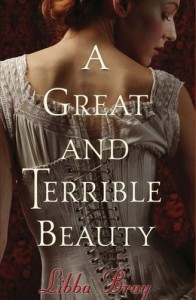
A GREAT AND TERRIBLE BEAUTY by Libba Bray (Simon & Schuster, 2003)
GENRE: Historical Romance w/ paranormal elements
HONORS: NY Times Best-Seller
REVIEW: There were not many options for girls in Victorian society, a fact that becomes obvious to sixteen-year-old Gemma Doyle upon her arrival at the Spence Academy. Initially socially marginalized, Gemma gradually befriends three other girls, even as she begins to experience disturbing visions that place her in the center of a mystery that followed her to London from the streets of India, where her beautiful mother died. A Great and Terrible Beauty reads like part gothic romance and part Victorian pulp with a healthy dose of the paranormal added to spice things up. There's of occult danger and Eastern 'otherness' (both sexy and mildly threatening to a respectable, young Englishwoman) and enough lurid drama to keep any tween / teen gobbling it down. Despite Bray's use of the first person present progressive tense, which gets tiresome at times, A Great and Terrible Beauty is a great deal of fun and surprisingly hard to put down.
OPINION: Libba Bray knows young women. Gemma Doyle is a good heroine, as far as historical fiction goes - she's active, she has agency, she's flawed but passionate. There's a fair amount of conflict and fight in her, which makes her easy for a modern girl to relate to. Gemma's friends are also interesting - the drab, unattractive Ann (who is a cutter, due in large part to her implied depression and alienation), the gorgeous, ornamental Pippa and Felicity, who, of the four, is the most complex.
IDEAS: The first in the Gemma Doyle trilogy, A Great and Terrible Beauty is a solid suggestion for girls looking for historical romance and / or drama. Though not necessarily for reluctant readers, the book appeals on a lot of levels, even as Bray explores serious issues like alienation, autonomy and the historical role of women and girls. A nice choice for a free reading title or as a book club selection - it has a lot of discussion points.
GENRE: Historical Romance w/ paranormal elements
HONORS: NY Times Best-Seller
REVIEW: There were not many options for girls in Victorian society, a fact that becomes obvious to sixteen-year-old Gemma Doyle upon her arrival at the Spence Academy. Initially socially marginalized, Gemma gradually befriends three other girls, even as she begins to experience disturbing visions that place her in the center of a mystery that followed her to London from the streets of India, where her beautiful mother died. A Great and Terrible Beauty reads like part gothic romance and part Victorian pulp with a healthy dose of the paranormal added to spice things up. There's of occult danger and Eastern 'otherness' (both sexy and mildly threatening to a respectable, young Englishwoman) and enough lurid drama to keep any tween / teen gobbling it down. Despite Bray's use of the first person present progressive tense, which gets tiresome at times, A Great and Terrible Beauty is a great deal of fun and surprisingly hard to put down.
OPINION: Libba Bray knows young women. Gemma Doyle is a good heroine, as far as historical fiction goes - she's active, she has agency, she's flawed but passionate. There's a fair amount of conflict and fight in her, which makes her easy for a modern girl to relate to. Gemma's friends are also interesting - the drab, unattractive Ann (who is a cutter, due in large part to her implied depression and alienation), the gorgeous, ornamental Pippa and Felicity, who, of the four, is the most complex.
A Great and Terrible Beauty is fun, dark, a little edgy and sexy in a safely historical way. It's strength lies in the fact that all four of the girls, Gemma, Pippa, Ann, and especially Felicity, want autonomy - they want to valued for themselves and, in their own way, they fight for that privilege in a Victorian world that valued silence in its women and girls. For that alone, A Great and Terrible Beauty is worth reading.
IDEAS: The first in the Gemma Doyle trilogy, A Great and Terrible Beauty is a solid suggestion for girls looking for historical romance and / or drama. Though not necessarily for reluctant readers, the book appeals on a lot of levels, even as Bray explores serious issues like alienation, autonomy and the historical role of women and girls. A nice choice for a free reading title or as a book club selection - it has a lot of discussion points.
August 3, 2012
My Depression: A Picture Book
MY DEPRESSION: A Picture Book by Elizabeth Swados (Hyperion, 2005)
GENRE: Nonfiction - Autobiography
HONORS: None
REVIEW: Depression is a difficult topic and there are very few books written for tweens on the subject. Though My Depression: A Picture Book is written by an adult with an adult audience in mind, there are many aspects of her story that will resonate with tweens struggling to understand the condition. Swados writes about depression frankly, as one who has struggled with the condition since she herself was an adolescent. Her illustrations are raw, evocative and gently humorous, underscoring her minimal text and the emotional difficulties of traveling through a depressive episode and successfully reaching the other side. Swados deals with everything from onset and coping mechanisms to social difficulties and treatment options without falling into the trap of recommending a cure - lots of things work, you just have to be patient and find what works for you. With an absolute lack of judgement, Swados delivers an encouraging message from a person with first hand experience.
OPINION: Certain topics in Swados's story may be inappropriate for younger adolescents (she briefly addresses suicide - though in such as way that emphasizes the many reasons she chose not to. Also mentioned are smoking and drinking as initial coping mechanisms). As such, it's a book that should be recommended and read with care. For older adolescents, particularly those who can read the book and discuss it with a trusted adult, My Depression: A Picture Book is an enlightening, encouraging and nourishing read, filled with sensitivity, frankness and the gentle humor of a person who has been there and made it through.
IDEAS: Unless dealing with a tween or teen that you know quite well, this My Depression: A Picture Book is best recommended to parents / caregivers by librarians (counselors and professionals often recommend it directly, but for nonprofessionals, caution is best). Though blatantly encouraging (the ability to draw strength from depression is repeatedly underscored, while Swados's positive attitude communicates strong authorial support), for older adolescents, it is still a book ideally read with the support of someone else.
GENRE: Nonfiction - Autobiography
HONORS: None
REVIEW: Depression is a difficult topic and there are very few books written for tweens on the subject. Though My Depression: A Picture Book is written by an adult with an adult audience in mind, there are many aspects of her story that will resonate with tweens struggling to understand the condition. Swados writes about depression frankly, as one who has struggled with the condition since she herself was an adolescent. Her illustrations are raw, evocative and gently humorous, underscoring her minimal text and the emotional difficulties of traveling through a depressive episode and successfully reaching the other side. Swados deals with everything from onset and coping mechanisms to social difficulties and treatment options without falling into the trap of recommending a cure - lots of things work, you just have to be patient and find what works for you. With an absolute lack of judgement, Swados delivers an encouraging message from a person with first hand experience.
OPINION: Certain topics in Swados's story may be inappropriate for younger adolescents (she briefly addresses suicide - though in such as way that emphasizes the many reasons she chose not to. Also mentioned are smoking and drinking as initial coping mechanisms). As such, it's a book that should be recommended and read with care. For older adolescents, particularly those who can read the book and discuss it with a trusted adult, My Depression: A Picture Book is an enlightening, encouraging and nourishing read, filled with sensitivity, frankness and the gentle humor of a person who has been there and made it through.
IDEAS: Unless dealing with a tween or teen that you know quite well, this My Depression: A Picture Book is best recommended to parents / caregivers by librarians (counselors and professionals often recommend it directly, but for nonprofessionals, caution is best). Though blatantly encouraging (the ability to draw strength from depression is repeatedly underscored, while Swados's positive attitude communicates strong authorial support), for older adolescents, it is still a book ideally read with the support of someone else.
Lilly and the Pirates
LILLY AND THE PIRATES by Phyllis Root; Illustrated by Rob Shepperson (Boyds Mills Press, 2010)
GENRE: Adventure
HONORS: None
REVIEW: Lilly worries. She worries a lot. What if a yodeler causes an avalanche? What if her parents get swept out to sea? She worries to keep disaster at bay, writing down her concerns in her worry book and hoping for the best - until her scientist parents go on an expedition to the Shipwreck Islands to study the frangipani fruit fly, leaving Lilly behind. When their boat wrecks on the reefs, it is up to Lilly to rescue them by overcoming her fear of the sea and finding the hidden island, all while outsmarting a bunch of pirates. She even learns not to worry - at least, not quite so much. Root's lean, well-paced chapter book is exciting and gently silly (the scholar pirate swears by shouting E=MC2!), while Lilly herself is an honest of an anxious child. Her preventative worrying will be familiar to any young worrier, and though slightly over the top, Root treats her with understanding and respect, all while allowing Lilly to overcome her worries in situationally appropriate, intuitive ways. Encouraging without being preachy, Lilly and the Pirates is a hidden gem - a real buried treasure!
OPINION: Lilly and the Pirates is a quick and extremely charming read. Easy to overlook (it deals with classic themes in classic ways), it still manages to feel fresh and modern. Shepperson's illustrations are great (especially the one of Lilly underwater, debating whether or not to let her worry book go so she can float to the surface), lending Root's tale an air of jaunty, piratical fun. Though it may require some blatant pushing at first, it's popularity is likely to grow through sheer word of mouth.
IDEAS: An unexpected though excellent addition to a pirate, adventure or even humor display. Even more directly, however, it's a wonderful recommendation for kids prone to worry or anxiety who are looking for a genuinely fun and encouraging adventure. In addition, it's a great book for younger adolescents or even grade school kids to read with their parents - especially given the lovely relationship between Lilly and her parents paired with her ability to strike out on her own independently at the end of the book while still loving them.
GENRE: Adventure
HONORS: None
REVIEW: Lilly worries. She worries a lot. What if a yodeler causes an avalanche? What if her parents get swept out to sea? She worries to keep disaster at bay, writing down her concerns in her worry book and hoping for the best - until her scientist parents go on an expedition to the Shipwreck Islands to study the frangipani fruit fly, leaving Lilly behind. When their boat wrecks on the reefs, it is up to Lilly to rescue them by overcoming her fear of the sea and finding the hidden island, all while outsmarting a bunch of pirates. She even learns not to worry - at least, not quite so much. Root's lean, well-paced chapter book is exciting and gently silly (the scholar pirate swears by shouting E=MC2!), while Lilly herself is an honest of an anxious child. Her preventative worrying will be familiar to any young worrier, and though slightly over the top, Root treats her with understanding and respect, all while allowing Lilly to overcome her worries in situationally appropriate, intuitive ways. Encouraging without being preachy, Lilly and the Pirates is a hidden gem - a real buried treasure!
OPINION: Lilly and the Pirates is a quick and extremely charming read. Easy to overlook (it deals with classic themes in classic ways), it still manages to feel fresh and modern. Shepperson's illustrations are great (especially the one of Lilly underwater, debating whether or not to let her worry book go so she can float to the surface), lending Root's tale an air of jaunty, piratical fun. Though it may require some blatant pushing at first, it's popularity is likely to grow through sheer word of mouth.
IDEAS: An unexpected though excellent addition to a pirate, adventure or even humor display. Even more directly, however, it's a wonderful recommendation for kids prone to worry or anxiety who are looking for a genuinely fun and encouraging adventure. In addition, it's a great book for younger adolescents or even grade school kids to read with their parents - especially given the lovely relationship between Lilly and her parents paired with her ability to strike out on her own independently at the end of the book while still loving them.
August 2, 2012
Nicola and the Viscount
NICOLA AND THE VISCOUNT by Meg Cabot (Harper Teen, 2004)
GENRE: Romance - Historical
HONORS: None
REVIEW: Beguiling 16-year-old orphan, Nicola Sparks, is everything a young marriageable young lady in Regency England should be - lovely, charming and just a bit silly. When the young Viscount Farnsworth, (whom Nicola thinks of habitually as "the God"), suddenly proposes marriage, she immediately accepts. The rest of the book is taken up with Nicola's slow realization that her intended, though handsome and superficially charming, may not be all he seems. Cabot treads well-worn ground here, so much so that Nicola and the Viscount, which is obviously intended to read like Jane Austen lite, reads a bit more like a junior Harlequin Regency romance. Not that there's anything wrong with this. Though formulaic in the extreme, the story still follows a winning, time-tested formula, with the heroine caught between two men in a romance peppered with social witticisms. Though Cabot's prose feels awkward, as if she's wearing a dress that doesn't quite fit, the tone is perfect for a light period romance. Even though it's obvious where the story is going from the start, the journey is fun for all it's romantically silly glory.
OPINION: Nicola and the Viscount is a nice alternative to the darker, more fraught passions of paranormal romance. Completely devoid of vampires, demons, werewolves, fallen angels or even run-of-the-mill seriousness, it's a classic sort of romance driven by just enough drama to keep the pages turning. All of the characters, though typical of Regency romances, are charming and fun. The overall effect is of a light little bon bon that's ever-so-easy to gobble up.
IDEAS: With romance that springs from interpersonal tensions rather than blatant physical desire, this is a great read for girls who are ready for more than holding hands at a dance, but not quite ready for Twilight. Also a good suggestion for fans of the film versions of Pride and Prejudice or Emma.
GENRE: Romance - Historical
HONORS: None
REVIEW: Beguiling 16-year-old orphan, Nicola Sparks, is everything a young marriageable young lady in Regency England should be - lovely, charming and just a bit silly. When the young Viscount Farnsworth, (whom Nicola thinks of habitually as "the God"), suddenly proposes marriage, she immediately accepts. The rest of the book is taken up with Nicola's slow realization that her intended, though handsome and superficially charming, may not be all he seems. Cabot treads well-worn ground here, so much so that Nicola and the Viscount, which is obviously intended to read like Jane Austen lite, reads a bit more like a junior Harlequin Regency romance. Not that there's anything wrong with this. Though formulaic in the extreme, the story still follows a winning, time-tested formula, with the heroine caught between two men in a romance peppered with social witticisms. Though Cabot's prose feels awkward, as if she's wearing a dress that doesn't quite fit, the tone is perfect for a light period romance. Even though it's obvious where the story is going from the start, the journey is fun for all it's romantically silly glory.
OPINION: Nicola and the Viscount is a nice alternative to the darker, more fraught passions of paranormal romance. Completely devoid of vampires, demons, werewolves, fallen angels or even run-of-the-mill seriousness, it's a classic sort of romance driven by just enough drama to keep the pages turning. All of the characters, though typical of Regency romances, are charming and fun. The overall effect is of a light little bon bon that's ever-so-easy to gobble up.
IDEAS: With romance that springs from interpersonal tensions rather than blatant physical desire, this is a great read for girls who are ready for more than holding hands at a dance, but not quite ready for Twilight. Also a good suggestion for fans of the film versions of Pride and Prejudice or Emma.
Labels:
assignment 5,
historical,
humor,
LIBR 264,
romance,
tween
The Book of Time
THE BOOK OF TIME by Guillaume Prevost (Scholastic, 2006)
GENRE: Science Fiction - Time Travel
HONORS: None
REVIEW: Sam Faulkner, 14, has had a difficult couple of years. After his mother died, his father, Allan, sold their house and opened an antique bookstore in a run-down house. Just when things start to become normal again, Allan disappears. But when Sam goes to look for him, he finds a stone in the basement that enables him to time travel - to a monastery under Viking attack, to a French battlefield in WWI and a temple in Ancient Egypt. The more Sam travels, the more he understands, until, with the help of his cousin, he deduces that his father is being held captive by Vlad Tepes in 15th century Translyvania. Unforunately, that's when the book ends. Though fast-paced and terrifically interesting, most of The Book of Time reads as if the author is simply laying groundwork for the next book, an impression confirmed by the abrupt cliff-hanger ending. This is unfortunate because the story is well-paced with a genuinely likable protagonist and tons of interesting, accessible historical material. For all that, it fails to work as a cohesive whole - in trying to establish a narrative arc for the series, the author failed to establish an arc for the book.
OPINION: For all it's structural flaws, The Book of Time is still a worthwhile read. The pacing is great - the author hardly allows Sam, or the reader, time to take a breath before launching into a new dangers. Even Sam's present day is full of threatening bullies and his aunt's suspicious new boyfriend. With this much adventure, action and suspense, (not to mention the highest of stakes - his father is being held captive by Vlad the Impaler), The Book of Time is likely to please.
IDEAS: This is fun, accessible science-fiction for kids who don't like science fiction. It's also a fantastic book for classroom use as Prevost (who teaches history) lines each adventure with serious doses of historical interest and detail. The Scholastic edition also includes a comprehensive list of discussion questions, making it a truly educational volume, even though it feels like nothing more than fun when you're reading it.
GENRE: Science Fiction - Time Travel
HONORS: None
REVIEW: Sam Faulkner, 14, has had a difficult couple of years. After his mother died, his father, Allan, sold their house and opened an antique bookstore in a run-down house. Just when things start to become normal again, Allan disappears. But when Sam goes to look for him, he finds a stone in the basement that enables him to time travel - to a monastery under Viking attack, to a French battlefield in WWI and a temple in Ancient Egypt. The more Sam travels, the more he understands, until, with the help of his cousin, he deduces that his father is being held captive by Vlad Tepes in 15th century Translyvania. Unforunately, that's when the book ends. Though fast-paced and terrifically interesting, most of The Book of Time reads as if the author is simply laying groundwork for the next book, an impression confirmed by the abrupt cliff-hanger ending. This is unfortunate because the story is well-paced with a genuinely likable protagonist and tons of interesting, accessible historical material. For all that, it fails to work as a cohesive whole - in trying to establish a narrative arc for the series, the author failed to establish an arc for the book.
OPINION: For all it's structural flaws, The Book of Time is still a worthwhile read. The pacing is great - the author hardly allows Sam, or the reader, time to take a breath before launching into a new dangers. Even Sam's present day is full of threatening bullies and his aunt's suspicious new boyfriend. With this much adventure, action and suspense, (not to mention the highest of stakes - his father is being held captive by Vlad the Impaler), The Book of Time is likely to please.
IDEAS: This is fun, accessible science-fiction for kids who don't like science fiction. It's also a fantastic book for classroom use as Prevost (who teaches history) lines each adventure with serious doses of historical interest and detail. The Scholastic edition also includes a comprehensive list of discussion questions, making it a truly educational volume, even though it feels like nothing more than fun when you're reading it.
I'd Tell You I Love You, But Then I'd Have to Kill You
I'D TELL YOU I LOVE YOU, BUT THEN I'D HAVE TO KILL YOU by Ally Carter (Hyperion, 2007)
GENRE: Romance - Contemporary
HONORS: None
REVIEW: Fifteen year old Cammie Morgan goes to the Gallagher Academy for Exceptional Young Women, a boarding school that trains future spies. Even there, she is truly special, with an ex-CIA mom (who is also headmistress) and a dad killed on assignment, Cammie is a natural spy. But she's also a girl, as the author is quick to point out. Curious about life beyond self-defense and covert ops, Cammie falls in love with Josh, a local boy, who has no idea who, or what, she is. Hijinks ensue as Cammie uses her skills to keep her worlds from colliding, which, of course, they inevitably do. The 1st person narration is perky and cute, almost to a fault, as Cammie confides in the reader through plentiful, though eventually tiresome asides. The world of the Gallagher Academy is completely over-the-top, though if you suspend the right amount of disbelief, the ridiculousness is almost fun. Unfortunately, the stakes never get high enough for all the drama to seem warranted. There are no real bad guys and no lives at stake. For a novel populated by supposedly hard-core spies, this is a problem. As a result, Cammie's real-girl struggles fall a bit flat in this elevated, fantasy world.
OPINION: Carter keeps a tight focus on the audience I Would Tell You I Love You, But Then I'd Have to Kill You is aimed at. Though it ultimately fails to live up to it's potential, tweens and teens will very likely devour this blend of everyday romance and girl-power spy-fantasy. Cammie is sympathetic and generally likable and, though not the most interesting person in this motley cast of characters, she is the easiest to relate to.
IDEAS: A good suggestion for girls who want their romance with a little humor and a bit of action. The importance of female friendships is also a nice touch and will likely appeal to a wide variety of girls.
GENRE: Romance - Contemporary
HONORS: None
REVIEW: Fifteen year old Cammie Morgan goes to the Gallagher Academy for Exceptional Young Women, a boarding school that trains future spies. Even there, she is truly special, with an ex-CIA mom (who is also headmistress) and a dad killed on assignment, Cammie is a natural spy. But she's also a girl, as the author is quick to point out. Curious about life beyond self-defense and covert ops, Cammie falls in love with Josh, a local boy, who has no idea who, or what, she is. Hijinks ensue as Cammie uses her skills to keep her worlds from colliding, which, of course, they inevitably do. The 1st person narration is perky and cute, almost to a fault, as Cammie confides in the reader through plentiful, though eventually tiresome asides. The world of the Gallagher Academy is completely over-the-top, though if you suspend the right amount of disbelief, the ridiculousness is almost fun. Unfortunately, the stakes never get high enough for all the drama to seem warranted. There are no real bad guys and no lives at stake. For a novel populated by supposedly hard-core spies, this is a problem. As a result, Cammie's real-girl struggles fall a bit flat in this elevated, fantasy world.
OPINION: Carter keeps a tight focus on the audience I Would Tell You I Love You, But Then I'd Have to Kill You is aimed at. Though it ultimately fails to live up to it's potential, tweens and teens will very likely devour this blend of everyday romance and girl-power spy-fantasy. Cammie is sympathetic and generally likable and, though not the most interesting person in this motley cast of characters, she is the easiest to relate to.
IDEAS: A good suggestion for girls who want their romance with a little humor and a bit of action. The importance of female friendships is also a nice touch and will likely appeal to a wide variety of girls.
Labels:
action,
assignment 5,
contemporary,
humor,
LIBR 264,
romance,
tween
August 1, 2012
The Mysteries of Harris Burdick
THE MYSTERIES OF HARRIS BURDICK by Chris Van Allsburg (Houghton Mifflin, 1984)
GENRE: Mystery
HONORS: None
REVIEW: The Mysteries of Harris Burdick is a deceptively simple book based on a deceptively simple premise. The author, award-winning Chris Van Allsburg, in a brief but fantastically contextualizing introduction, purports to be simply reproducing existing material - specifically, a collection of 12 illustrations, titles and first lines from 12 stories by a mysterious author named, Harris Burdick. Supposedly, Burdick left this "sample" of his work with a man named Peter Wenders 30 years before with the idea that if Wenders liked his work, Burdick would return with the rest of the stories and their illustrations. Wenders loved Burdick's work, but the author / illustrator never returned. His illustrations and titles, however, had inspired dozens of stories by the school children that Wenders had shown the work to. Inspired in turn, Van Allsburg states in his introduction that he is now publishing the "collection" in the hopes that it will inspire an even wider audience. The illustrations, as with all of Van Allsburg's art, are haunting and shadowy, hinting at far more than the eye initially sees. The titles and first lines add to the art's mystique, underscoring humor in some images, or, far more often, instilling the illustrations with an odd, unsettling quality. Though the text is sparse, the visual and creative content is not. The Mysteries of Harris Burdick is full of enough mystery to inspire even the only marginally curious to return to the images again and again.
OPINION: To page casually through The Mysteries of Harris Burdick is to skim the surface of one's own creative potential. Though there is comparatively little text, the imaginative demands of the book's premise make it an excellent read for younger adolescents and a great creative tool / source of inspiration for tweens (and even teens) of all ages. Creepy, funny, unsettling and, indeed, mysterious, The Mysteries of Harris Burdick offers no solution to the problem of the missing manuscript pages or Burdick's disappearance, but it does offer the reader ample opportunity to write the resolution for themselves.
IDEAS: This is a fantastic book to spur discussions in a classroom or book club - how do you interpret the image? The title and first line? All three elements together? Why? It's also a great jumping off point for a creative writing exercise.
GENRE: Mystery
HONORS: None
REVIEW: The Mysteries of Harris Burdick is a deceptively simple book based on a deceptively simple premise. The author, award-winning Chris Van Allsburg, in a brief but fantastically contextualizing introduction, purports to be simply reproducing existing material - specifically, a collection of 12 illustrations, titles and first lines from 12 stories by a mysterious author named, Harris Burdick. Supposedly, Burdick left this "sample" of his work with a man named Peter Wenders 30 years before with the idea that if Wenders liked his work, Burdick would return with the rest of the stories and their illustrations. Wenders loved Burdick's work, but the author / illustrator never returned. His illustrations and titles, however, had inspired dozens of stories by the school children that Wenders had shown the work to. Inspired in turn, Van Allsburg states in his introduction that he is now publishing the "collection" in the hopes that it will inspire an even wider audience. The illustrations, as with all of Van Allsburg's art, are haunting and shadowy, hinting at far more than the eye initially sees. The titles and first lines add to the art's mystique, underscoring humor in some images, or, far more often, instilling the illustrations with an odd, unsettling quality. Though the text is sparse, the visual and creative content is not. The Mysteries of Harris Burdick is full of enough mystery to inspire even the only marginally curious to return to the images again and again.
OPINION: To page casually through The Mysteries of Harris Burdick is to skim the surface of one's own creative potential. Though there is comparatively little text, the imaginative demands of the book's premise make it an excellent read for younger adolescents and a great creative tool / source of inspiration for tweens (and even teens) of all ages. Creepy, funny, unsettling and, indeed, mysterious, The Mysteries of Harris Burdick offers no solution to the problem of the missing manuscript pages or Burdick's disappearance, but it does offer the reader ample opportunity to write the resolution for themselves.
IDEAS: This is a fantastic book to spur discussions in a classroom or book club - how do you interpret the image? The title and first line? All three elements together? Why? It's also a great jumping off point for a creative writing exercise.
July 31, 2012
The Hitchhiker's Guide to the Galaxy
THE HITCHHIKER'S GUIDE TO THE GALAXY by Douglas Adams (Crown, 2004 - Anniversary Edition)
GENRE: Science Fiction
HONORS: Multiple Best-Seller Lists Over Multiple Decades
REVIEW: One morning, Arthur Dent wakes up to find a construction crew with a bulldozer outside of his house - the location for a new interstate. It is also the day that Earth has been scheduled for demolition to make way for a new intergalactic highway. Luckily, Arthur's friend, Ford Prefect, is not what he seems. He is a Hitchhiker and he knows where his towel is. Just as the Earth explodes, Ford, with Arthur in tow, snags a ride from a passing ship, escaping the Earth's destruction and landing them in a series of comic misadventures across the galaxy. With a cast of characters that have come to personify the ridiculous (in a really funny kind of way), Adams's now classic adventure is true must-read, particularly junior high boys - not to discriminate against junior high girls, it's just that, even thirty years later, adolescent males seem to take special joy in quoting any number of Adamsisms at length. Expertly paced, tonally perfect and truly quirky, The Hitchhiker's Guide to the Galaxy may be science-fiction lite, but it's still must-read science fiction, even at the risk of exposure to Vogon poetry.
OPINION: The Hitchhiker's Guide to the Galaxy is the kind of funny that relies on timing, word play and healthy dose of the ridiculous. It swings along and before you know it, you're halfway through and ignoring chores. Though not for readers that take themselves terribly seriously, most adolescents will enjoy Arthur Dent's slow inculcation into the Hitchhiking way of life. If a library doesn't have this book, there is very likely something wrong...
IDEAS: A great suggestion for parents looking a book they can read with their tween. A lot of parents will remember reading it when they were adolescents and would probably share it, with great enthusiasm, with their own kids. The humor has more than held up.
GENRE: Science Fiction
HONORS: Multiple Best-Seller Lists Over Multiple Decades
REVIEW: One morning, Arthur Dent wakes up to find a construction crew with a bulldozer outside of his house - the location for a new interstate. It is also the day that Earth has been scheduled for demolition to make way for a new intergalactic highway. Luckily, Arthur's friend, Ford Prefect, is not what he seems. He is a Hitchhiker and he knows where his towel is. Just as the Earth explodes, Ford, with Arthur in tow, snags a ride from a passing ship, escaping the Earth's destruction and landing them in a series of comic misadventures across the galaxy. With a cast of characters that have come to personify the ridiculous (in a really funny kind of way), Adams's now classic adventure is true must-read, particularly junior high boys - not to discriminate against junior high girls, it's just that, even thirty years later, adolescent males seem to take special joy in quoting any number of Adamsisms at length. Expertly paced, tonally perfect and truly quirky, The Hitchhiker's Guide to the Galaxy may be science-fiction lite, but it's still must-read science fiction, even at the risk of exposure to Vogon poetry.
OPINION: The Hitchhiker's Guide to the Galaxy is the kind of funny that relies on timing, word play and healthy dose of the ridiculous. It swings along and before you know it, you're halfway through and ignoring chores. Though not for readers that take themselves terribly seriously, most adolescents will enjoy Arthur Dent's slow inculcation into the Hitchhiking way of life. If a library doesn't have this book, there is very likely something wrong...
IDEAS: A great suggestion for parents looking a book they can read with their tween. A lot of parents will remember reading it when they were adolescents and would probably share it, with great enthusiasm, with their own kids. The humor has more than held up.
The Girl Who Circumnavigated Fairyland in a Ship of Her Own Making
THE GIRL WHO CIRCUMNAVIGATED FAIRYLAND IN A SHIP OF HER OWN MAKING by Catherynne M. Valente; Illustrated by Ana Juan (Square Fish, 2012)
GENRE: Fantasy / Fairytale
HONORS: Andre Norton Award
REVIEW: While washing pink and yellow teacups in her kitchen sink, September is offered the chance to ride the Leopard of Gentle Breezes to Fairyland with the Green Wind, a natty and mischievous individual. September, who is not only tired of washing teacups, but of Nebraska and of normal life in general, accepts, embarking on an adventure that takes her to Pandemonium, (the capital of Fairyland) and the home of the evil Marquess, to the Autumn territories where it is always Halloween, around the whole of Fairyland in her titular ship and finally to the Lonely Jail, where all is explained. Along the way, she meets a girl made of soap, a Wyverary (a Wyvern that is half library), witches, pookahs, alchemists, velocipedes, a boy named Saturday and her own Death. While drawing liberally on motifs and themes from multiple fairy tales, Valente manages to construct a story that is both linguistically beautiful and completely unique. September's journey lands her in unexpected and oddly familiar places, while the climax, though (in hindsight) is perfectly, constructed and inevitable, still manages to surprise. A gorgeous and truly special book, The Girl Who Circumnavigated Fairyland in a Ship of Her Own Making is a lovely, jewel of a thing, full of enough adventure and emotional resonance to have readers gobbling it up like fairy food.
OPINION: This is, so far, my favorite book of the semester. Valente's narrative voice is playful and sure, drawsing on old-fashioned language and conceits (such as asides to the reader) that in her hands feels fresh and new. Everything about September's story vibrates with energy and color, but what makes it stand out, particularly, is the emotional depth operating beneath the visual and linguistic loveliness. Themes of loneliness, fear and regret play out gracefully to the end, making The Girl Who Circumnavigated Fairyland in a Ship of Her Own Making much more than just a charming face.
IDEAS: A good suggestion for slightly older tweens with the ability to focus on language. While not a difficult read, it does require a bit of focus and maturity from the reader. It would be especially fun for tweens who enjoy fairy tales and classics like Alice's Adventures in Wonderland as Valente refers to many of them thematically and stylistically throughout. Also a wonderful choice for a library or school book club, where an adult could help lead discussions on any number of possible topics.
GENRE: Fantasy / Fairytale
HONORS: Andre Norton Award
REVIEW: While washing pink and yellow teacups in her kitchen sink, September is offered the chance to ride the Leopard of Gentle Breezes to Fairyland with the Green Wind, a natty and mischievous individual. September, who is not only tired of washing teacups, but of Nebraska and of normal life in general, accepts, embarking on an adventure that takes her to Pandemonium, (the capital of Fairyland) and the home of the evil Marquess, to the Autumn territories where it is always Halloween, around the whole of Fairyland in her titular ship and finally to the Lonely Jail, where all is explained. Along the way, she meets a girl made of soap, a Wyverary (a Wyvern that is half library), witches, pookahs, alchemists, velocipedes, a boy named Saturday and her own Death. While drawing liberally on motifs and themes from multiple fairy tales, Valente manages to construct a story that is both linguistically beautiful and completely unique. September's journey lands her in unexpected and oddly familiar places, while the climax, though (in hindsight) is perfectly, constructed and inevitable, still manages to surprise. A gorgeous and truly special book, The Girl Who Circumnavigated Fairyland in a Ship of Her Own Making is a lovely, jewel of a thing, full of enough adventure and emotional resonance to have readers gobbling it up like fairy food.
OPINION: This is, so far, my favorite book of the semester. Valente's narrative voice is playful and sure, drawsing on old-fashioned language and conceits (such as asides to the reader) that in her hands feels fresh and new. Everything about September's story vibrates with energy and color, but what makes it stand out, particularly, is the emotional depth operating beneath the visual and linguistic loveliness. Themes of loneliness, fear and regret play out gracefully to the end, making The Girl Who Circumnavigated Fairyland in a Ship of Her Own Making much more than just a charming face.
IDEAS: A good suggestion for slightly older tweens with the ability to focus on language. While not a difficult read, it does require a bit of focus and maturity from the reader. It would be especially fun for tweens who enjoy fairy tales and classics like Alice's Adventures in Wonderland as Valente refers to many of them thematically and stylistically throughout. Also a wonderful choice for a library or school book club, where an adult could help lead discussions on any number of possible topics.
The Mummy's Mother
THE MUMMY'S MOTHER by Tony Johnston (Blue Sky Press, 2003)
GENRE: Adventure / Humor
HONORS: None
REVIEW: Ramoses is a 4, 010 year old mummy (4, 010 because he was 10 years old when he was mummified 4,000 years ago). For all that time, he and his mother, the Queen, have been tucked quietly in their tomb, waiting for the Afterlife, until one day, nefarious thieves steal his mother's mummy away. Though young, inexperienced and a bit physically fragile (one good thump could crumble his ancient bones), Ramoses heads off in pursuit, undertaking a journey that leads him through the desert on a cranky camel, to a ship where he makes friends and plays ping-pong and finally to New York, where his mother is being displayed in a museum. Ramoses is a sweet and earnest protagonist, whose vulnerabilities (both emotional and physical) are nicely balanced by his bravery and his ability to rise to every occasion. Johnston keeps things moving without unduly rushing the narrative. The result is a well-paced little story that lingers just long enough on each of Ramoses's adventures for humor or tension to bloom, without interfering with the pace.
OPINION: The Mummy's Mother makes up in humor and pacing for what it lacks in depth. Still, given that it is aimed at younger adolescents, a slight lack of depth could be considered a plus. It is especially humorous that Ramoses, who looks like a typical mummy, never arouses the suspicion of adults, most of whom assume he is a normal boy wearing bandages for some reason. This fun and funny suspension of disbelief contributes greatly to the book's charm. As an added benefit, Johnston weaves in a lot of aspects of Ancient Egyptian history and mythology, which will likely pique the interest of young readers and perhaps prompt them to learn more.
IDEAS: A great suggestion to younger tweens interested in Ancient Egypt or quick adventures with a gentle dose of humor. Also a nice supplementary reading for classrooms who are doing a unit on world mythology as the names and functions of Egyptian gods are featured throughout.
GENRE: Adventure / Humor
HONORS: None
REVIEW: Ramoses is a 4, 010 year old mummy (4, 010 because he was 10 years old when he was mummified 4,000 years ago). For all that time, he and his mother, the Queen, have been tucked quietly in their tomb, waiting for the Afterlife, until one day, nefarious thieves steal his mother's mummy away. Though young, inexperienced and a bit physically fragile (one good thump could crumble his ancient bones), Ramoses heads off in pursuit, undertaking a journey that leads him through the desert on a cranky camel, to a ship where he makes friends and plays ping-pong and finally to New York, where his mother is being displayed in a museum. Ramoses is a sweet and earnest protagonist, whose vulnerabilities (both emotional and physical) are nicely balanced by his bravery and his ability to rise to every occasion. Johnston keeps things moving without unduly rushing the narrative. The result is a well-paced little story that lingers just long enough on each of Ramoses's adventures for humor or tension to bloom, without interfering with the pace.
OPINION: The Mummy's Mother makes up in humor and pacing for what it lacks in depth. Still, given that it is aimed at younger adolescents, a slight lack of depth could be considered a plus. It is especially humorous that Ramoses, who looks like a typical mummy, never arouses the suspicion of adults, most of whom assume he is a normal boy wearing bandages for some reason. This fun and funny suspension of disbelief contributes greatly to the book's charm. As an added benefit, Johnston weaves in a lot of aspects of Ancient Egyptian history and mythology, which will likely pique the interest of young readers and perhaps prompt them to learn more.
IDEAS: A great suggestion to younger tweens interested in Ancient Egypt or quick adventures with a gentle dose of humor. Also a nice supplementary reading for classrooms who are doing a unit on world mythology as the names and functions of Egyptian gods are featured throughout.
July 27, 2012
The Giver
THE GIVER by Lois Lowry (Houghton Mifflin, 1993)
GENRE: Science Fiction - Dystopic
HONORS: Newbery Award
REVIEW: Jonas lives in a community ruled by "Sameness". People are assigned jobs and spouses, they apply to have children (a maximum of one boy and one girl, dispensed when the "new child" is 1 year old). It is a society that doesn't know war or pain or hunger, but they also cannot love. There is no collective memory. All of the community's memories reside in The Receiver, a person of great honor, and Jonas is selected to replace him. As the old Receiver becomes The Giver, passing memories of joy and pain into the boy, Jonas faces the painful isolation of awareness. He alone knows about colors and snow and war and love. Ultimately, Jonas must decide whether to stay in a community that becomes increasingly horrific in his eyes, or to risk the wilds "Els subtle ewhere"for a chance at an honest life. With a masterful, light touch, Lowry constructs a world that grows increasingly unsettling over course of this short book, dispensing knowledge more through implication than stated fact. Jonas journey of awareness is painful and inevitable, and the choice he ultimately makes is the perfect criticism of a society based on rigid homogeneity.
OPINION: The Giver is a subtly overwhelming book. Lowry blends the tender (the naming ceremony) with the creepy ("comfort objects"; the "Releasing Room") to paint a picture of life in a society that, though safe, is hardly a life at all. Jonah is a brave protagonist who grows rapidly over the course of the book, gaining wisdom through the memories The Giver transfers to him. As a meditation on societal control, "sameness", the importance of shared history and the nature of love, The Giver is, quite possibly, the perfect adolescent novel. It most certainly contains a perfect dystopia, if such a thing could exist.
IDEAS: Used in middle school and junior high English classes everywhere, The Giver is made to be discussed, with serious themes and issues woven carefully through its straightforward narrative. A great suggestion for tween fans of dystopic fiction and science fiction, it's also a wonderful introduction for young people not yet familiar with the genre.
GENRE: Science Fiction - Dystopic
HONORS: Newbery Award
REVIEW: Jonas lives in a community ruled by "Sameness". People are assigned jobs and spouses, they apply to have children (a maximum of one boy and one girl, dispensed when the "new child" is 1 year old). It is a society that doesn't know war or pain or hunger, but they also cannot love. There is no collective memory. All of the community's memories reside in The Receiver, a person of great honor, and Jonas is selected to replace him. As the old Receiver becomes The Giver, passing memories of joy and pain into the boy, Jonas faces the painful isolation of awareness. He alone knows about colors and snow and war and love. Ultimately, Jonas must decide whether to stay in a community that becomes increasingly horrific in his eyes, or to risk the wilds "Els subtle ewhere"for a chance at an honest life. With a masterful, light touch, Lowry constructs a world that grows increasingly unsettling over course of this short book, dispensing knowledge more through implication than stated fact. Jonas journey of awareness is painful and inevitable, and the choice he ultimately makes is the perfect criticism of a society based on rigid homogeneity.
OPINION: The Giver is a subtly overwhelming book. Lowry blends the tender (the naming ceremony) with the creepy ("comfort objects"; the "Releasing Room") to paint a picture of life in a society that, though safe, is hardly a life at all. Jonah is a brave protagonist who grows rapidly over the course of the book, gaining wisdom through the memories The Giver transfers to him. As a meditation on societal control, "sameness", the importance of shared history and the nature of love, The Giver is, quite possibly, the perfect adolescent novel. It most certainly contains a perfect dystopia, if such a thing could exist.
IDEAS: Used in middle school and junior high English classes everywhere, The Giver is made to be discussed, with serious themes and issues woven carefully through its straightforward narrative. A great suggestion for tween fans of dystopic fiction and science fiction, it's also a wonderful introduction for young people not yet familiar with the genre.
The 13 Clocks
THE 13 CLOCKS by James Thurber; Illustrated by Marc Simont; Introduction by Neil Gaiman (New York Review Children's Collection, 1950)
GENRE: Fantasy / Humor / Fairy Tale
HONORS: None
REVIEW: High up in a castle, an evil Duke (who is so cold that even the hands of his 13 clocks have frozen at "ten minutes to five") lives with his beautiful niece, Princess Seralinda. Loathe to lose her to marriage, the Duke devises all manner of impossible quests for the suitors who come knocking at his castle door. It is only when Xingu, a "knight who is not a knight" learns of the lovely Seralinda and undertakes a quest to win her hand in marriage, that the Duke overthrown and justice served. Thoroughly intelligent and charmingly ridiculous, The 13 Clocks takes full advantage of an entire host of fairy tales. Though it won't appeal to every reader, for those who enjoy a touch of the ridiculous, light romance, fairy tales or complex puns it is a wonderful, surprising read.
OPINION: The 13 Clocks is a quick read that works on several levels. For younger adolescents, the story alone, with it's fabulous villain, lovely princess and intrepid knight, is a fun romp through territory littered with familiar fairy tale motifs. For older tweens, or those who read more closely, Thurber's word play and internal pacing give The 13 Clocks and extra degree of interest. One could read this book several times and still not catch every double-meaning or subtle joke, making it a subtly ridiculous, utterly engrossing read for a wide range of tweens. Neil Gaiman's introduction adds a nice bit of context for the modern reader, as well.
IDEAS: Great for fans of Roald Dahl's satirical style and work play. Also an unexpected suggestion for fans of fairy tales and knightly romance, particularly for those who enjoy a dash of humor and a touch of the ridiculous. In the classroom, a nice vehicle for discussion about folklore and fairy tale motifs and themes.
GENRE: Fantasy / Humor / Fairy Tale
HONORS: None
REVIEW: High up in a castle, an evil Duke (who is so cold that even the hands of his 13 clocks have frozen at "ten minutes to five") lives with his beautiful niece, Princess Seralinda. Loathe to lose her to marriage, the Duke devises all manner of impossible quests for the suitors who come knocking at his castle door. It is only when Xingu, a "knight who is not a knight" learns of the lovely Seralinda and undertakes a quest to win her hand in marriage, that the Duke overthrown and justice served. Thoroughly intelligent and charmingly ridiculous, The 13 Clocks takes full advantage of an entire host of fairy tales. Though it won't appeal to every reader, for those who enjoy a touch of the ridiculous, light romance, fairy tales or complex puns it is a wonderful, surprising read.
OPINION: The 13 Clocks is a quick read that works on several levels. For younger adolescents, the story alone, with it's fabulous villain, lovely princess and intrepid knight, is a fun romp through territory littered with familiar fairy tale motifs. For older tweens, or those who read more closely, Thurber's word play and internal pacing give The 13 Clocks and extra degree of interest. One could read this book several times and still not catch every double-meaning or subtle joke, making it a subtly ridiculous, utterly engrossing read for a wide range of tweens. Neil Gaiman's introduction adds a nice bit of context for the modern reader, as well.
IDEAS: Great for fans of Roald Dahl's satirical style and work play. Also an unexpected suggestion for fans of fairy tales and knightly romance, particularly for those who enjoy a dash of humor and a touch of the ridiculous. In the classroom, a nice vehicle for discussion about folklore and fairy tale motifs and themes.
Jane Eyre
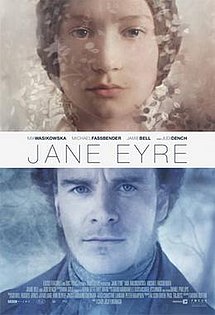
JANE EYRE (Film Adaptation) directed by Cary Joji Fukunaga; Starring Mia Wasikowska and Michael Fassbender. Based on the novel by Charlotte Bronte. (Focus Features, 2011).
GENRE: Romance (Gothic) / Historical
HONORS: LA Film Critic's Assoc. Award for Best Actor (Michael Fassbender - won); National Board of Review Spotlight Award (Michael Fassbender - won); British Independent Film Best Actress Award (Mia Wasikowska - nominated)
REVIEW: Few films capture the tone and feel of a classic as well as Fukunaga's 2011 adaptation of Charlotte Bronte's Jane Eyre. Orphaned Jane goes to work for the mysterious Mr. Rochester as a governess. Before long, she begins to notice odd things in the expansive house - strange noises, sudden fires and unexplained injuries. All the while, Jane becomes increasingly fascinated by her mercurial, challenging employer. But though Jane may look small and pale, she is strong, stronger than anyone else in the house, with a moral and ethical core that renders her integrity stunning in it's unshakability. As in the novel, Wasikowska's Jane knows her own mind, and though she is humble, she knows her own value and will not compromise it. Fassbender's Rochester is a haunted, complicated man, with an edge that wavers just to one side of dangerous. The production itself is lovely with light dreamlike expanses contrasting starkly with the dark, sinister interior of Rochester's home. Taut and intense, Jane Eyre is not a movie to watch while texting or playing an app. Luckily, it's appealing enough that even the most tech savvy tween won't want to.
OPINION: Jane Eyre is a classic with much to offer adolescent readers. However, it's also a title that tends to intimidate or simply not interest modern tweens. This adaptation, though faithfully adapted from Bronte's original, renders the story far more accessible by concentrating primarily on Jane's growth, and on her romance with Rochester, in all it's complicated, gothic glory. Darker than all of the perennially popular Jane Austen's work combined, Jane Eyre is a great suggestion for tweens looking for something a touch more gothic, and Fukunaga's film adaptation is a wonderful way to introduce them to the story and pique their interest.
IDEAS: A must-have for any display featuring the classics, it would also be an unexpected inclusion in a display with a romance or historical theme. Also a nice suggestion for fans of the book and for tweens, particularly girls, interested in classical literature / stories, but unsure where to start.
GENRE: Romance (Gothic) / Historical
HONORS: LA Film Critic's Assoc. Award for Best Actor (Michael Fassbender - won); National Board of Review Spotlight Award (Michael Fassbender - won); British Independent Film Best Actress Award (Mia Wasikowska - nominated)
REVIEW: Few films capture the tone and feel of a classic as well as Fukunaga's 2011 adaptation of Charlotte Bronte's Jane Eyre. Orphaned Jane goes to work for the mysterious Mr. Rochester as a governess. Before long, she begins to notice odd things in the expansive house - strange noises, sudden fires and unexplained injuries. All the while, Jane becomes increasingly fascinated by her mercurial, challenging employer. But though Jane may look small and pale, she is strong, stronger than anyone else in the house, with a moral and ethical core that renders her integrity stunning in it's unshakability. As in the novel, Wasikowska's Jane knows her own mind, and though she is humble, she knows her own value and will not compromise it. Fassbender's Rochester is a haunted, complicated man, with an edge that wavers just to one side of dangerous. The production itself is lovely with light dreamlike expanses contrasting starkly with the dark, sinister interior of Rochester's home. Taut and intense, Jane Eyre is not a movie to watch while texting or playing an app. Luckily, it's appealing enough that even the most tech savvy tween won't want to.
OPINION: Jane Eyre is a classic with much to offer adolescent readers. However, it's also a title that tends to intimidate or simply not interest modern tweens. This adaptation, though faithfully adapted from Bronte's original, renders the story far more accessible by concentrating primarily on Jane's growth, and on her romance with Rochester, in all it's complicated, gothic glory. Darker than all of the perennially popular Jane Austen's work combined, Jane Eyre is a great suggestion for tweens looking for something a touch more gothic, and Fukunaga's film adaptation is a wonderful way to introduce them to the story and pique their interest.
IDEAS: A must-have for any display featuring the classics, it would also be an unexpected inclusion in a display with a romance or historical theme. Also a nice suggestion for fans of the book and for tweens, particularly girls, interested in classical literature / stories, but unsure where to start.
The Rose and the Beast
THE ROSE AND THE BEAST by Francesca Lia Block (Harper Collins, 2000)
GENRE: Fantasy / Fairy Tales
HONORS: L.A. Times Best Seller
REVIEW: The Rose and the Beast is an unexpected collection. Each story is an adaptation of a fairy tale ranging from the popular, ("Snow," a variation on Snow White) to the less well-known, ("Bones," Block's Bluebeard). As in much of Francesca Lia Block's work, the language is lovely and poetic, with a nebulous quality that gives each story the feeling a Impressionist painting. Though not immediately obvious in most cases, the original tales form strong foundation for each adaptation, providing Block with a platform on which to explore themes such as the variable nature of love and friendship, as well as darker issues, such as abuse and alienation. More appropriate for adolescents 13 and over, The Rose and the Beast is a subtle, emotional collection, one that deals with potentially difficult subject matter, while rarely handing the reader a clear-cut solution to any of the situations depicted. That said, the stories are haunting and beautiful, and will reward the reader who takes the time to sit and ponder them.
OPINION: This is a wonderful collection of literary fairy tale adaptations. Each story, written with Block's characteristic linguistic care, skims the surface of the original, while hinting at the depths beneath. A strong addition to any tween collection, it is a book that requires the reader's full emotional and intellectual attention. It would probably be most enjoyed by readers already familiar with the world of fairy tales and their adaptations and / or fans of Block's other work.
IDEAS: A great book for comparative discussion. The tales of full of hints, clues and variations on the original fairy tales that inspired them. Also a great suggestion for fans of Block's other collections, particularly Girl Goddess #9 and How to (un)Cage a Girl.
GENRE: Fantasy / Fairy Tales
HONORS: L.A. Times Best Seller
REVIEW: The Rose and the Beast is an unexpected collection. Each story is an adaptation of a fairy tale ranging from the popular, ("Snow," a variation on Snow White) to the less well-known, ("Bones," Block's Bluebeard). As in much of Francesca Lia Block's work, the language is lovely and poetic, with a nebulous quality that gives each story the feeling a Impressionist painting. Though not immediately obvious in most cases, the original tales form strong foundation for each adaptation, providing Block with a platform on which to explore themes such as the variable nature of love and friendship, as well as darker issues, such as abuse and alienation. More appropriate for adolescents 13 and over, The Rose and the Beast is a subtle, emotional collection, one that deals with potentially difficult subject matter, while rarely handing the reader a clear-cut solution to any of the situations depicted. That said, the stories are haunting and beautiful, and will reward the reader who takes the time to sit and ponder them.
OPINION: This is a wonderful collection of literary fairy tale adaptations. Each story, written with Block's characteristic linguistic care, skims the surface of the original, while hinting at the depths beneath. A strong addition to any tween collection, it is a book that requires the reader's full emotional and intellectual attention. It would probably be most enjoyed by readers already familiar with the world of fairy tales and their adaptations and / or fans of Block's other work.
IDEAS: A great book for comparative discussion. The tales of full of hints, clues and variations on the original fairy tales that inspired them. Also a great suggestion for fans of Block's other collections, particularly Girl Goddess #9 and How to (un)Cage a Girl.
From the Mixed-Up Files of Mrs. Basil E. Frankweiler
FROM THE MIXED-UP FILES OF MRS. BASIL E. FRANKWEILER by E.L. Konigsburg (Aladdin, 2002)
GENRE: Contemporary
HONORS: Newbery Medal
REVIEW: When 11-year-old Claudia Kincaid decides to leave home, she decides to do so in comfort, so she invites her 9-year-old brother Jamie, (who has saved all his money), to come with her. The two Kincaids follow Claudia's plan not to run away from home, but rather to run to The Metropolitan Museum of Art. Jamie and Claudia take up residence at the museum, hiding in bathrooms and sleeping in antique beds, while displaying a level of intelligence and discipline that is admirable in kids their age. What follows is an adventure that, though quiet by 21st century standards, feels both true and engaging. Claudia and Jamie balance each other, for while Claudia is the planner, Jamie holds the purse-strings, resulting in a dynamic that is one of equals. The mystery of the angel statue, (which leads them to Mrs. Frankweiler's mixed-up files), keeps the narrative moving and gives Claudia and Jamie greater purpose. The result is an engrossing, quick read in which Claudia and Jamie gain a greater understanding of themselves and each other, in addition to discovering the statue's mysterious origins.
OPINION: From the Mixed-Up Files of Mrs. Basil E. Frankweiler has become a modern classic for a reason. Claudia and Jamie are fantastic, complicated characters. They are both flawed, but also remarkable in their ways, making them excellent role-models. Their relationship with each other - one of grudging respect and even admiration - is complex, requiring the reader to think beyond simple, stock brother / sister dynamics. Konisberg keeps the narrative calm, but taut - she has incredible control over her pacing and plot. It really is a must-read.
IDEAS: This is a book that respects it's reader. It's a great introduction to literary mysteries. Also wonderful for kids interested in New York, or those that need to read a Newbery book, but can't find one that interests them. Also a nice addition to a display for books on museums, adventures, art or mysteries. Fantastic book to discuss in class, as well.
GENRE: Contemporary
HONORS: Newbery Medal
REVIEW: When 11-year-old Claudia Kincaid decides to leave home, she decides to do so in comfort, so she invites her 9-year-old brother Jamie, (who has saved all his money), to come with her. The two Kincaids follow Claudia's plan not to run away from home, but rather to run to The Metropolitan Museum of Art. Jamie and Claudia take up residence at the museum, hiding in bathrooms and sleeping in antique beds, while displaying a level of intelligence and discipline that is admirable in kids their age. What follows is an adventure that, though quiet by 21st century standards, feels both true and engaging. Claudia and Jamie balance each other, for while Claudia is the planner, Jamie holds the purse-strings, resulting in a dynamic that is one of equals. The mystery of the angel statue, (which leads them to Mrs. Frankweiler's mixed-up files), keeps the narrative moving and gives Claudia and Jamie greater purpose. The result is an engrossing, quick read in which Claudia and Jamie gain a greater understanding of themselves and each other, in addition to discovering the statue's mysterious origins.
OPINION: From the Mixed-Up Files of Mrs. Basil E. Frankweiler has become a modern classic for a reason. Claudia and Jamie are fantastic, complicated characters. They are both flawed, but also remarkable in their ways, making them excellent role-models. Their relationship with each other - one of grudging respect and even admiration - is complex, requiring the reader to think beyond simple, stock brother / sister dynamics. Konisberg keeps the narrative calm, but taut - she has incredible control over her pacing and plot. It really is a must-read.
IDEAS: This is a book that respects it's reader. It's a great introduction to literary mysteries. Also wonderful for kids interested in New York, or those that need to read a Newbery book, but can't find one that interests them. Also a nice addition to a display for books on museums, adventures, art or mysteries. Fantastic book to discuss in class, as well.
July 23, 2012
Virginia Wolf
VIRGINIA WOLF by Kyo Maclear; Illustrated by Isabella Aresenault (Kids Can Press, 2012)
GENRE: Loosely Fictional Biography
HONORS: None yet, though it has received a number of very positive reviews.
REVIEW: One day, a girl named Vanessa notices that her sister, Virginia, has begun to behave "wolfishly". She howls and sends people away, isolating herself in her bed while the household turns upside-down. Rather than be chased off by her sister's terrible, dark mood, Vanessa embraces her and engages her, painting her walls with flowers and enchanted objects so that she might create an enchanted place called "Bloomsberry" for the unhappy Virginia. Thanks to Vanessa's stalwart love, Virginia emerges from her wolfish mood and rejoins her sister in the light. Virginia Wolf is a subtle, delicately crafted book. It draws just enough from the lives of Vanessa Bell and Virginia Woolf to be undeniable biographical, while never explicitly bringing up the topics of depression or Woolf's eventual suicide. Instead, it is a story of sisterly love and support, and how it helps the wolfish Virginia emerge from her dark place. Aresnault's delicate, watercolor illustrations mirror the subtlety and depth of Maclear's prose, making Virginia Wolf an effective, yet unthreatening meditation on "the doldrums" and the isolation that can result.
OPINION: Though simple on the surface, Virginia Wolf is a book with deep emotional resonance. Because Maclear's hand is so light, it is a perfect book for young people not yet ready to deal with the dark, potentially alienating topic of depression or sadness in a direct manner. Instead, Maclear allows the topic to perfume the air while focusing on the support that helps Virginia transcend her doldrums. A beautiful, sensitive book with sophisticated underpinnings and gorgeous illustrations, it is truly a picture book for older readers.
IDEAS: Beautiful in it's own right, Virginia Wolf is a strong suggestion for young people interested in stories about the bond between sisters, as well as for those dealing with sadness, grief, depression or even just a series of bad moods or bad days. These themes are touched on lightly, but it is this gentle treatment which allows individual readers to glean what they need from the text and illustrations.
*For a lovely short essay by the author on writing a children's book based on a famous depressive and her sister, see the following: http://kyomaclearkids.com/virginia-wolf/extras/whos-afraid-of-virginia-woolf/
GENRE: Loosely Fictional Biography
HONORS: None yet, though it has received a number of very positive reviews.
REVIEW: One day, a girl named Vanessa notices that her sister, Virginia, has begun to behave "wolfishly". She howls and sends people away, isolating herself in her bed while the household turns upside-down. Rather than be chased off by her sister's terrible, dark mood, Vanessa embraces her and engages her, painting her walls with flowers and enchanted objects so that she might create an enchanted place called "Bloomsberry" for the unhappy Virginia. Thanks to Vanessa's stalwart love, Virginia emerges from her wolfish mood and rejoins her sister in the light. Virginia Wolf is a subtle, delicately crafted book. It draws just enough from the lives of Vanessa Bell and Virginia Woolf to be undeniable biographical, while never explicitly bringing up the topics of depression or Woolf's eventual suicide. Instead, it is a story of sisterly love and support, and how it helps the wolfish Virginia emerge from her dark place. Aresnault's delicate, watercolor illustrations mirror the subtlety and depth of Maclear's prose, making Virginia Wolf an effective, yet unthreatening meditation on "the doldrums" and the isolation that can result.
OPINION: Though simple on the surface, Virginia Wolf is a book with deep emotional resonance. Because Maclear's hand is so light, it is a perfect book for young people not yet ready to deal with the dark, potentially alienating topic of depression or sadness in a direct manner. Instead, Maclear allows the topic to perfume the air while focusing on the support that helps Virginia transcend her doldrums. A beautiful, sensitive book with sophisticated underpinnings and gorgeous illustrations, it is truly a picture book for older readers.
IDEAS: Beautiful in it's own right, Virginia Wolf is a strong suggestion for young people interested in stories about the bond between sisters, as well as for those dealing with sadness, grief, depression or even just a series of bad moods or bad days. These themes are touched on lightly, but it is this gentle treatment which allows individual readers to glean what they need from the text and illustrations.
*For a lovely short essay by the author on writing a children's book based on a famous depressive and her sister, see the following: http://kyomaclearkids.com/virginia-wolf/extras/whos-afraid-of-virginia-woolf/
The Cod's Tale
THE COD'S TALE by Mark Kurlansky; Illustrated by S.D. Schindler (G.P. Putnam, 2001)
GENRE: Nonfiction / History
HONORS: Orbis Pictus Award
REVIEW: Every aspect of The Cod's Tale has been carefully chosen and meticulously executed, making this a surprisingly interesting mediation on history, zoological science and environmentalism all filtered through the lens of that most unglamorous of fish, the cod. Kurlansky's voice is straightforward and frank, crediting the reader with interest and intelligence without lapsing into didacticism. Schindler's watercolor illustrations are humorous and appealing in their detail, while the maps and timelines compliment and support the text. In addition to a wide range of well-chosen facts, Kurlansky also includes side bars with supplementary quotes, stories and even recipes, drawing the reader further along into the narrative of the cod's once robust presence in the oceans to the species' desperately dwindling numbers. Even more impressive is the fact that Kurlansky manages to convey the global import of this under-considered fish through structure alone. By opening with the cod's place in the oceanographic hierarchy and then narrowing down to the history of how humans have used the fish before widening one again to ponder the environmental impact of overfishing, Kurlansky gives import and interest to a topic that would not, intuitively, have either.
OPINION: Although The Cod's Tale is, ostensibly, a picture book, the level of detail and thought that has gone into it's making elevates it to the level of any nonfiction chapter book, and certainly above most textbooks, based on interest alone. A book that demands thought and consideration, it is still an accessible and engrossing read while being undeniably informative.
IDEAS: A good addition to Earth Day or oceanographic displays. Also a strong suggestion for students interested in topics on environmental impact and the history and influence of food in western culture (and particularly in America).
GENRE: Nonfiction / History
HONORS: Orbis Pictus Award
REVIEW: Every aspect of The Cod's Tale has been carefully chosen and meticulously executed, making this a surprisingly interesting mediation on history, zoological science and environmentalism all filtered through the lens of that most unglamorous of fish, the cod. Kurlansky's voice is straightforward and frank, crediting the reader with interest and intelligence without lapsing into didacticism. Schindler's watercolor illustrations are humorous and appealing in their detail, while the maps and timelines compliment and support the text. In addition to a wide range of well-chosen facts, Kurlansky also includes side bars with supplementary quotes, stories and even recipes, drawing the reader further along into the narrative of the cod's once robust presence in the oceans to the species' desperately dwindling numbers. Even more impressive is the fact that Kurlansky manages to convey the global import of this under-considered fish through structure alone. By opening with the cod's place in the oceanographic hierarchy and then narrowing down to the history of how humans have used the fish before widening one again to ponder the environmental impact of overfishing, Kurlansky gives import and interest to a topic that would not, intuitively, have either.
OPINION: Although The Cod's Tale is, ostensibly, a picture book, the level of detail and thought that has gone into it's making elevates it to the level of any nonfiction chapter book, and certainly above most textbooks, based on interest alone. A book that demands thought and consideration, it is still an accessible and engrossing read while being undeniably informative.
IDEAS: A good addition to Earth Day or oceanographic displays. Also a strong suggestion for students interested in topics on environmental impact and the history and influence of food in western culture (and particularly in America).
Subscribe to:
Posts (Atom)