Showing posts with label mythology. Show all posts

October 11, 2012

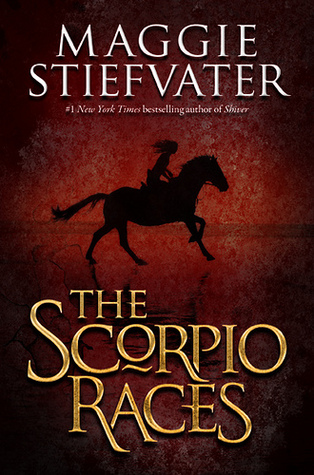
The Scorpio Races

THE SCORPIO RACES by Maggie Stiefvater (Scholastic Press, 2011)
GENRE: Fantastic Realism / Romance
AGE: 14 and up

Though not without issues, The Scorpio Races is an excellent book. It has countless starred reviews and a Printz Honor to prove it, and though it takes more than that to convince me of anything, I agree that, for the most part, it lives up to the hype - the plotting is solid, the language is lovely and the setting is moody and atmospheric. That said, I'd like to leave all that aside and look at the two elements that gave this book a quality rare in mainstream YA lit. The first is the seamless integration, in the form of the water horses, of the fantastic into a story that is otherwise rooted staunchly in reality. The other is the subtlety of the Stiefvater's characterizations, particularly with Sean Kendrick. But a little summary first:

Every October, the capaill uische, mythical and predatory water horses, come up out of the water onto the fictional island of Thisby. Their arrival culminates, on November 1st, with the Scorpio Races, a day of bloody racing where the men of the island ride the capaill uische across the beach, some to glory, many to death. Sean Kendrick has won the Scorpio Races four years out of six, and is respected on the island, despite his silence and stillness, thanks to his uncanny way with horses, both mundane and magical. Kate, aka Puck, Connelly, has never had use for the races and has always steered clear of capaill uische, particularly since her parents died the year before. But when her older brother announces that he's moving to the mainland, Kate decides to ride in the races, not for honor, but for the winners purse. But as Nov. 1st gets closer, the stakes get higher for both Puck and Sean until the day of the race when their fates are decided on the bloody beach.

The capaill uische legend has a lot of variants. Based on the source materials, this could easily have become just another romance about a girl who falls in love with a shapeshifting beast. But Stiefvater takes a more nuanced approach. The Isle of Thisby is a windblown, rocky place with it's roots deep in the past. It has little need for the present. It is losing it's young people to mainland, its only real economies are fishing and tourism and there are scant opportunities for work, (issues that reflect the current reality of many small towns). Stiefvater layers the magical water horses into this reality without explanation or excuse, and the technique works. By defying the temptation to myth-make, Stiefvater grounds the story, keeping the focus on her characters' determination to transcend the limitations of their situations. Though the romance is a key element, the narrative isn't about the relationship that grows between Sean and Puck. It is much more about Sean and Puck coming into their own. They simply find each other in the process.

The other element that works particularly well is Sean's character development. Puck is plucky and emotionally true, but she is of a recognizable type (feisty red-head with plenty of guff) whereas I've never seen a character quite like Sean. He's nineteen, but an old nineteen, with a stillness and perspective that, while impressive, reads as natural to his character. His chapters (the story is told with alternating POV) contain some of the loveliest, most incisive observations I've read in a while. His arc is a subtle one and watching him rock and re-center on his foundation was a quiet pleasure.

While younger readers will enjoy the horsey elements of the book, and the romance is fairly tame and tween approved, I would say that Puck and Sean go places that older teens will identify with more readily. Though the pacing is somewhat sluggish (all those lovely descriptive elements occasionally bog down the plot), The Scorpio Races is a beautiful read, subtle in ways that are rare in YA fiction. It really is a winner - especially if you happen to like horses, and even if you don't.


August 9, 2012

The Dark is Rising

THE DARK IS RISING by Susan Cooper (Scholastic, 1974)
GENRE: Fantasy
HONORS: Newbery Honor (1974)

REVIEW: On his eleventh birthday, Will Stanton, the seventh son of a seventh son, finds out that he is an Old One, an ancient race of beings who keep the Dark at bay in the name of the Light. No sooner does Will discover that his true purpose as the Seeker, the Old One destined to unite the Things of Power, than he is plunged into the battle between Light and Dark, Good and Evil. The story follows Will as he collects the Six Signs to form the Circle, pursued by the Black Rider, an agent of Darkness, and added by Merriman Lyon, The Lady and other Old Ones who have been fighting the Dark for centuries. Peppered with elements from Celtic myth and Arthurian legend, The Dark is Rising (the second in The Dark is Rising Sequence) is a layered and thoughtful combination of old myth, fantasy and contemporary suspense. It is a book that rewards focus and attention, even while giving it's readers an entertaining, satisfying ride.

OPINION: Beautifully written and briskly paced, The Dark is Rising, smacks of literary quality even as its premise is rooted firmly in the fantasy tradition. Will is a compelling hero - mature, smart, savvy and slightly flawed. He is a kid that most readers would want to be, or at least be friends with. His growth over the course of the novel, spurred primarily through his expanding view of the world, is one that many young readers will identify with, even if they themselves are unlikely to battle the Dark or call on the Wild Hunt for assistance. A tween fantasy classic for a reason, it is arguably the strongest title in The Dark is Rising Sequence, one that stands firmly on it's own.

IDEAS: A wonderful tie in to units on world mythology, particularly Celtic mythology and Arthurian legend. Also a good way to introduce theme, symbolism and allusion. A great recommendation to kids who need to read a Newbery book, but who are more interested in genre fiction than realism. This book has stood the test of time and still feels urgent and contemporary.

August 6, 2012

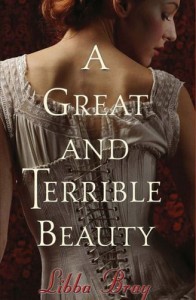
A Great and Terrible Beauty

A GREAT AND TERRIBLE BEAUTY by Libba Bray (Simon & Schuster, 2003)
GENRE: Historical Romance w/ paranormal elements
HONORS: NY Times Best-Seller

REVIEW: There were not many options for girls in Victorian society, a fact that becomes obvious to sixteen-year-old Gemma Doyle upon her arrival at the Spence Academy. Initially socially marginalized, Gemma gradually befriends three other girls, even as she begins to experience disturbing visions that place her in the center of a mystery that followed her to London from the streets of India, where her beautiful mother died. A Great and Terrible Beauty reads like part gothic romance and part Victorian pulp with a healthy dose of the paranormal added to spice things up. There's of occult danger and Eastern 'otherness' (both sexy and mildly threatening to a respectable, young Englishwoman) and enough lurid drama to keep any tween / teen gobbling it down. Despite Bray's use of the first person present progressive tense, which gets tiresome at times, A Great and Terrible Beauty is a great deal of fun and surprisingly hard to put down.

OPINION: Libba Bray knows young women. Gemma Doyle is a good heroine, as far as historical fiction goes - she's active, she has agency, she's flawed but passionate. There's a fair amount of conflict and fight in her, which makes her easy for a modern girl to relate to. Gemma's friends are also interesting - the drab, unattractive Ann (who is a cutter, due in large part to her implied depression and alienation), the gorgeous, ornamental Pippa and Felicity, who, of the four, is the most complex.

A Great and Terrible Beauty is fun, dark, a little edgy and sexy in a safely historical way. It's strength lies in the fact that all four of the girls, Gemma, Pippa, Ann, and especially Felicity, want autonomy - they want to valued for themselves and, in their own way, they fight for that privilege in a Victorian world that valued silence in its women and girls. For that alone, A Great and Terrible Beauty is worth reading.

IDEAS: The first in the Gemma Doyle trilogy, A Great and Terrible Beauty is a solid suggestion for girls looking for historical romance and / or drama. Though not necessarily for reluctant readers, the book appeals on a lot of levels, even as Bray explores serious issues like alienation, autonomy and the historical role of women and girls. A nice choice for a free reading title or as a book club selection - it has a lot of discussion points.


July 31, 2012

The Mummy's Mother

THE MUMMY'S MOTHER by Tony Johnston (Blue Sky Press, 2003)
GENRE: Adventure / Humor
HONORS: None

REVIEW: Ramoses is a 4, 010 year old mummy (4, 010 because he was 10 years old when he was mummified 4,000 years ago). For all that time, he and his mother, the Queen, have been tucked quietly in their tomb, waiting for the Afterlife, until one day, nefarious thieves steal his mother's mummy away. Though young, inexperienced and a bit physically fragile (one good thump could crumble his ancient bones), Ramoses heads off in pursuit, undertaking a journey that leads him through the desert on a cranky camel, to a ship where he makes friends and plays ping-pong and finally to New York, where his mother is being displayed in a museum. Ramoses is a sweet and earnest protagonist, whose vulnerabilities (both emotional and physical) are nicely balanced by his bravery and his ability to rise to every occasion. Johnston keeps things moving without unduly rushing the narrative. The result is a well-paced little story that lingers just long enough on each of Ramoses's adventures for humor or tension to bloom, without interfering with the pace.

OPINION: The Mummy's Mother makes up in humor and pacing for what it lacks in depth. Still, given that it is aimed at younger adolescents, a slight lack of depth could be considered a plus. It is especially humorous that Ramoses, who looks like a typical mummy, never arouses the suspicion of adults, most of whom assume he is a normal boy wearing bandages for some reason. This fun and funny suspension of disbelief contributes greatly to the book's charm. As an added benefit, Johnston weaves in a lot of aspects of Ancient Egyptian history and mythology, which will likely pique the interest of young readers and perhaps prompt them to learn more.

IDEAS: A great suggestion to younger tweens interested in Ancient Egypt or quick adventures with a gentle dose of humor. Also a nice supplementary reading for classrooms who are doing a unit on world mythology as the names and functions of Egyptian gods are featured throughout.

July 9, 2012

Percy Jackson and the Olympians: The Lighting Thief


PERCY JACKSON & THE OLYMPIANS: THE LIGHTENING THIEF. Film adaptation. (Directed by Chris Columbus. Starring Logan Lerhman. Based on the novels by Rick Riorden)
GENRE: Action / Adventure
HONORS: None

REVIEW: The film adaptation of Rick Riorden’s best-selling series, Percy Jackson and the Olympians, moves at an efficient pace while maintaining the essence of what makes the books so appealing – Percy’s struggle to manage himself in the wider world. Lehrman plays Percy, demigod and son of Poseiden, with modern flair, mixing enough defiance into Percy’s geekiness to make him an appealing underdog with plenty of fight. Grover, his satyr "protector", grounds Percy’s quest in contextual gravity while providing comic relief, while Annabeth, the battle-ready daughter of Athena is a nice foil for Percy, who is literally dropped into his new reality when a Fury accosts him. Upon learning of his true heritage, Percy rises to the challenge and proves himself to be a natural hero with what seems to be, at times, convenient ease.

OPINION: The emotional core of Percy Jackson and the Lightening Thief rang hollow at times and it lacks the world-building creativity of other series adaptations, but it is still a satisfying ride that will no doubt appeal to fans of the books.

IDEAS: A strong addition to any unit on Greek mythology or hero quests. Show the film and talk about parallels between Percy’s quest and the mythological quests it draws from (Odysseus and the lotus-eaters, Perseus and Medusa, Orpheus in Hades, etc.). There is also an inherent appeal for kids with dyslexia and ADHD as Percy struggles with these conditions before discovering that he is a hero.