THE HITCHHIKER'S GUIDE TO THE GALAXY by Douglas Adams (Crown, 2004 - Anniversary Edition)
GENRE: Science Fiction
HONORS: Multiple Best-Seller Lists Over Multiple Decades
REVIEW: One morning, Arthur Dent wakes up to find a construction crew with a bulldozer outside of his house - the location for a new interstate. It is also the day that Earth has been scheduled for demolition to make way for a new intergalactic highway. Luckily, Arthur's friend, Ford Prefect, is not what he seems. He is a Hitchhiker and he knows where his towel is. Just as the Earth explodes, Ford, with Arthur in tow, snags a ride from a passing ship, escaping the Earth's destruction and landing them in a series of comic misadventures across the galaxy. With a cast of characters that have come to personify the ridiculous (in a really funny kind of way), Adams's now classic adventure is true must-read, particularly junior high boys - not to discriminate against junior high girls, it's just that, even thirty years later, adolescent males seem to take special joy in quoting any number of Adamsisms at length. Expertly paced, tonally perfect and truly quirky, The Hitchhiker's Guide to the Galaxy may be science-fiction lite, but it's still must-read science fiction, even at the risk of exposure to Vogon poetry.
OPINION: The Hitchhiker's Guide to the Galaxy is the kind of funny that relies on timing, word play and healthy dose of the ridiculous. It swings along and before you know it, you're halfway through and ignoring chores. Though not for readers that take themselves terribly seriously, most adolescents will enjoy Arthur Dent's slow inculcation into the Hitchhiking way of life. If a library doesn't have this book, there is very likely something wrong...
IDEAS: A great suggestion for parents looking a book they can read with their tween. A lot of parents will remember reading it when they were adolescents and would probably share it, with great enthusiasm, with their own kids. The humor has more than held up.
July 31, 2012
The Girl Who Circumnavigated Fairyland in a Ship of Her Own Making
THE GIRL WHO CIRCUMNAVIGATED FAIRYLAND IN A SHIP OF HER OWN MAKING by Catherynne M. Valente; Illustrated by Ana Juan (Square Fish, 2012)
GENRE: Fantasy / Fairytale
HONORS: Andre Norton Award
REVIEW: While washing pink and yellow teacups in her kitchen sink, September is offered the chance to ride the Leopard of Gentle Breezes to Fairyland with the Green Wind, a natty and mischievous individual. September, who is not only tired of washing teacups, but of Nebraska and of normal life in general, accepts, embarking on an adventure that takes her to Pandemonium, (the capital of Fairyland) and the home of the evil Marquess, to the Autumn territories where it is always Halloween, around the whole of Fairyland in her titular ship and finally to the Lonely Jail, where all is explained. Along the way, she meets a girl made of soap, a Wyverary (a Wyvern that is half library), witches, pookahs, alchemists, velocipedes, a boy named Saturday and her own Death. While drawing liberally on motifs and themes from multiple fairy tales, Valente manages to construct a story that is both linguistically beautiful and completely unique. September's journey lands her in unexpected and oddly familiar places, while the climax, though (in hindsight) is perfectly, constructed and inevitable, still manages to surprise. A gorgeous and truly special book, The Girl Who Circumnavigated Fairyland in a Ship of Her Own Making is a lovely, jewel of a thing, full of enough adventure and emotional resonance to have readers gobbling it up like fairy food.
OPINION: This is, so far, my favorite book of the semester. Valente's narrative voice is playful and sure, drawsing on old-fashioned language and conceits (such as asides to the reader) that in her hands feels fresh and new. Everything about September's story vibrates with energy and color, but what makes it stand out, particularly, is the emotional depth operating beneath the visual and linguistic loveliness. Themes of loneliness, fear and regret play out gracefully to the end, making The Girl Who Circumnavigated Fairyland in a Ship of Her Own Making much more than just a charming face.
IDEAS: A good suggestion for slightly older tweens with the ability to focus on language. While not a difficult read, it does require a bit of focus and maturity from the reader. It would be especially fun for tweens who enjoy fairy tales and classics like Alice's Adventures in Wonderland as Valente refers to many of them thematically and stylistically throughout. Also a wonderful choice for a library or school book club, where an adult could help lead discussions on any number of possible topics.
GENRE: Fantasy / Fairytale
HONORS: Andre Norton Award
REVIEW: While washing pink and yellow teacups in her kitchen sink, September is offered the chance to ride the Leopard of Gentle Breezes to Fairyland with the Green Wind, a natty and mischievous individual. September, who is not only tired of washing teacups, but of Nebraska and of normal life in general, accepts, embarking on an adventure that takes her to Pandemonium, (the capital of Fairyland) and the home of the evil Marquess, to the Autumn territories where it is always Halloween, around the whole of Fairyland in her titular ship and finally to the Lonely Jail, where all is explained. Along the way, she meets a girl made of soap, a Wyverary (a Wyvern that is half library), witches, pookahs, alchemists, velocipedes, a boy named Saturday and her own Death. While drawing liberally on motifs and themes from multiple fairy tales, Valente manages to construct a story that is both linguistically beautiful and completely unique. September's journey lands her in unexpected and oddly familiar places, while the climax, though (in hindsight) is perfectly, constructed and inevitable, still manages to surprise. A gorgeous and truly special book, The Girl Who Circumnavigated Fairyland in a Ship of Her Own Making is a lovely, jewel of a thing, full of enough adventure and emotional resonance to have readers gobbling it up like fairy food.
OPINION: This is, so far, my favorite book of the semester. Valente's narrative voice is playful and sure, drawsing on old-fashioned language and conceits (such as asides to the reader) that in her hands feels fresh and new. Everything about September's story vibrates with energy and color, but what makes it stand out, particularly, is the emotional depth operating beneath the visual and linguistic loveliness. Themes of loneliness, fear and regret play out gracefully to the end, making The Girl Who Circumnavigated Fairyland in a Ship of Her Own Making much more than just a charming face.
IDEAS: A good suggestion for slightly older tweens with the ability to focus on language. While not a difficult read, it does require a bit of focus and maturity from the reader. It would be especially fun for tweens who enjoy fairy tales and classics like Alice's Adventures in Wonderland as Valente refers to many of them thematically and stylistically throughout. Also a wonderful choice for a library or school book club, where an adult could help lead discussions on any number of possible topics.
The Mummy's Mother
THE MUMMY'S MOTHER by Tony Johnston (Blue Sky Press, 2003)
GENRE: Adventure / Humor
HONORS: None
REVIEW: Ramoses is a 4, 010 year old mummy (4, 010 because he was 10 years old when he was mummified 4,000 years ago). For all that time, he and his mother, the Queen, have been tucked quietly in their tomb, waiting for the Afterlife, until one day, nefarious thieves steal his mother's mummy away. Though young, inexperienced and a bit physically fragile (one good thump could crumble his ancient bones), Ramoses heads off in pursuit, undertaking a journey that leads him through the desert on a cranky camel, to a ship where he makes friends and plays ping-pong and finally to New York, where his mother is being displayed in a museum. Ramoses is a sweet and earnest protagonist, whose vulnerabilities (both emotional and physical) are nicely balanced by his bravery and his ability to rise to every occasion. Johnston keeps things moving without unduly rushing the narrative. The result is a well-paced little story that lingers just long enough on each of Ramoses's adventures for humor or tension to bloom, without interfering with the pace.
OPINION: The Mummy's Mother makes up in humor and pacing for what it lacks in depth. Still, given that it is aimed at younger adolescents, a slight lack of depth could be considered a plus. It is especially humorous that Ramoses, who looks like a typical mummy, never arouses the suspicion of adults, most of whom assume he is a normal boy wearing bandages for some reason. This fun and funny suspension of disbelief contributes greatly to the book's charm. As an added benefit, Johnston weaves in a lot of aspects of Ancient Egyptian history and mythology, which will likely pique the interest of young readers and perhaps prompt them to learn more.
IDEAS: A great suggestion to younger tweens interested in Ancient Egypt or quick adventures with a gentle dose of humor. Also a nice supplementary reading for classrooms who are doing a unit on world mythology as the names and functions of Egyptian gods are featured throughout.
GENRE: Adventure / Humor
HONORS: None
REVIEW: Ramoses is a 4, 010 year old mummy (4, 010 because he was 10 years old when he was mummified 4,000 years ago). For all that time, he and his mother, the Queen, have been tucked quietly in their tomb, waiting for the Afterlife, until one day, nefarious thieves steal his mother's mummy away. Though young, inexperienced and a bit physically fragile (one good thump could crumble his ancient bones), Ramoses heads off in pursuit, undertaking a journey that leads him through the desert on a cranky camel, to a ship where he makes friends and plays ping-pong and finally to New York, where his mother is being displayed in a museum. Ramoses is a sweet and earnest protagonist, whose vulnerabilities (both emotional and physical) are nicely balanced by his bravery and his ability to rise to every occasion. Johnston keeps things moving without unduly rushing the narrative. The result is a well-paced little story that lingers just long enough on each of Ramoses's adventures for humor or tension to bloom, without interfering with the pace.
OPINION: The Mummy's Mother makes up in humor and pacing for what it lacks in depth. Still, given that it is aimed at younger adolescents, a slight lack of depth could be considered a plus. It is especially humorous that Ramoses, who looks like a typical mummy, never arouses the suspicion of adults, most of whom assume he is a normal boy wearing bandages for some reason. This fun and funny suspension of disbelief contributes greatly to the book's charm. As an added benefit, Johnston weaves in a lot of aspects of Ancient Egyptian history and mythology, which will likely pique the interest of young readers and perhaps prompt them to learn more.
IDEAS: A great suggestion to younger tweens interested in Ancient Egypt or quick adventures with a gentle dose of humor. Also a nice supplementary reading for classrooms who are doing a unit on world mythology as the names and functions of Egyptian gods are featured throughout.
July 27, 2012
The Giver
THE GIVER by Lois Lowry (Houghton Mifflin, 1993)
GENRE: Science Fiction - Dystopic
HONORS: Newbery Award
REVIEW: Jonas lives in a community ruled by "Sameness". People are assigned jobs and spouses, they apply to have children (a maximum of one boy and one girl, dispensed when the "new child" is 1 year old). It is a society that doesn't know war or pain or hunger, but they also cannot love. There is no collective memory. All of the community's memories reside in The Receiver, a person of great honor, and Jonas is selected to replace him. As the old Receiver becomes The Giver, passing memories of joy and pain into the boy, Jonas faces the painful isolation of awareness. He alone knows about colors and snow and war and love. Ultimately, Jonas must decide whether to stay in a community that becomes increasingly horrific in his eyes, or to risk the wilds "Els subtle ewhere"for a chance at an honest life. With a masterful, light touch, Lowry constructs a world that grows increasingly unsettling over course of this short book, dispensing knowledge more through implication than stated fact. Jonas journey of awareness is painful and inevitable, and the choice he ultimately makes is the perfect criticism of a society based on rigid homogeneity.
OPINION: The Giver is a subtly overwhelming book. Lowry blends the tender (the naming ceremony) with the creepy ("comfort objects"; the "Releasing Room") to paint a picture of life in a society that, though safe, is hardly a life at all. Jonah is a brave protagonist who grows rapidly over the course of the book, gaining wisdom through the memories The Giver transfers to him. As a meditation on societal control, "sameness", the importance of shared history and the nature of love, The Giver is, quite possibly, the perfect adolescent novel. It most certainly contains a perfect dystopia, if such a thing could exist.
IDEAS: Used in middle school and junior high English classes everywhere, The Giver is made to be discussed, with serious themes and issues woven carefully through its straightforward narrative. A great suggestion for tween fans of dystopic fiction and science fiction, it's also a wonderful introduction for young people not yet familiar with the genre.
GENRE: Science Fiction - Dystopic
HONORS: Newbery Award
REVIEW: Jonas lives in a community ruled by "Sameness". People are assigned jobs and spouses, they apply to have children (a maximum of one boy and one girl, dispensed when the "new child" is 1 year old). It is a society that doesn't know war or pain or hunger, but they also cannot love. There is no collective memory. All of the community's memories reside in The Receiver, a person of great honor, and Jonas is selected to replace him. As the old Receiver becomes The Giver, passing memories of joy and pain into the boy, Jonas faces the painful isolation of awareness. He alone knows about colors and snow and war and love. Ultimately, Jonas must decide whether to stay in a community that becomes increasingly horrific in his eyes, or to risk the wilds "Els subtle ewhere"for a chance at an honest life. With a masterful, light touch, Lowry constructs a world that grows increasingly unsettling over course of this short book, dispensing knowledge more through implication than stated fact. Jonas journey of awareness is painful and inevitable, and the choice he ultimately makes is the perfect criticism of a society based on rigid homogeneity.
OPINION: The Giver is a subtly overwhelming book. Lowry blends the tender (the naming ceremony) with the creepy ("comfort objects"; the "Releasing Room") to paint a picture of life in a society that, though safe, is hardly a life at all. Jonah is a brave protagonist who grows rapidly over the course of the book, gaining wisdom through the memories The Giver transfers to him. As a meditation on societal control, "sameness", the importance of shared history and the nature of love, The Giver is, quite possibly, the perfect adolescent novel. It most certainly contains a perfect dystopia, if such a thing could exist.
IDEAS: Used in middle school and junior high English classes everywhere, The Giver is made to be discussed, with serious themes and issues woven carefully through its straightforward narrative. A great suggestion for tween fans of dystopic fiction and science fiction, it's also a wonderful introduction for young people not yet familiar with the genre.
The 13 Clocks
THE 13 CLOCKS by James Thurber; Illustrated by Marc Simont; Introduction by Neil Gaiman (New York Review Children's Collection, 1950)
GENRE: Fantasy / Humor / Fairy Tale
HONORS: None
REVIEW: High up in a castle, an evil Duke (who is so cold that even the hands of his 13 clocks have frozen at "ten minutes to five") lives with his beautiful niece, Princess Seralinda. Loathe to lose her to marriage, the Duke devises all manner of impossible quests for the suitors who come knocking at his castle door. It is only when Xingu, a "knight who is not a knight" learns of the lovely Seralinda and undertakes a quest to win her hand in marriage, that the Duke overthrown and justice served. Thoroughly intelligent and charmingly ridiculous, The 13 Clocks takes full advantage of an entire host of fairy tales. Though it won't appeal to every reader, for those who enjoy a touch of the ridiculous, light romance, fairy tales or complex puns it is a wonderful, surprising read.
OPINION: The 13 Clocks is a quick read that works on several levels. For younger adolescents, the story alone, with it's fabulous villain, lovely princess and intrepid knight, is a fun romp through territory littered with familiar fairy tale motifs. For older tweens, or those who read more closely, Thurber's word play and internal pacing give The 13 Clocks and extra degree of interest. One could read this book several times and still not catch every double-meaning or subtle joke, making it a subtly ridiculous, utterly engrossing read for a wide range of tweens. Neil Gaiman's introduction adds a nice bit of context for the modern reader, as well.
IDEAS: Great for fans of Roald Dahl's satirical style and work play. Also an unexpected suggestion for fans of fairy tales and knightly romance, particularly for those who enjoy a dash of humor and a touch of the ridiculous. In the classroom, a nice vehicle for discussion about folklore and fairy tale motifs and themes.
GENRE: Fantasy / Humor / Fairy Tale
HONORS: None
REVIEW: High up in a castle, an evil Duke (who is so cold that even the hands of his 13 clocks have frozen at "ten minutes to five") lives with his beautiful niece, Princess Seralinda. Loathe to lose her to marriage, the Duke devises all manner of impossible quests for the suitors who come knocking at his castle door. It is only when Xingu, a "knight who is not a knight" learns of the lovely Seralinda and undertakes a quest to win her hand in marriage, that the Duke overthrown and justice served. Thoroughly intelligent and charmingly ridiculous, The 13 Clocks takes full advantage of an entire host of fairy tales. Though it won't appeal to every reader, for those who enjoy a touch of the ridiculous, light romance, fairy tales or complex puns it is a wonderful, surprising read.
OPINION: The 13 Clocks is a quick read that works on several levels. For younger adolescents, the story alone, with it's fabulous villain, lovely princess and intrepid knight, is a fun romp through territory littered with familiar fairy tale motifs. For older tweens, or those who read more closely, Thurber's word play and internal pacing give The 13 Clocks and extra degree of interest. One could read this book several times and still not catch every double-meaning or subtle joke, making it a subtly ridiculous, utterly engrossing read for a wide range of tweens. Neil Gaiman's introduction adds a nice bit of context for the modern reader, as well.
IDEAS: Great for fans of Roald Dahl's satirical style and work play. Also an unexpected suggestion for fans of fairy tales and knightly romance, particularly for those who enjoy a dash of humor and a touch of the ridiculous. In the classroom, a nice vehicle for discussion about folklore and fairy tale motifs and themes.
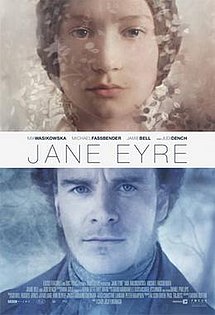
Jane Eyre
JANE EYRE (Film Adaptation) directed by Cary Joji Fukunaga; Starring Mia Wasikowska and Michael Fassbender. Based on the novel by Charlotte Bronte. (Focus Features, 2011).
GENRE: Romance (Gothic) / Historical
HONORS: LA Film Critic's Assoc. Award for Best Actor (Michael Fassbender - won); National Board of Review Spotlight Award (Michael Fassbender - won); British Independent Film Best Actress Award (Mia Wasikowska - nominated)
REVIEW: Few films capture the tone and feel of a classic as well as Fukunaga's 2011 adaptation of Charlotte Bronte's Jane Eyre. Orphaned Jane goes to work for the mysterious Mr. Rochester as a governess. Before long, she begins to notice odd things in the expansive house - strange noises, sudden fires and unexplained injuries. All the while, Jane becomes increasingly fascinated by her mercurial, challenging employer. But though Jane may look small and pale, she is strong, stronger than anyone else in the house, with a moral and ethical core that renders her integrity stunning in it's unshakability. As in the novel, Wasikowska's Jane knows her own mind, and though she is humble, she knows her own value and will not compromise it. Fassbender's Rochester is a haunted, complicated man, with an edge that wavers just to one side of dangerous. The production itself is lovely with light dreamlike expanses contrasting starkly with the dark, sinister interior of Rochester's home. Taut and intense, Jane Eyre is not a movie to watch while texting or playing an app. Luckily, it's appealing enough that even the most tech savvy tween won't want to.
OPINION: Jane Eyre is a classic with much to offer adolescent readers. However, it's also a title that tends to intimidate or simply not interest modern tweens. This adaptation, though faithfully adapted from Bronte's original, renders the story far more accessible by concentrating primarily on Jane's growth, and on her romance with Rochester, in all it's complicated, gothic glory. Darker than all of the perennially popular Jane Austen's work combined, Jane Eyre is a great suggestion for tweens looking for something a touch more gothic, and Fukunaga's film adaptation is a wonderful way to introduce them to the story and pique their interest.
IDEAS: A must-have for any display featuring the classics, it would also be an unexpected inclusion in a display with a romance or historical theme. Also a nice suggestion for fans of the book and for tweens, particularly girls, interested in classical literature / stories, but unsure where to start.
GENRE: Romance (Gothic) / Historical
HONORS: LA Film Critic's Assoc. Award for Best Actor (Michael Fassbender - won); National Board of Review Spotlight Award (Michael Fassbender - won); British Independent Film Best Actress Award (Mia Wasikowska - nominated)
REVIEW: Few films capture the tone and feel of a classic as well as Fukunaga's 2011 adaptation of Charlotte Bronte's Jane Eyre. Orphaned Jane goes to work for the mysterious Mr. Rochester as a governess. Before long, she begins to notice odd things in the expansive house - strange noises, sudden fires and unexplained injuries. All the while, Jane becomes increasingly fascinated by her mercurial, challenging employer. But though Jane may look small and pale, she is strong, stronger than anyone else in the house, with a moral and ethical core that renders her integrity stunning in it's unshakability. As in the novel, Wasikowska's Jane knows her own mind, and though she is humble, she knows her own value and will not compromise it. Fassbender's Rochester is a haunted, complicated man, with an edge that wavers just to one side of dangerous. The production itself is lovely with light dreamlike expanses contrasting starkly with the dark, sinister interior of Rochester's home. Taut and intense, Jane Eyre is not a movie to watch while texting or playing an app. Luckily, it's appealing enough that even the most tech savvy tween won't want to.
OPINION: Jane Eyre is a classic with much to offer adolescent readers. However, it's also a title that tends to intimidate or simply not interest modern tweens. This adaptation, though faithfully adapted from Bronte's original, renders the story far more accessible by concentrating primarily on Jane's growth, and on her romance with Rochester, in all it's complicated, gothic glory. Darker than all of the perennially popular Jane Austen's work combined, Jane Eyre is a great suggestion for tweens looking for something a touch more gothic, and Fukunaga's film adaptation is a wonderful way to introduce them to the story and pique their interest.
IDEAS: A must-have for any display featuring the classics, it would also be an unexpected inclusion in a display with a romance or historical theme. Also a nice suggestion for fans of the book and for tweens, particularly girls, interested in classical literature / stories, but unsure where to start.
The Rose and the Beast
THE ROSE AND THE BEAST by Francesca Lia Block (Harper Collins, 2000)
GENRE: Fantasy / Fairy Tales
HONORS: L.A. Times Best Seller
REVIEW: The Rose and the Beast is an unexpected collection. Each story is an adaptation of a fairy tale ranging from the popular, ("Snow," a variation on Snow White) to the less well-known, ("Bones," Block's Bluebeard). As in much of Francesca Lia Block's work, the language is lovely and poetic, with a nebulous quality that gives each story the feeling a Impressionist painting. Though not immediately obvious in most cases, the original tales form strong foundation for each adaptation, providing Block with a platform on which to explore themes such as the variable nature of love and friendship, as well as darker issues, such as abuse and alienation. More appropriate for adolescents 13 and over, The Rose and the Beast is a subtle, emotional collection, one that deals with potentially difficult subject matter, while rarely handing the reader a clear-cut solution to any of the situations depicted. That said, the stories are haunting and beautiful, and will reward the reader who takes the time to sit and ponder them.
OPINION: This is a wonderful collection of literary fairy tale adaptations. Each story, written with Block's characteristic linguistic care, skims the surface of the original, while hinting at the depths beneath. A strong addition to any tween collection, it is a book that requires the reader's full emotional and intellectual attention. It would probably be most enjoyed by readers already familiar with the world of fairy tales and their adaptations and / or fans of Block's other work.
IDEAS: A great book for comparative discussion. The tales of full of hints, clues and variations on the original fairy tales that inspired them. Also a great suggestion for fans of Block's other collections, particularly Girl Goddess #9 and How to (un)Cage a Girl.
GENRE: Fantasy / Fairy Tales
HONORS: L.A. Times Best Seller
REVIEW: The Rose and the Beast is an unexpected collection. Each story is an adaptation of a fairy tale ranging from the popular, ("Snow," a variation on Snow White) to the less well-known, ("Bones," Block's Bluebeard). As in much of Francesca Lia Block's work, the language is lovely and poetic, with a nebulous quality that gives each story the feeling a Impressionist painting. Though not immediately obvious in most cases, the original tales form strong foundation for each adaptation, providing Block with a platform on which to explore themes such as the variable nature of love and friendship, as well as darker issues, such as abuse and alienation. More appropriate for adolescents 13 and over, The Rose and the Beast is a subtle, emotional collection, one that deals with potentially difficult subject matter, while rarely handing the reader a clear-cut solution to any of the situations depicted. That said, the stories are haunting and beautiful, and will reward the reader who takes the time to sit and ponder them.
OPINION: This is a wonderful collection of literary fairy tale adaptations. Each story, written with Block's characteristic linguistic care, skims the surface of the original, while hinting at the depths beneath. A strong addition to any tween collection, it is a book that requires the reader's full emotional and intellectual attention. It would probably be most enjoyed by readers already familiar with the world of fairy tales and their adaptations and / or fans of Block's other work.
IDEAS: A great book for comparative discussion. The tales of full of hints, clues and variations on the original fairy tales that inspired them. Also a great suggestion for fans of Block's other collections, particularly Girl Goddess #9 and How to (un)Cage a Girl.
Subscribe to:
Posts (Atom)